
Open-Ended Toys That Boost Toddler Brain Growth
A supportive, research-informed guide to choosing open-ended toys that strengthen creativity, problem-solving, and independent play during toddlerhood.
Try Related Tools
Use our source-informed calculators to get helpful insights.
If you have ever watched your toddler play for a long stretch with something as simple as a wooden spoon or a cardboard box, you already understand the magic of open-ended toys. Toddlers thrive when they get to explore freely, follow their curiosity, and create something from their imagination. Open-ended toys encourage exactly that kind of growth.
Unlike battery-powered toys that perform one action, open-ended toys invite your toddler to think, experiment, and problem-solve. They support brain development in ways many experts often highlight during early childhood appointments. Most importantly, they help you slow down and enjoy meaningful play moments together.
This guide explains why these toys matter, how they support your child's development, and how to choose the right ones for your home. You will also find Amazon search links set up correctly with your affiliate tag for easy browsing.
Table of Contents
- What Makes a Toy “Open-Ended”?
- Why Open-Ended Toys Support Strong Brain Growth
- Best Open-Ended Toys for Toddlers
- How to Introduce Open-Ended Toys Without Overwhelm
- Developmental Benefits by Age
- Realistic Expectations for Parents
- Frequently Asked Questions (FAQ)
- 1. My toddler only throws blocks. Is that normal?
- 2. How many open-ended toys should I have?
- 3. Are open-ended toys better than electronic toys?
- 4. What is a good first open-ended toy?
- 5. My toddler plays the same way every day. Is that okay?
- 6. Can open-ended toys help with speech delays?
- 7. How do I clean wooden toys safely?
- 8. When should I worry about a child’s play skills?
- References and Further Reading
- Medical Disclaimer
- About the Author
What Makes a Toy “Open-Ended”?
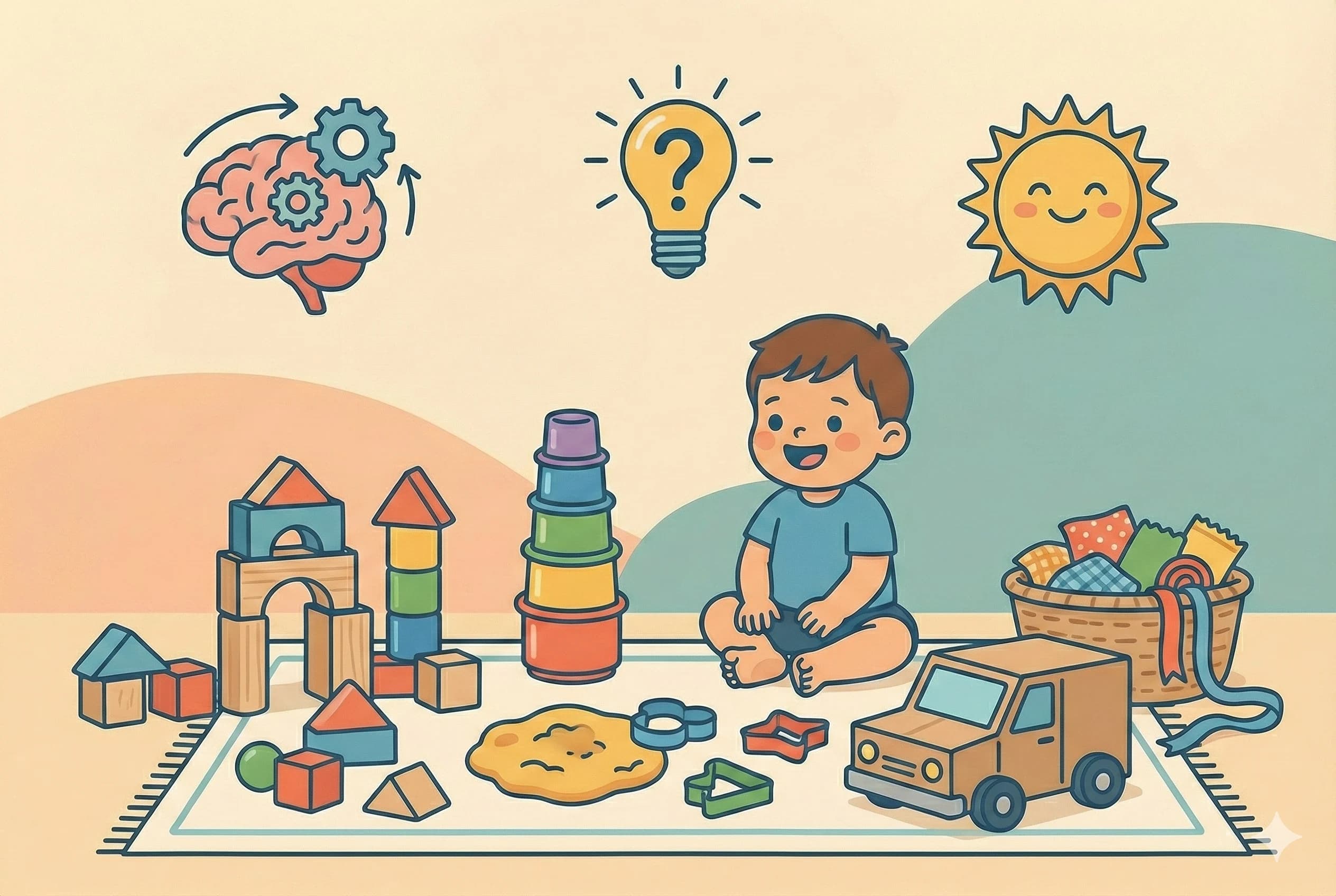
Open-ended toys can be used in many different ways. There is no single correct outcome, which encourages toddlers to take the lead in their play. Many child development specialists explain that this type of play strengthens creativity, problem-solving, and emotional skills.
Some examples include:
- Wooden blocks
- Magnetic tiles
- Stacking cups
- Loose parts
- Play silks
- Clay or dough
- Pretend-play items
These toys do not dictate how play should look. Instead, your toddler becomes the storyteller, the builder, the chef, or the engineer.
Why Open-Ended Toys Support Strong Brain Growth
1. They encourage problem-solving
When a tower falls, your toddler tries again. This trial-and-error process helps them understand balance, weight, and cause and effect. Research suggests these experiences support stronger reasoning skills later in childhood.
2. They build language naturally
Toddlers often talk, gesture, or show you what they are creating. This kind of self-directed play helps vocabulary grow. If you are also working on speech goals, pairing open-ended toys with gentle narration can be especially helpful.
3. They reduce overstimulation
Simple toys give toddlers space to think. Flashing lights and music can overwhelm young children. Open-ended toys create a calmer environment that helps your child focus and stay engaged longer.
4. They build patience and persistence
Play that has no fixed outcome teaches children to slow down and explore. This supports emotional regulation and independence.
5. They grow with your child
A toy that is used for stacking at age one may be used for building cities at age three. This adaptability makes open-ended toys budget friendly and long lasting.
Best Open-Ended Toys for Toddlers
With Correct Amazon Affiliate Links
Below is a list of widely recommended open-ended toys along with Amazon search links using your correct affiliate tag.
1. Wooden Blocks
These support early engineering skills, spatial awareness, and problem-solving.
Browse wooden blocks on Amazon
2. Magnetic Tiles
They help toddlers understand shapes, height, and structure while encouraging imagination.
Browse magnetic tiles on Amazon
3. Play Silks
Silks can become water, grass, food, capes, blankets, or anything your toddler imagines.
Browse play silks on Amazon
4. Loose Parts
These allow sorting, transferring, stacking, and pretend cooking.
Browse Montessori loose parts on Amazon
5. Stacking Cups
Build, pour, nest, or pretend. They support fine motor skills and early problem-solving.
Browse stacking cups on Amazon
6. Wooden Puzzles and Shape Sorters
Gentle early problem-solving toys that help toddlers understand spatial relationships.
Browse wooden puzzles for toddlers
7. Pretend-Play Sets
Small kitchens, wooden foods, doctor sets, and dolls help toddlers understand emotions and routines.
Browse toddler pretend play sets
8. Art and Sensory Supplies
Clay, dough, crayons, and finger paints help toddlers express themselves without limits.
Browse toddler art and clay sets
How to Introduce Open-Ended Toys Without Overwhelm
Keep choices minimal
A shelf packed with toys often leads to confusion. Start with three or four toys and rotate weekly.
Make toys accessible
Place toys on low shelves so your child can choose independently.
Let them take the lead
Instead of directing the play, sit close and observe. Support with comments like:
- “You are building something tall.”
- “You chose the green cup today.”
These gentle observations strengthen confidence.
Provide enough time
Kids need unhurried moments to explore deeply. Even twenty minutes can make a big difference.
Reduce overstimulating toys
Loud or flashing toys often interrupt calm thinking. When removed, toddlers often become more creative and patient.
Developmental Benefits by Age
12–18 Months
- Basic stacking
- Carrying objects
- Filling and dumping
- Simple pretend feeding
This age is about exploring new abilities and repeating them until mastered.
18–24 Months
- Building simple towers
- Sorting objects
- Beginning to act out simple scenes
- Matching shapes
Many doctors recommend this stage for building fine motor skills and early symbolic thinking.
24–36 Months
- Building more complex structures
- Creating full pretend-play storylines
- Role-playing with dolls or figures
- Early problem-solving
Experts often explain that pretend play at this age supports emotional understanding and patience.
Realistic Expectations for Parents
Not every toddler engages with toys in the same way. Some love structured play, while others prefer wandering and observing. Both are normal. It is also normal if your child needs repeated exposure before embracing a new toy.
If your toddler struggles with focus, becomes frustrated easily, or avoids play consistently, it may help to speak with your pediatrician to ensure their developmental needs are being supported.
Frequently Asked Questions (FAQ)
1. My toddler only throws blocks. Is that normal?
Yes. Throwing is a common part of learning. Offer soft items for safe throwing and guide them gently toward building when they appear ready.
2. How many open-ended toys should I have?
Five to ten high-quality toys are sufficient. Rotation keeps things interesting without overstimulation.
3. Are open-ended toys better than electronic toys?
Many professionals recommend open-ended toys for building focus, problem-solving, and creativity. Electronic toys can still be used occasionally for fun.
4. What is a good first open-ended toy?
Stacking cups, play silks, or a set of simple wooden blocks are wonderful options.
5. My toddler plays the same way every day. Is that okay?
Yes. Repetition helps them master skills and understand patterns.
6. Can open-ended toys help with speech delays?
Often, yes. They encourage storytelling and conversation. Pairing this with simple narration can support language growth.
7. How do I clean wooden toys safely?
Use mild soap and water. Avoid soaking to protect the wood.
8. When should I worry about a child’s play skills?
If your toddler rarely engages with toys, avoids interaction, or seems withdrawn during play, consider discussing it with your pediatrician.
References and Further Reading
-
Zero to Three (Early Childhood Development):
https://www.zerotothree.org -
American Academy of Pediatrics: Play Guidance:
https://www.healthychildren.org -
National Association for the Education of Young Children (NAEYC): Play-Based Learning:
https://www.naeyc.org
Medical Disclaimer
This article provides general educational guidance and does not replace medical advice. Always consult your pediatrician if you have concerns about your child's development or behavior.
About the Author
Abhilasha Mishra writes about toddler development, early learning, and family well-being. She focuses on making research-backed advice warm, clear, and supportive for mothers.