
Beyond the Due Date: 7 Factors That Actually Determine When Your Baby Arrives
Only about 5% of babies are born on their due date. This supportive, evidence-based guide explains why your due date is an estimate, what truly influences labor timing, and how to trust your body through the final weeks of pregnancy.
Try Related Tools
Use our source-informed calculators to get helpful insights.
The moment you see your due date on a screen, something changes. It stops being a calculation and starts feeling like a promise. Many first-time mothers quietly circle that date in their minds, counting down to a single day when everything is supposed to happen.
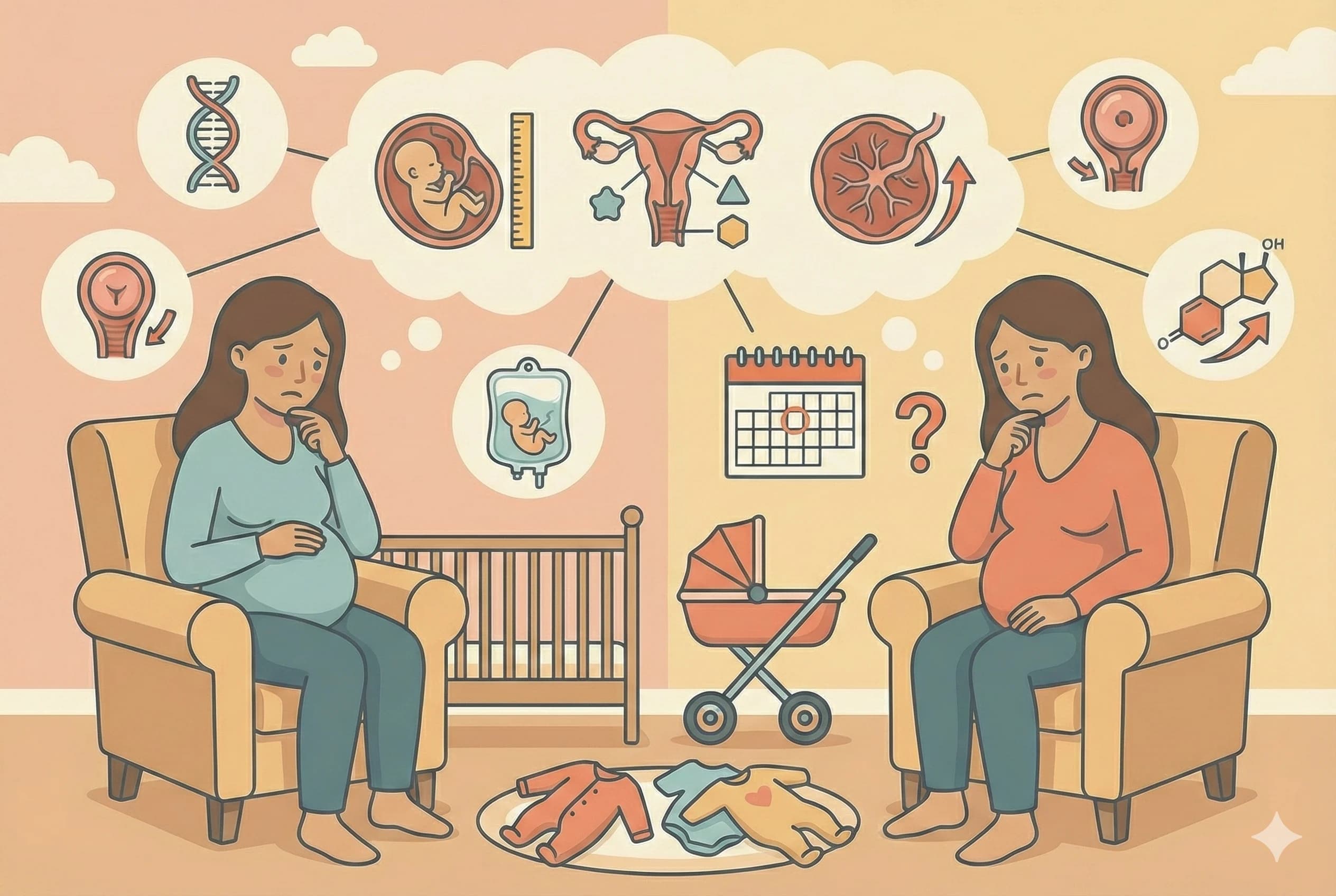
If you are feeling anxious because your Due Date Calculator shows one specific day, you are not alone. It is completely human to want certainty during such a life-altering moment. But here is the gentle truth that many doctors explain early on: pregnancy does not work on a calendar. In fact, research suggests that only around five percent of babies arrive exactly on their estimated due date.
This article is here to soften that pressure. It is meant to give you context, reassurance, and a deeper understanding of what truly influences when your baby arrives, so that you can replace anxiety with trust in your body.
Table of Contents
- Why a Due Date Is an Estimate, Not a Deadline
- Gestational Age vs Fetal Age: A Quiet Source of Confusion
- Cycle Regularity Plays a Bigger Role Than You Think
- Your Baby Has a Timeline of Their Own
- Hormones and the Body’s Readiness
- Physical Activity and Lifestyle Factors
- IVF and Assisted Conception Follow Different Rules
- Why Waiting Can Feel So Emotionally Heavy
- When to Seek Medical Guidance
- Learning to Trust the Process
- Frequently Asked Questions
- Is it bad if I go past my due date?
- Why do some women deliver early?
- Can stress delay labor?
- Does ultrasound always give an accurate due date?
- Should I try natural labor-inducing methods?
- How can I cope emotionally while waiting?
- Will my next pregnancy have the same timing?
- References and Further Reading
- Medical Disclaimer
- About the Author
Why a Due Date Is an Estimate, Not a Deadline
A due date is calculated based on averages. It assumes a 28-day menstrual cycle, ovulation on day 14, and a pregnancy length of 40 weeks. Many women do not fit neatly into that model.
Even when you track your pregnancy week by week using a Pregnancy Week Tracker, it helps to remember that these tools provide guidance, not a fixed schedule. Your body and your baby are not machines. They respond to biology, hormones, and subtle signals that science is still learning to fully explain.
Understanding the difference between prediction and reality can ease a great deal of emotional strain in the final weeks.
Gestational Age vs Fetal Age: A Quiet Source of Confusion
One reason due dates feel imprecise is the way pregnancy is dated. Doctors use gestational age, which counts from the first day of your last menstrual period. Actual fetal development begins about two weeks later, after ovulation and conception.
This means that when you are told you are 40 weeks pregnant, your baby has been growing for closer to 38 weeks. That two-week difference often surprises women and can make the timing feel misleading.
Tools like the LMP & Ultrasound Due Date Calculator help refine estimates, but even ultrasound dating has a margin of error, especially later in pregnancy.
Cycle Regularity Plays a Bigger Role Than You Think
If your menstrual cycles were longer, shorter, or irregular before pregnancy, your ovulation likely did not happen on day 14. This alone can shift a due date by several days or even more than a week.
Many doctors recommend focusing less on the exact date and more on the overall range of normal delivery, which spans from 37 to 42 weeks. Babies born anywhere in that window are generally considered full term, provided there are no medical complications.
Your Baby Has a Timeline of Their Own
One of the most comforting ideas to hold onto is that your baby participates in the timing of labor. Research suggests that babies release proteins when their lungs are mature, signaling the body that it is time for birth.
This is not something you can rush or control. It explains why two pregnancies in the same woman can have very different delivery dates, even when everything else appears similar.
Hormones and the Body’s Readiness
Labor is the result of a complex hormonal dance involving oxytocin, prostaglandins, and cortisol. These hormones prepare the uterus, cervix, and nervous system for birth.
Stress, illness, and sleep deprivation can subtly influence this process. Many doctors recommend prioritizing rest, emotional safety, and calm during the final weeks, not because it guarantees labor, but because it supports the body’s natural readiness.
Physical Activity and Lifestyle Factors
Gentle movement such as walking, prenatal yoga, and stretching may help your baby settle into a favorable position. However, there is no strong evidence that physical activity alone can trigger labor before the body is ready.
Similarly, popular advice about spicy food or specific exercises tends to be anecdotal. Experts often explain that while these practices are usually safe, they should not be relied on to control labor timing.
IVF and Assisted Conception Follow Different Rules
If you conceived through assisted methods, timing is calculated differently. An IVF Due Date Calculator uses the date of embryo transfer rather than ovulation or LMP.
Even then, the same principle applies. The date provides guidance, but birth still unfolds based on biological readiness rather than prediction.
Why Waiting Can Feel So Emotionally Heavy
As the due date approaches and passes, many women experience rising anxiety, frustration, or even guilt. You might feel pressure from family messages or constant check-ins asking if the baby has arrived yet.
Please know that waiting does not mean something is wrong. It often means your body is doing exactly what it needs to do. Emotional reassurance during this time is not a luxury; it is a form of care.
When to Seek Medical Guidance
While flexibility is normal, there are moments when medical input is essential. Contact your provider if you notice reduced fetal movement, unusual pain, bleeding, or signs of preeclampsia such as severe headaches or vision changes.
Doctors monitor post-term pregnancies closely and may recommend induction if risks increase. These decisions are based on safety, not impatience.
Learning to Trust the Process
Perhaps the most important shift is moving from watching the calendar to listening to your body. Pregnancy is not a test you can fail by delivering early or late.
Your due date is a reference point, not a measure of success.
Frequently Asked Questions
Is it bad if I go past my due date?
No. Many healthy pregnancies extend beyond the estimated date. Most providers consider delivery up to 42 weeks normal with proper monitoring.
Why do some women deliver early?
Factors include genetics, cervical changes, uterine sensitivity to hormones, and sometimes unknown biological triggers.
Can stress delay labor?
Chronic stress may influence hormonal balance, but it does not directly stop labor. Gentle emotional support is still beneficial.
Does ultrasound always give an accurate due date?
Early ultrasounds are more accurate than later ones, but all estimates have a margin of error.
Should I try natural labor-inducing methods?
Many are harmless but not proven. Always discuss any method with your healthcare provider first.
How can I cope emotionally while waiting?
Limit outside pressure, stay connected to supportive people, and focus on rest rather than timelines.
Will my next pregnancy have the same timing?
Not necessarily. Each pregnancy can follow a different pattern, even in the same body.
References and Further Reading
- American College of Obstetricians and Gynecologists: Due Dates and What They Mean
- March of Dimes: When Will My Baby Be Born?
- NIH: Length of Human Pregnancy
Medical Disclaimer
This article is for educational purposes only and does not replace professional medical advice. Always consult your healthcare provider for concerns related to pregnancy or labor timing.
About the Author
Abhilasha Mishra is a women’s health writer focused on pregnancy education, fertility awareness, and maternal well-being. Her work centers on clarity, reassurance, and evidence-based guidance for families navigating pregnancy.