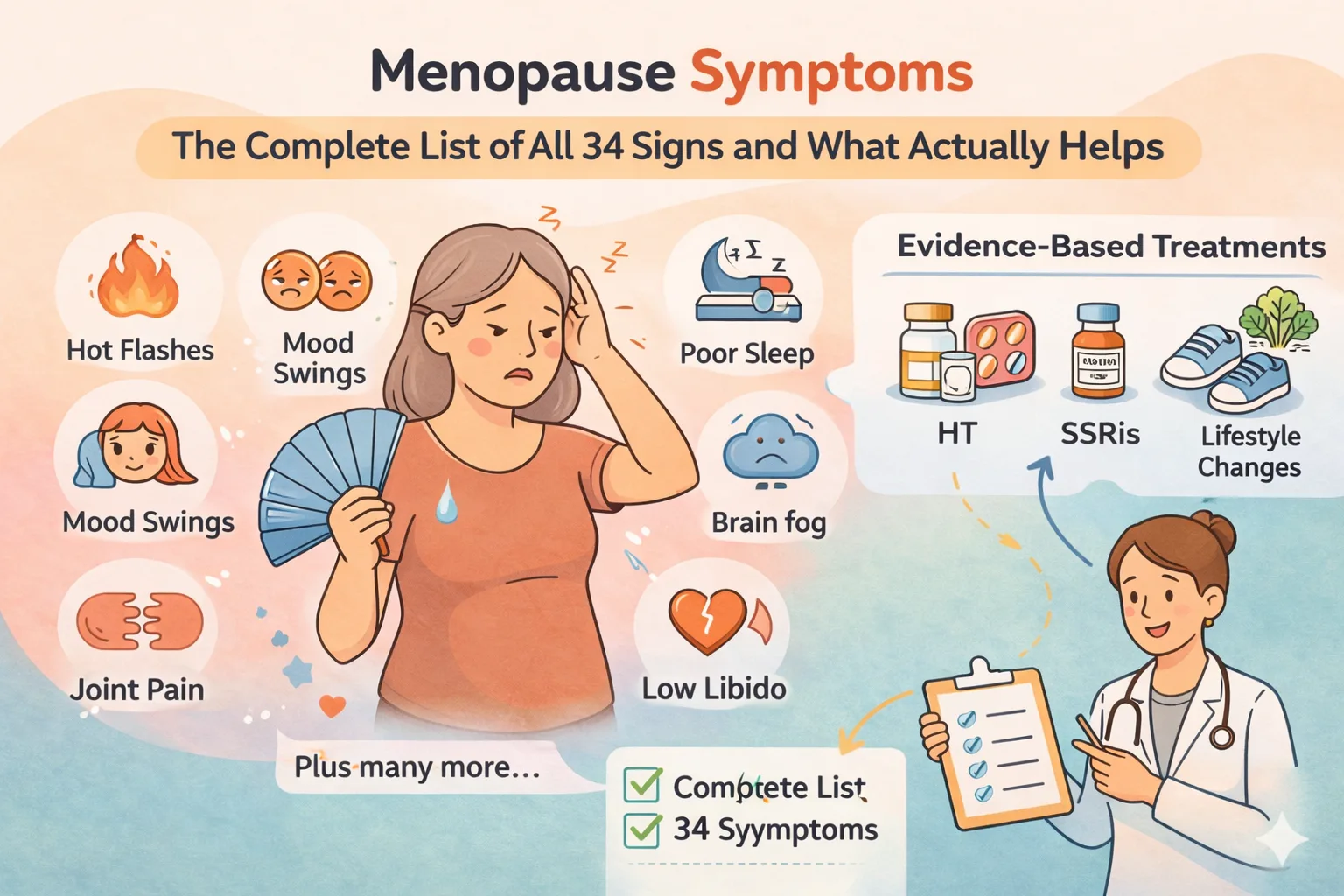
Menopause Symptoms: The Complete List of All 34 Signs and What Actually Helps
Menopause symptoms explained by an OB/GYN — the complete list of all 34 recognised signs, when they start, how long they last, and which treatments have real evidence behind them.
Try Related Tools
Use our source-informed calculators to get helpful insights.
Table of Contents
- Understanding the Menopause Timeline
- The 34 Recognised Symptoms of Menopause
- What Actually Helps: Evidence-Based Treatments
- When to See Your Doctor
- Frequently Asked Questions (FAQ)
- References and Further Reading
Understanding the Menopause Timeline
Perimenopause (also called the menopausal transition) begins when ovarian function starts declining, characterised by:
- Fluctuating and ultimately declining oestrogen levels
- Irregular menstrual cycles
- Rising FSH (follicle-stimulating hormone) as the pituitary works harder to stimulate failing ovaries
Menopause is confirmed retrospectively — defined as 12 consecutive months without menstruation. Average age: 51.
Postmenopause is the phase after menopause. Many symptoms, particularly vasomotor (hot flashes) and genitourinary symptoms, persist and may intensify in the early postmenopausal years before stabilising.
Early menopause refers to menopause occurring between ages 40–45. Premature ovarian insufficiency (POI) describes ovarian failure before age 40, affecting approximately 1% of women.
"Many of my patients are surprised to learn that their symptoms began during perimenopause — sometimes years before their periods stop," says medical experts**. "The 40s are when most women first notice the changes, yet this is also the phase that is most frequently missed or misattributed to stress, depression, or thyroid problems."
The 34 Recognised Symptoms of Menopause
The following symptoms are all associated with perimenopause and menopause. They are driven primarily by declining and fluctuating oestrogen, but also by changes in progesterone, testosterone, and their complex interactions with the nervous system, cardiovascular system, and endocrine system.
Vasomotor Symptoms
1. Hot flashes (hot flushes) The hallmark symptom. A sudden sensation of intense heat spreading from the chest upward to the face and neck, often accompanied by visible flushing, sweating, and a rapid heart rate. Last 1–5 minutes on average. Affect approximately 75–80% of menopausal women.
2. Night sweats Hot flashes that occur during sleep, causing profuse sweating sufficient to soak nightwear and bedding. A primary cause of the chronic sleep disruption of menopause.
3. Cold flashes Less discussed, but real: some women experience sudden sensations of intense cold, shivering, or chills, often following a hot flash as the body's thermal regulation overreacts in the opposite direction.
Menstrual Changes
4. Irregular periods Cycles that vary in length, become shorter or longer, and have unpredictable timing. Typically the earliest sign of perimenopause. May include periods that are heavier or lighter than usual.
5. Heavy periods (menorrhagia) Flooding, clotting, and prolonged periods are common in early perimenopause due to anovulatory cycles (cycles without ovulation), which cause oestrogen dominance with insufficient progesterone to regulate the uterine lining.
6. Skipped periods Cycles may be missed entirely — sometimes for 2–3 months — then resume unpredictably before final cessation.
Sleep and Energy Symptoms
7. Insomnia Difficulty falling asleep, frequent waking, and early morning awakening are all common. The mechanisms include night sweats, declining progesterone (which has sleep-promoting properties), and changes in melatonin regulation.
8. Fatigue A persistent exhaustion disproportionate to activity level, driven by disrupted sleep, hormonal fluctuations, and sometimes anaemia from heavy periods.
9. Sleep apnoea (increased risk) Postmenopausal women have a significantly elevated risk of obstructive sleep apnoea — comparable to men in the same age group — due to hormonal changes affecting upper airway muscle tone.
Psychological and Cognitive Symptoms
10. Mood changes Increased irritability, tearfulness, low mood, and emotional reactivity are commonly reported. The mechanism involves oestrogen's modulatory effects on serotonin and dopamine pathways in the brain.
11. Anxiety New-onset anxiety, or significant worsening of pre-existing anxiety, is one of the most underrecognised menopause symptoms. Oestrogen has anxiolytic (anxiety-reducing) effects; its decline can unmask underlying vulnerability.
12. Depression Risk of clinical depression is elevated during perimenopause. Research from the Study of Women's Health Across the Nation (SWAN) found that perimenopausal women were significantly more likely to report depressive symptoms than premenopausal women, independent of prior history.
13. Brain fog Difficulty concentrating, word-finding problems, memory lapses, and reduced mental clarity. Subjectively very distressing for high-functioning women. Research suggests this is a real, measurable phenomenon — not psychosomatic — associated with declining oestrogen's effects on hippocampal function.
14. Difficulty concentrating Related to brain fog, but distinct in that it involves difficulty maintaining focus over extended periods, particularly for tasks that were previously automatic.
15. Poor memory Specifically, short-term verbal memory — recalling names, words, and recent events — is most commonly affected.
Musculoskeletal and Physical Symptoms
16. Joint pain (arthralgias) Aching, stiffness, and inflammation in the joints — particularly the hands, knees, hips, and shoulders. Oestrogen has anti-inflammatory properties; its decline is directly linked to joint inflammation. This is one of the most common but least discussed menopause symptoms.
17. Muscle aches (myalgias) Generalised muscle soreness and tenderness, particularly upon waking, not attributable to exercise or other causes.
18. Bone density loss In the 5–7 years following menopause, women can lose 10–20% of bone density due to oestrogen's role in regulating osteoclast activity. This is the primary mechanism behind elevated osteoporosis risk postmenopause.
19. Weight changes Specifically, a redistribution of body fat from the hips and thighs (gynoid distribution) to the abdomen (android distribution), driven by declining oestrogen and age-related changes in metabolism. Metabolic rate also decreases.
20. Changes in body odour Reported by many women as a distinct change in their personal scent, attributed to hormonal influences on skin bacteria and sweat composition.
Genitourinary Symptoms
21. Vaginal dryness Thinning and loss of lubrication of the vaginal walls (vaginal atrophy or GSM — genitourinary syndrome of menopause), caused directly by declining oestrogen. Affects up to 50% of postmenopausal women.
22. Painful intercourse (dyspareunia) A direct consequence of vaginal atrophy — the thinned, drier vaginal tissue is more susceptible to microtrauma and pain during intercourse.
23. Urinary urgency and frequency Declining oestrogen affects the urethra and bladder lining, reducing their resilience and increasing urgency, frequency, and susceptibility to infection.
24. Recurrent urinary tract infections (UTIs) Postmenopausal women experience a significantly elevated rate of UTIs due to the thinning of the urethral and bladder epithelium and changes in the vaginal microbiome.
25. Reduced libido Decreased sexual desire is multifactorial: declining testosterone (produced in part by the ovaries), vaginal dryness causing pain, disrupted sleep, mood changes, and changed body image all contribute.
Skin, Hair, and Sensory Symptoms
26. Dry or itchy skin Oestrogen stimulates collagen production and skin hydration. Its decline causes measurable reductions in skin thickness, collagen density, and moisture retention.
27. Hair thinning or loss Androgenic alopecia worsens postmenopause as the testosterone-to-oestrogen ratio shifts. Some women also experience diffuse hair thinning.
28. Brittle nails Related to skin changes; nails may become more fragile and prone to breaking.
29. Tingling or numbness (paraesthesia) Tingling, burning, or numb sensations in the extremities, reported by a significant minority of women. The mechanism involves oestrogen's role in nerve insulation and peripheral nerve function.
30. Electric shock sensation A distinct but peculiar symptom — a brief, wave-like electrical sensation, often in the head or through the body, sometimes preceding a hot flash.
31. Tinnitus Ringing or buzzing in the ears. Reported more frequently in perimenopausal and postmenopausal women; thought to relate to oestrogen's effects on inner ear blood flow and neurotransmission.
32. Burning mouth syndrome A persistent burning sensation in the mouth, tongue, or lips. Rare but real; directly associated with oestrogen withdrawal's effects on oral mucosa nerve function.
Cardiovascular and Digestive
33. Heart palpitations Awareness of the heartbeat — racing, fluttering, or skipping — often associated with hot flashes. Oestrogen has direct effects on cardiac electrical conduction; its withdrawal destabilises this.
34. Digestive changes Bloating, increased flatulence, constipation or loose stools, and nausea — reported by many perimenopausal women. The mechanism involves oestrogen's influence on gut motility and the gut microbiome.
What Actually Helps: Evidence-Based Treatments
Hormone Replacement Therapy (HRT)
HRT remains the most effective treatment for the majority of menopause symptoms, particularly vasomotor and genitourinary symptoms.
The updated evidence: The WHI (Women's Health Initiative) study in 2002 created enormous, partially unwarranted fear about HRT. Subsequent analysis and newer formulations (body-identical oestrogen, micronised progesterone) have substantially changed the risk-benefit picture. Current guidance from the British Menopause Society, NICE, and ACOG positions HRT as appropriate and beneficial for most healthy women under 60 within 10 years of menopause onset.
Types of HRT:
- Systemic HRT (patches, gels, tablets, sprays): addresses vasomotor, mood, cognitive, joint, and skin symptoms
- Vaginal oestrogen (cream, pessary, ring): addresses genitourinary symptoms specifically; systemic absorption is minimal and it is considered safe even for women who cannot use systemic HRT
- Micronised progesterone (Utrogestan): the preferred progestogen for women with a uterus; superior safety profile to synthetic progestogens
Risks: Discuss your individual risk profile with your doctor. HRT carries a small increased risk of VTE (blood clots) with oral preparations (not with transdermal); breast cancer risk with combined HRT after 5+ years is approximately equivalent to the risk associated with 1–2 units of alcohol per day — context matters.
Non-Hormonal Treatments for Vasomotor Symptoms
For women who cannot or choose not to use HRT:
- SSRIs/SNRIs (paroxetine, venlafaxine, escitalopram): reduce hot flash frequency by 50-60%. First-line non-hormonal pharmacological option.
- Gabapentin: effective for hot flashes, particularly nocturnal ones. Useful when night sweats are the dominant complaint.
- Fezolinetant (Veoza, 2023): a new NK3 receptor antagonist — the first non-hormonal medication specifically approved for vasomotor symptoms. Highly effective with rapid onset.
- Oxybutynin: has shown moderate efficacy for hot flashes in clinical trials.
Lifestyle Measures
While lifestyle changes rarely eliminate moderate-to-severe symptoms, they reduce severity and improve overall resilience:
- Regular aerobic exercise: consistently reduces hot flash frequency and severity; improves mood, sleep, and bone density
- Cooling strategies: layered clothing, breathable bedding, bedside fan, cooling mattress pads
- Reducing triggers: alcohol, caffeine, spicy food, and stress all trigger vasomotor symptoms
- CBT (Cognitive Behavioural Therapy): NICE-recommended for mood symptoms and management of hot flash distress; evidence base is solid
- Mindfulness: demonstrates significant benefit for mood, anxiety, and sleep quality in multiple trials
For Genitourinary Symptoms
- Vaginal oestrogen (most effective — use long-term)
- Lubricants for immediate relief during intercourse (silicone-based are longer-lasting; water-based for use with latex products)
- Vaginal moisturisers used regularly (every 2–3 days) for baseline comfort
- Ospemifene (oral SERM): effective for dyspareunia without stimulating breast tissue
- Pelvic floor physiotherapy: addresses bladder urgency and continence alongside vaginal changes
For Bone Health
- Weight-bearing and resistance exercise (most effective lifestyle measure)
- Calcium (1000–1200 mg daily from food and supplements combined)
- Vitamin D (800–1000 IU daily minimum; higher if deficient)
- HRT: the most effective prevention of early postmenopausal bone loss
- Bisphosphonates (alendronate, risedronate): first-line medication for osteoporosis; not needed if HRT is being used
When to See Your Doctor
Seek an appointment if:
- You have symptoms consistent with perimenopause and want to discuss treatment options
- Your symptoms are significantly impacting your quality of life
- You have had a period after 12 months of no periods (postmenopausal bleeding must always be investigated)
- You are under 45 and experiencing menopause symptoms (earlier evaluation and treatment is particularly important)
- You are under 40 (this requires investigation for premature ovarian insufficiency)
- You are on HRT and want a review
Frequently Asked Questions (FAQ)
Q: How do I know if I am in perimenopause or just stressed? A: The key indicator is changes in your menstrual cycle alongside other symptoms. Perimenopause is associated with irregular periods, cycles that shorten then lengthen, and clusters of the symptoms described above. A blood test measuring FSH and oestradiol can provide information, but levels fluctuate significantly during perimenopause and are not definitive on their own. A clinical assessment by a menopause-knowledgeable doctor, combining your symptom history with any blood test findings, is the most reliable approach.
Q: At what age do menopause symptoms start? A: Perimenopausal symptoms most commonly begin between ages 45 and 50, though some women notice changes from their early to mid-40s. In the UK, the average age of the final period is 51. However, approximately 5% of women experience early menopause (40–45) and 1% experience premature ovarian insufficiency (before 40).
Q: Is HRT safe? A: For most healthy women under 60 who are within 10 years of menopause onset and have no specific contraindications (oestrogen-sensitive cancers, active VTE, uncontrolled cardiovascular disease), the benefits of HRT substantially outweigh the risks. The updated evidence — particularly for body-identical, transdermal oestrogen with micronised progesterone — shows a more favourable risk profile than the older synthetic preparations that dominated the original WHI data. This is a conversation to have with your specific doctor based on your personal and family history.
Q: How long do menopause symptoms last? A: Vasomotor symptoms (hot flashes and night sweats) last on average 7 years from the onset of perimenopause, and 4–5 years from the final period. However, approximately 15–20% of women continue to experience hot flashes into their 60s. Genitourinary symptoms (vaginal dryness, urinary changes) do not resolve without treatment and may worsen over time. Bone loss is ongoing throughout the early postmenopausal years.
Q: Can menopause cause depression? A: Yes. Perimenopause significantly increases the risk of clinical depression, independent of prior history. This is not simply a psychological response to life changes — it has a neurobiological basis related to oestrogen's effects on serotonin and dopamine systems. Women with a history of premenstrual dysphoric disorder (PMDD) or postnatal depression are at particularly elevated risk. Effective treatments include antidepressants, CBT, and HRT (which addresses the underlying hormonal driver).
Q: What are the first signs of menopause to watch for? A: For most women, the earliest signs are changes in the menstrual cycle — periods becoming shorter, longer, heavier, lighter, or less predictable. Alongside this, many women notice subtle mood changes, increased anxiety, worsening PMS, or disturbed sleep before other classic symptoms like hot flashes appear. Some women experience joint pain or palpitations early in the transition before recognising these as menopause-related.
Q: Does menopause affect the heart? A: Yes. Oestrogen has significant cardioprotective effects on the cardiovascular system — maintaining blood vessel flexibility, modulating cholesterol levels, and reducing inflammation. After menopause, cardiovascular risk rises substantially and women eventually reach the same cardiovascular risk profile as men of the same age. HRT started within 10 years of menopause (the "timing hypothesis") may have a cardioprotective effect; starting HRT more than 10 years after menopause or after age 60 does not carry the same benefit.
Q: Can perimenopause cause weight gain? A: Perimenopause is associated with a redistribution of body fat toward the abdomen rather than simple total weight gain, though both can occur. Declining oestrogen shifts fat storage from the peripheral (hips, thighs) to central (abdominal) pattern, which carries higher cardiovascular and metabolic risk. Age-related decline in muscle mass (sarcopenia) also reduces metabolic rate. Resistance training is the most effective strategy for maintaining muscle mass and moderating weight change during this transition.
References and Further Reading
-
British Menopause Society — Benefits and risks of HRT:
https://thebms.org.uk/education/principles-practice-of-menopause-care/bms-ppmc-resources-toolkit/what-are-the-benefits-and-risks-of-hrt/ -
NICE Guideline NG23 — Menopause: Diagnosis and Management (2019 update):
https://www.nice.org.uk/guidance/ng23 -
SWAN Study — Study of Women's Health Across the Nation:
https://www.swanstudy.org -
Menopause Society (formerly NAMS) — Position Statement:
https://menopause.org/professional-resources/position-statements -
What are the 34 symptoms - Medical News Today:
https://www.medicalnewstoday.com/articles/what-are-the-34-symptoms-of-menopause
Medical Disclaimer
This article is for informational and educational purposes only. It does not constitute medical advice, diagnosis, or treatment. Menopause management is highly individual — what is appropriate for one woman may not be appropriate for another. Always discuss your symptoms, medical history, and treatment options with a qualified healthcare provider, ideally one with specific expertise in menopause. Postmenopausal bleeding requires urgent investigation and should never be attributed to menopause without professional evaluation.
About the Author
Abhilasha Mishra is a health and wellness writer specializing in women's health, hormonal transitions, and reproductive medicine. She writes to empower women at every stage of life with evidence-based, clearly communicated health information.