
Male Fertility: How to Improve Sperm Count Naturally (Evidence-Based Guide)
How to improve sperm count naturally — an OB/GYN-reviewed guide covering diet, lifestyle, supplements, and medical steps that genuinely move the needle on male fertility.
Try Related Tools
Use our source-informed calculators to get helpful insights.
Table of Contents
- Understanding Male Fertility: What the Numbers Mean
- Lifestyle Factors That Damage Sperm (and How to Reverse Them)
- Diet and Nutrition for Sperm Quality
- Foods That Support Sperm Quality
- Exercise and Weight
- Stress and Sleep
- Environmental Toxins and Endocrine Disruptors
- When to See a Specialist
- A Practical 3-Month Plan to Improve Sperm Quality
- Frequently Asked Questions (FAQ)
- References and Further Reading
Understanding Male Fertility: What the Numbers Mean
Before discussing improvements, it helps to understand what a semen analysis measures and what the normal ranges are (per WHO 2021 reference criteria):
| Parameter | WHO Reference Value |
|---|---|
| Semen volume | ≥ 1.4 mL |
| Total sperm count | ≥ 39 million per ejaculate |
| Sperm concentration | ≥ 16 million per mL |
| Total motility | ≥ 42% motile sperm |
| Progressive motility | ≥ 30% |
| Sperm morphology (Kruger) | ≥ 4% normal forms |
A result below these thresholds does not mean infertility is inevitable — many men with borderline results conceive naturally. But it does signal areas for improvement.
"When I see a couple who have been trying for more than six months without success, I always recommend a semen analysis alongside female fertility investigations," says medical experts**. "Male factor is consistently underdiagnosed simply because the testing is not routinely initiated early enough."
Lifestyle Factors That Damage Sperm (and How to Reverse Them)
1. Heat Exposure
The testes are located outside the body for a reason: optimal sperm production requires a temperature 2–3°C below core body temperature (approximately 34–35°C). Chronic heat exposure is one of the most well-documented suppressors of sperm production.
Sources of problematic heat:
- Hot baths and Jacuzzis (repeated exposure, not occasional)
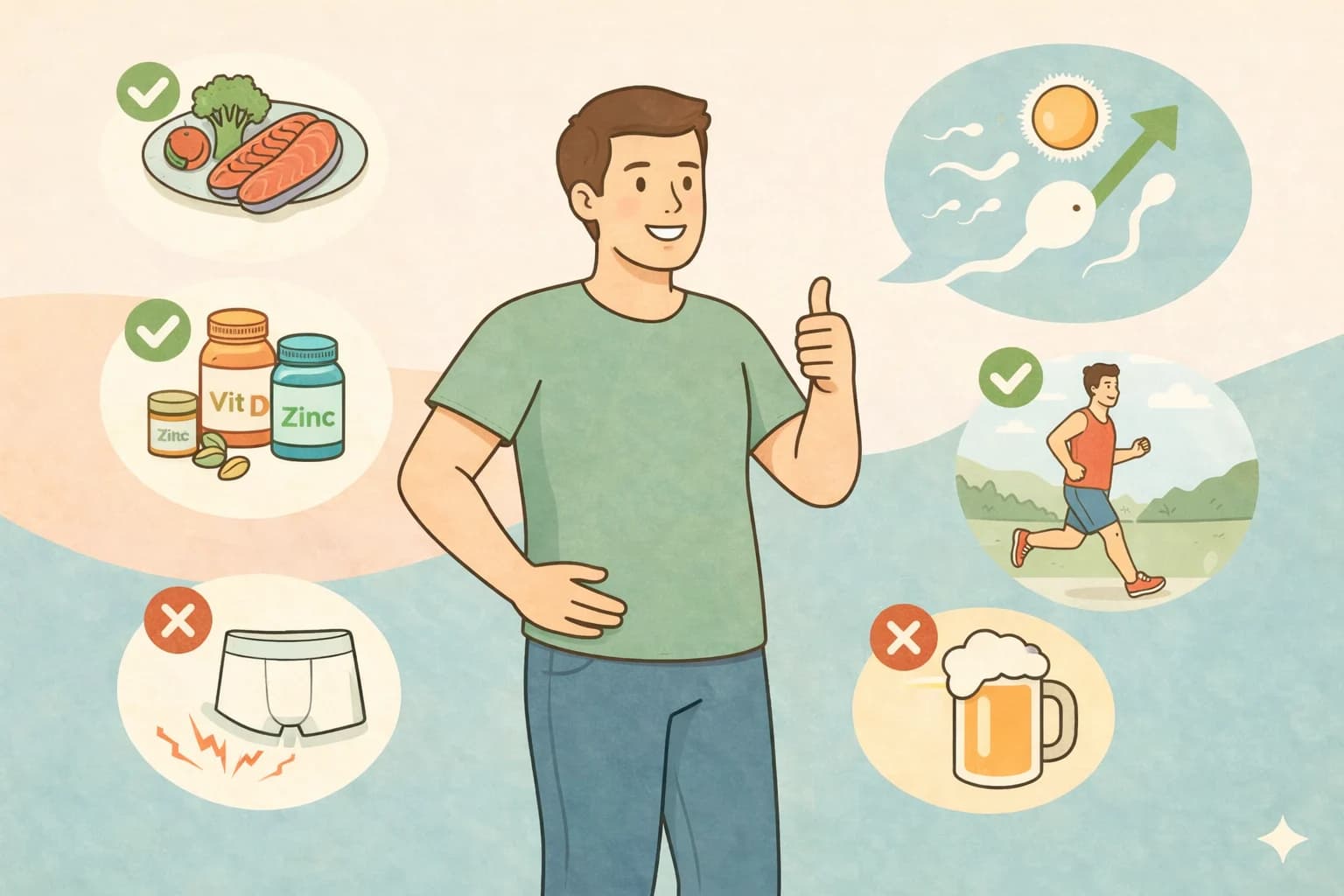
- Tight underwear (briefs versus boxers — evidence is modest but the mechanism is sound)
- Laptop computers resting directly on the lap
- Heated car seats used daily
- Occupational heat exposure (bakeries, foundries, prolonged driving)
What to do: Switch to loose-fitting underwear, avoid prolonged hot bath or sauna use (occasional is acceptable), and avoid resting laptops directly on the groin. The effect of heat is reversible — sperm quality typically improves within one full spermatogenesis cycle (approximately 74 days) of reducing exposure.
2. Smoking
The evidence linking cigarette smoking to impaired sperm quality is substantial and consistent. Smoking is associated with:
- Reduced sperm concentration (typically 10–17% lower in smokers)
- Reduced sperm motility
- Increased DNA fragmentation in sperm
- Increased abnormal morphology
The good news: sperm DNA damage from smoking is largely reversible after cessation. Studies show measurable improvement within 3–6 months of stopping.
3. Alcohol
Moderate-to-heavy alcohol consumption consistently shows negative effects on sperm quality. Alcohol is metabolised to acetaldehyde, which is directly toxic to the Leydig cells in the testes that produce testosterone.
Effects include:
- Reduced testosterone levels
- Reduced sperm production (oligospermia)
- Increased abnormal sperm morphology
Light, occasional drinking has a much smaller effect. Abstaining from alcohol or reducing to fewer than 3–4 units per week during the preconception period is a reasonable target.
4. Anabolic Steroids and Testosterone Therapy
Exogenous testosterone — whether prescribed therapeutically or used for muscle building — profoundly suppresses the body's own testosterone production via negative feedback on the hypothalamic-pituitary axis. The result is often severe oligospermia (very low sperm count) or even azoospermia (no sperm in the ejaculate).
If you are taking testosterone in any form and trying to conceive, speak to a urologist or reproductive endocrinologist immediately. Recovery of sperm production after stopping testosterone is possible but can take 6 months to over 2 years.
5. Recreational Drugs
- Marijuana (cannabis): Consistently associated with reduced sperm count, impaired motility, and altered morphology. THC is lipophilic and accumulates in testicular tissue.
- Cocaine: Associated with reduced motility and abnormal morphology.
- Opioids: Associated with reduced testosterone and suppressed sperm production.
Diet and Nutrition for Sperm Quality
The Antioxidant Principle
Sperm are uniquely vulnerable to oxidative stress — damage caused by reactive oxygen species (free radicals). Sperm cells have very little cytoplasm and therefore very limited antioxidant defences of their own. A diet rich in antioxidants provides the external defence system sperm cannot build for themselves.
Key Nutrients and Their Evidence
Zinc Zinc is arguably the most important mineral for male fertility. It is essential for testosterone production, sperm formation, and the integrity of sperm DNA.
- Evidence: Multiple studies show that zinc supplementation significantly improves sperm count, motility, and morphology in men with low zinc levels.
- Best food sources: Oysters (highest concentration of any food), red meat, pumpkin seeds, chickpeas, cashews, dairy.
- Supplement dose: 25–66 mg daily (consult a provider; excess zinc inhibits copper absorption).
Folate (Vitamin B9) Folate is not only important for women in pregnancy — it is also critical for sperm DNA integrity in men. Low folate is associated with increased sperm DNA fragmentation.
- Evidence: A landmark 2002 study found that supplementing with folic acid and zinc together significantly increased total sperm count.
- Best food sources: Dark leafy greens, legumes, fortified cereals, avocado.
- Supplement dose: 400–1000 mcg daily.
Vitamin C Vitamin C is a potent antioxidant that directly protects sperm from oxidative damage and has been shown to increase sperm count and motility.
- Evidence: A 2016 clinical trial found that vitamin C supplementation significantly improved sperm count, motility, and morphology in men with infertility.
- Best food sources: Bell peppers, kiwi, citrus fruits, strawberries, broccoli.
- Supplement dose: 500–1000 mg daily.
Vitamin D Vitamin D receptors are present in testicular cells. Deficiency is associated with lower testosterone levels and impaired sperm motility.
- Evidence: A systematic review found significant associations between vitamin D levels and sperm motility. Deficiency is common, particularly in populations with limited sun exposure.
- Best sources: Sun exposure, fatty fish (salmon, mackerel), egg yolks, fortified foods.
- Supplement dose: 1000–2000 IU daily (check levels first; optimal levels are 40-60 ng/mL).
Omega-3 Fatty Acids (DHA) The sperm cell membrane requires high concentrations of DHA to maintain flexibility and enable proper movement. DHA is also critical for the structure of the sperm tail.
- Evidence: Multiple studies show that omega-3 supplementation improves sperm motility, morphology, and count.
- Best food sources: Fatty fish (salmon, sardines, mackerel), walnuts, flaxseed.
- Supplement dose: 1000–2000 mg fish oil daily, or algae-based DHA for vegetarians.
CoQ10 (Coenzyme Q10) CoQ10 is both an antioxidant and a critical component of the cellular energy production system in the sperm midpiece (the engine that powers the sperm's tail). CoQ10 declines with age.
- Evidence: A 2012 Cochrane-cited review found that CoQ10 supplementation significantly improved sperm concentration, motility, and morphology.
- Supplement dose: 200-600 mg daily.
Selenium Selenium is incorporated directly into selenoprotein P in sperm and is essential for sperm motility and normal morphology.
- Best food sources: Brazil nuts (just 1–2 per day provides adequate selenium), tuna, eggs, sunflower seeds.
- Supplement dose: 55–200 mcg daily (do not exceed 400 mcg — selenium toxicity is possible).
Foods That Support Sperm Quality
A Mediterranean-style diet pattern is consistently associated with better sperm quality in population studies.
Eat more of:
- Colourful vegetables and fruits (antioxidant load)
- Nuts — especially walnuts (rich in omega-3, antioxidants, and folate)
- Fatty fish (salmon, sardines, mackerel)
- Legumes (chickpeas, lentils, beans)
- Whole grains
- Extra virgin olive oil
- Eggs (DHA, selenium, zinc)
- Dark chocolate (70%+ cacao — flavonoids and antioxidants)
Reduce or eliminate:
- Processed meats (hot dogs, bacon, sausages) — associated with lower sperm morphology in multiple studies
- Trans fats (partially hydrogenated oils, found in many processed snacks and fast food)
- High-sugar beverages — sweetened drinks are associated with reduced motility
- Soy in very high amounts (phytoestrogens may modestly suppress testosterone in very high consumption; normal soy consumption is likely fine)
Exercise and Weight
Healthy Weight
Obesity is associated with significantly impaired sperm quality through multiple mechanisms: elevated scrotal temperature (fat deposits around the groin raise local temperature), increased aromatase activity (converting testosterone to estrogen), and systemic inflammation.
Men who are significantly overweight consistently show lower testosterone levels, reduced sperm count, and poorer motility compared to men of healthy weight. Weight loss through diet and exercise produces measurable improvements in semen parameters.
Exercise
Regular moderate exercise supports healthy testosterone levels and reduces systemic inflammation. Resistance training (weight lifting) and aerobic exercise have both been associated with improvements in sperm quality.
The important caveat: Excessive endurance training (marathon running, ultra-endurance cycling) can actually suppress testosterone and impair sperm production. Cycling specifically deserves mention — prolonged pressure from a bicycle saddle on the perineum restricts blood flow to the testes and raises scrotal temperature. Men who cycle many hours per week should use a properly fitted, ergonomic seat and consider breaks from cycling during active conception attempts.
Stress and Sleep
Chronic stress elevates cortisol, which directly suppresses the hypothalamic-pituitary-gonadal axis — the hormonal pathway that drives testosterone production and sperm development. Men reporting high chronic stress consistently show lower sperm quality in studies.
Sleep deprivation (consistently under 6 hours per night) is associated with lower testosterone, higher rates of DNA-fragmented sperm, and impaired overall semen quality. The majority of daily testosterone production occurs during deep (slow-wave) sleep.
Practical steps: aim for 7–9 hours of sleep per night. Manage stress through exercise, reduced caffeine, and mind-body practices if chronic stress is a factor.
Environmental Toxins and Endocrine Disruptors
Certain environmental chemicals — endocrine-disrupting compounds (EDCs) — mimic estrogen in the body and can suppress testosterone and sperm production. Common sources include:
- BPA (bisphenol A): Found in some plastic food containers, canned food linings, thermal paper receipts. Use glass or stainless steel containers where possible.
- Phthalates: Found in flexible plastics, personal care products with synthetic fragrance. Choose fragrance-free or naturally fragranced personal care products.
- Pesticide residues: Wash produce thoroughly; consider organic options for high-pesticide crops.
- Heavy metals: Occupational exposure to lead, cadmium, and mercury is associated with impaired spermatogenesis. Follow workplace safety guidelines if in a high-exposure industry.
When to See a Specialist
Natural optimisation strategies take a minimum of 3 months to show measurable effect (one full spermatogenesis cycle). However, do not delay medical evaluation if:
- You have been trying to conceive for 12 months with regular intercourse (or 6 months if your partner is over 35)
- You have a known history of undescended testes, testicular surgery, or orchitis
- You have had sexually transmitted infections (particularly chlamydia or gonorrhoea, which can affect the epididymis and vas deferens)
- You have varicocele (varicose veins of the scrotum — the most common surgically correctable cause of male infertility)
- You are experiencing erectile dysfunction or ejaculatory problems
- A semen analysis has already shown azoospermia (no sperm present)
A urologist or andrologist can perform a full evaluation including semen analysis, hormonal panel (FSH, LH, testosterone, prolactin), testicular ultrasound, and genetic testing where indicated.
A Practical 3-Month Plan to Improve Sperm Quality
| Month | Focus Areas |
|---|---|
| Month 1 | Stop smoking. Reduce alcohol significantly. Start zinc, folic acid, vitamin C, vitamin D. Switch to boxers. Eliminate laptop from lap. |
| Month 2 | Optimise diet: Mediterranean pattern. Add CoQ10 and omega-3. Begin regular moderate exercise. Prioritise 7–9 hours sleep. |
| Month 3 | Reduce environmental toxin exposure. Manage stress actively. Continue all supplements. Book semen analysis to establish a baseline or recheck. |
Frequently Asked Questions (FAQ)
Q: How long does it take to improve sperm count naturally? A: The full cycle of sperm production (spermatogenesis) takes approximately 72–74 days. This means any changes made today — in diet, lifestyle, or supplementation — will be reflected in sperm quality roughly 2.5 to 3 months later. This is why a 3-month commitment is the minimum meaningful timeframe for assessing improvement.
Q: Does wearing tight underwear actually affect sperm count? A: The evidence is modest but biologically plausible. The mechanism is genuine — tight underwear holds the testes closer to the body, marginally increasing scrotal temperature. A 2018 Harvard study found that men who wore boxers had significantly higher sperm concentrations than men who wore tight underwear. Switching to boxers is low-cost and low-risk.
Q: Can stress alone cause low sperm count? A: Chronic, sustained stress — through elevated cortisol — suppresses the hormonal axis that drives testosterone production and spermatogenesis. The effect is real but typically modest compared to factors like smoking, heat exposure, or obesity. Addressing stress is part of an overall optimisation strategy, not a standalone solution.
Q: Is a low sperm count the same as infertility? A: No. Oligospermia (low sperm count) reduces the probability of conception in any given cycle but does not make natural conception impossible. Many men with low counts successfully conceive naturally, particularly if sperm motility and morphology are relatively preserved. The degree of deficit matters.
Q: Are sperm supplements worth taking? A: For men with documented nutritional deficiencies or poor sperm parameters, supplementation with zinc, folic acid, vitamin C, vitamin D, CoQ10, and omega-3 has credible evidence of benefit. These are not magic solutions, but they address genuine biological requirements for sperm production. Combined supplementation alongside lifestyle improvements is the most evidence-based approach.
Q: Can a varicocele be treated without surgery? A: Varicocele (varicose veins of the scrotum) is the most common correctable cause of male infertility. Surgical treatment (varicocelectomy) or radiological embolisation can improve sperm parameters in many men with clinical varicocele. Non-surgical options are less effective. If a varicocele is found on examination, referral to a urologist is appropriate.
Q: Does hot water exposure really affect sperm? A: Yes. A single exposure to a Jacuzzi or hot bath is unlikely to cause lasting damage, but regular exposure raises scrotal temperature persistently enough to impair spermatogenesis. Studies have shown temporary reduction in sperm parameters in men who regularly use hot tubs. The effect reverses after cessation.
Q: My partner and I have been trying for over a year. Should I get a semen analysis? A: Yes, absolutely. A semen analysis is the single most important first step in male fertility evaluation. It is non-invasive, widely available, and inexpensive compared to other fertility investigations. Given that male factor accounts for half of infertility cases, waiting to investigate it is an unnecessary delay.
References and Further Reading
-
WHO Laboratory Manual for the Examination and Processing of Human Semen (6th Ed., 2021):
https://www.who.int/publications/b/59107 -
American Society for Reproductive Medicine — Male Infertility:
https://www.reproductivefacts.org/browse-resources/sart-fertility-experts/sart-fertility-experts-complimentary-and-integrative-medicine-in-reproductive-care-and-infertility-treatment/ -
Agarwal A et al. — A Unique View on Male Infertility Around the Globe (Reproductive Biology and Endocrinology, 2015):
https://pubmed.ncbi.nlm.nih.gov/26198129/ -
Nassan FL et al. — Diet and Men's Fertility (Fertility and Sterility, 2018):
https://pubmed.ncbi.nlm.nih.gov/29935686/ -
Salas-Huetos A et al. — Dietary Patterns, Foods and Nutrients in Male Fertility Parameters (Human Reproduction Update, 2017):
https://pubmed.ncbi.nlm.nih.gov/28531238/
Medical Disclaimer
This article is for informational and educational purposes only. It does not constitute medical advice, diagnosis, or treatment. Male fertility concerns require individual medical evaluation. If you are concerned about sperm quality or have been unable to conceive, please consult a qualified urologist, andrologist, or reproductive medicine specialist for a personalised assessment and treatment plan.
About the Author
Abhilasha Mishra is a health and wellness writer specializing in women's health, fertility, and reproductive medicine. Her work is grounded in evidence-based research and written to ensure that both partners in the conception journey feel informed, supported, and empowered.