
How to Teach Toddlers Colors, Shapes, and ABCs (Daily Routines)
A warm, practical guide to helping toddlers learn colors, shapes, and early letters through everyday routines, play, and natural interactions instead of pressure or drills.
Try Related Tools
Use our source-informed calculators to get helpful insights.
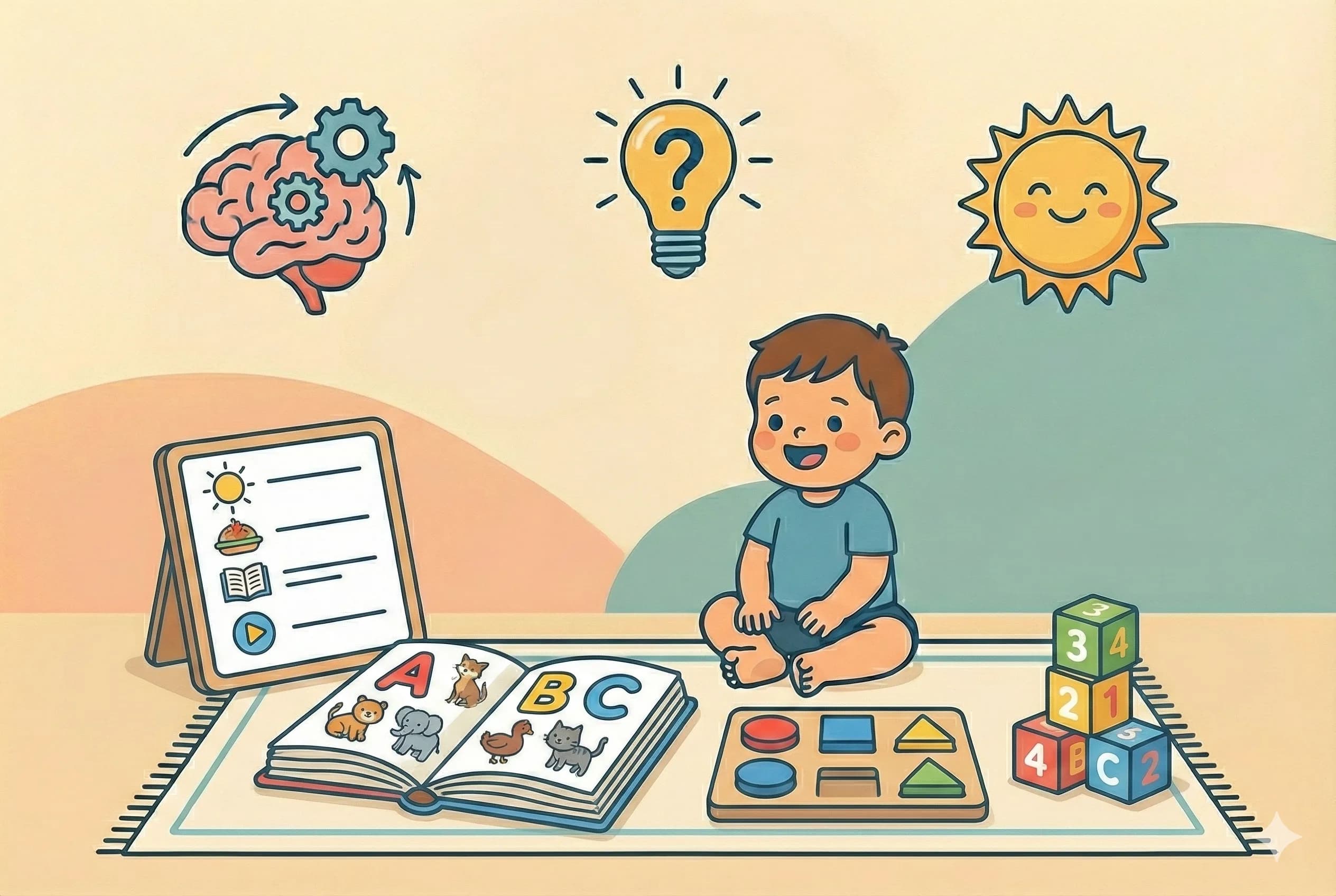
Teaching a toddler colors, shapes, and early letters does not need to be formal or stressful. In fact, many child development experts explain that toddlers learn best through everyday routines, repetition, and natural curiosity. When learning feels like a warm conversation instead of a lesson, a toddler’s brain absorbs information more easily and joyfully.
If you have ever wondered whether you are doing enough to support your child’s early learning, take a deep breath. You are likely doing more than you think. The small moments during bath time, snack time, grocery shopping, and playtime create rich opportunities for learning without pressure.
In this guide, you will find simple ways to teach colors, shapes, and ABCs throughout the day. No worksheets are required. These ideas blend beautifully with Montessori principles and gentle parenting approaches. For families who want additional tools, you will also find creative Amazon search links using your affiliate tag.
Table of Contents
- Why Toddlers Learn Best Through Daily Routines
- How to Teach Colors Naturally
- How to Teach Shapes Through Play
- How to Introduce ABCs Gently
- Daily Routine Examples
- Tips to Keep Learning Joyful
- Creative Household Learning Activities
- When to Be Concerned
- Frequently Asked Questions (FAQ)
- 1. When should toddlers know colors?
- 2. Should I correct my toddler when they name a color wrong?
- 3. How long should learning activities be?
- 4. When should I start teaching ABCs?
- 5. What if my toddler refuses learning activities?
- 6. Can screens help teach colors or letters?
- 7. What is the easiest shape to teach?
- 8. Do bilingual toddlers learn slower?
- References and Further Reading
- Medical Disclaimer
- About the Author
Why Toddlers Learn Best Through Daily Routines
Many doctors recommend learning through daily experiences because it supports:
Natural repetition
Toddlers hear and see the same labels multiple times across familiar settings. This strengthens memory and language.
Real-world context
A “yellow banana” or a “round plate” is easier to understand than a picture on a card.
Emotional safety
Toddlers learn more when they feel connected and relaxed. Warm interactions encourage confidence.
Hands-on exploration
Toddlers understand concepts better when they can touch, move, sort, and compare.
Developmentally appropriate pacing
Learning unfolds slowly and gently, without rushing or testing.
How to Teach Colors Naturally
No drills, just daily life
1. Name colors during everyday tasks
When getting dressed:
“You picked your red socks.”
During snack time:
“Here is your green cucumber.”
Short, simple phrases work best.
2. Offer color sorting baskets
Use bowls or baskets for sorting toys, socks, or blocks.
This promotes both color recognition and fine motor skills.
3. Use bath time
Colored cups or bath crayons are fantastic for naming colors in a playful way.
4. Outside walks
Point out flowers, leaves, cars, and birds. Nature offers endless color variation.
Helpful Amazon searches
Browse toddler color sorting toys
How to Teach Shapes Through Play
Toddlers understand shapes best through touch and real-world experiences.
1. Use kitchen tools
Plates (circle), napkins (square), placemats (rectangle).
Name the shapes as you use them.
2. Play with blocks
Blocks introduce cubes, cylinders, and rectangular prisms in a natural way.
3. Shape hunts around the house
“Let’s find something shaped like a triangle.”
Toddlers love this because it feels like a game.
4. Use snack time
Crackers, apple slices, sandwiches, and fruit can be cut into shapes for fun learning.
Helpful Amazon searches
How to Introduce ABCs Gently
Focus on exposure, not memorization
Experts often explain that toddlers learn early literacy skills through sounds, rhythm, and repetition. Recognizing letters is only one part of early literacy.
1. Start with your child's name
This is usually the most meaningful word to them.
Show them the first letter often.
Say:
“Your name starts with S. This is S.”
2. Use alphabet books during calm moments
Point to letters slowly, without pressure to repeat.
3. Sing alphabet songs
Songs help toddlers internalize the rhythm of letters long before they identify them visually.
4. Label familiar items
Use simple labels around the house like “Door,” “Cup,” “Table.”
Toddlers begin connecting symbols with meaning.
5. Keep expectations age appropriate
Most toddlers do not master ABC recognition before age three.
Focus on exposure, not performance.
Helpful Amazon searches
Browse alphabet books for toddlers
Browse ABC flashcards for toddlers
Daily Routine Examples
Practical scripts and ideas you can use immediately
Morning Routine
While getting dressed:
“You chose your blue shirt. Blue.”
“These are your round buttons.”
Breakfast time:
“This toast is square. Your banana is yellow.”
Grocery Store Routine
Colors everywhere:
“Look at the red apples.”
Shapes on packaging:
“This cereal box is a rectangle.”
Bath Time Routine
Use cups, sponges, and toys:
“This cup is tall. This one is short.”
“This soap is white.”
Outdoor Routine
Point to shapes in nature:
“The sun looks like a circle.”
“This leaf is shaped like an oval.”
Bedtime Routine
Use soft learning:
Read alphabet books.
Talk about colors in illustrations.
Name shapes of objects on the last page.
Tips to Keep Learning Joyful
Follow their lead
If your toddler is interested in circles today, stay with circles.
Curiosity guides learning beautifully.
Use short phrases
Long explanations overwhelm toddlers. Simple statements stick better.
Avoid testing
Instead of asking “What color is this?”, try “This is green.”
Testing can create stress.
Praise effort, not accuracy
“I love how you noticed that shape.”
This encourages confidence and curiosity.
Rotate toys to avoid boredom
A simple basket of blocks, crayons, and puzzles offers plenty of stimulation.
Creative Household Learning Activities
1. Muffin Tin Color Sort
Use colored paper inside each space.
Your toddler drops matching objects inside.
2. Shape Snack Tray
Use different cutters to make food in shapes.
3. Color or Shape Scavenger Hunt
Give your toddler a small basket and encourage them to find objects of one color or shape.
4. Alphabet Treasure Basket
Fill a basket with objects starting with one letter.
5. Rainbow Water Pouring
Add a drop of food coloring to water and let them pour between containers.
Helpful Amazon searches
Browse Montessori learning toys
Browse toddler fine motor kits
When to Be Concerned
According to many pediatric guidelines, you may want to talk to your doctor if your toddler:
- Shows little interest in objects or books
- Avoids eye contact or interaction
- Has difficulty following simple directions after age two
- Shows no interest in naming or pointing by age two
- Loses skills previously gained
Early guidance helps support development with confidence and clarity.
Frequently Asked Questions (FAQ)
1. When should toddlers know colors?
Many toddlers begin noticing colors around 18 to 24 months, but full color naming often happens closer to age three.
2. Should I correct my toddler when they name a color wrong?
Correct gently. Say, “This is actually blue.” No pressure.
3. How long should learning activities be?
Short sessions of five to ten minutes are enough. Toddlers learn through small bursts.
4. When should I start teaching ABCs?
Exposure can begin around 18 months, but mastery usually comes later. Focus on sounds, songs, and books.
5. What if my toddler refuses learning activities?
Follow their interests. Use play, not lessons.
6. Can screens help teach colors or letters?
They can help a bit, but children learn best through real interactions and hands-on play.
7. What is the easiest shape to teach?
Circles and squares are usually easiest because toddlers see them often.
8. Do bilingual toddlers learn slower?
Not at all. They may mix languages early on, which is normal. Cognitive benefits often appear later.
References and Further Reading
-
American Academy of Pediatrics: Learning Through Play
https://www.healthychildren.org -
Zero to Three: Early Brain Development
https://www.zerotothree.org -
NAEYC: Early Learning Standards
https://www.naeyc.org
Medical Disclaimer
This article provides educational information only and should not replace medical guidance. Speak with your pediatrician about any developmental concerns.
About the Author
Abhilasha Mishra writes about toddler learning, early development, and gentle parenting. Her goal is to support mothers with warm, practical guidance backed by trusted research.