
How to Potty Train a Toddler in 3 Days (Evidence-Based)
A gentle, realistic, evidence-based guide to potty training your toddler in three days. Learn expert-backed strategies, signs of readiness, and a calm step-by-step plan for successful training.
Try Related Tools
Use our source-informed calculators to get helpful insights.
How to Potty Train a Toddler in 3 Days (Evidence-Based)
Table of Contents
- Signs Your Toddler Is Ready
- What You Need Before Starting
- The Evidence Based Three Day Plan
- Day 1: Potty Awareness and Constant Supervision
- Day 2: Practice and Skill Building
- Day 3: Reinforcement and Building Consistency
- What Happens After Three Days
- How to Handle Potty Training Challenges
- Expert Backed Tips to Support Success
- Frequently Asked Questions
-
- 1. Can all toddlers be trained in three days?
- 2. What if my toddler cries on the potty?
- 3. Should I use pull ups?
- 4. How long does full training take?
- 5. Is it okay if my toddler stands to pee?
- 6. How do I manage potty training while traveling?
- 7. What if my toddler refuses public toilets?
- 8. When should I talk to a doctor?
-
- References and Further Reading
Signs Your Toddler Is Ready
Before you begin, readiness matters more than any method. Pediatricians often explain that children cannot be trained until their bladder and brain coordination mature. Pushing too early creates frustration for parents and toddlers.
Look for several of these signs:
Physical readiness
- Your toddler stays dry for at least two hours.
- Their bowel movements become more predictable.
- They can sit down and stand up without help.
Communication readiness
- They can express basic needs through words, gestures, or pointing.
- They show awareness by hiding while pooping or telling you after they have gone.
Behavioral readiness
- They imitate adults or older siblings using the bathroom.
- They show interest in underwear or the potty seat.
- They follow simple instructions.
If your toddler has most of these signs, you can begin with confidence.
What You Need Before Starting
A calm home environment supports success. Try to choose a three day window when you have minimal outings or commitments.
Prepare these items:
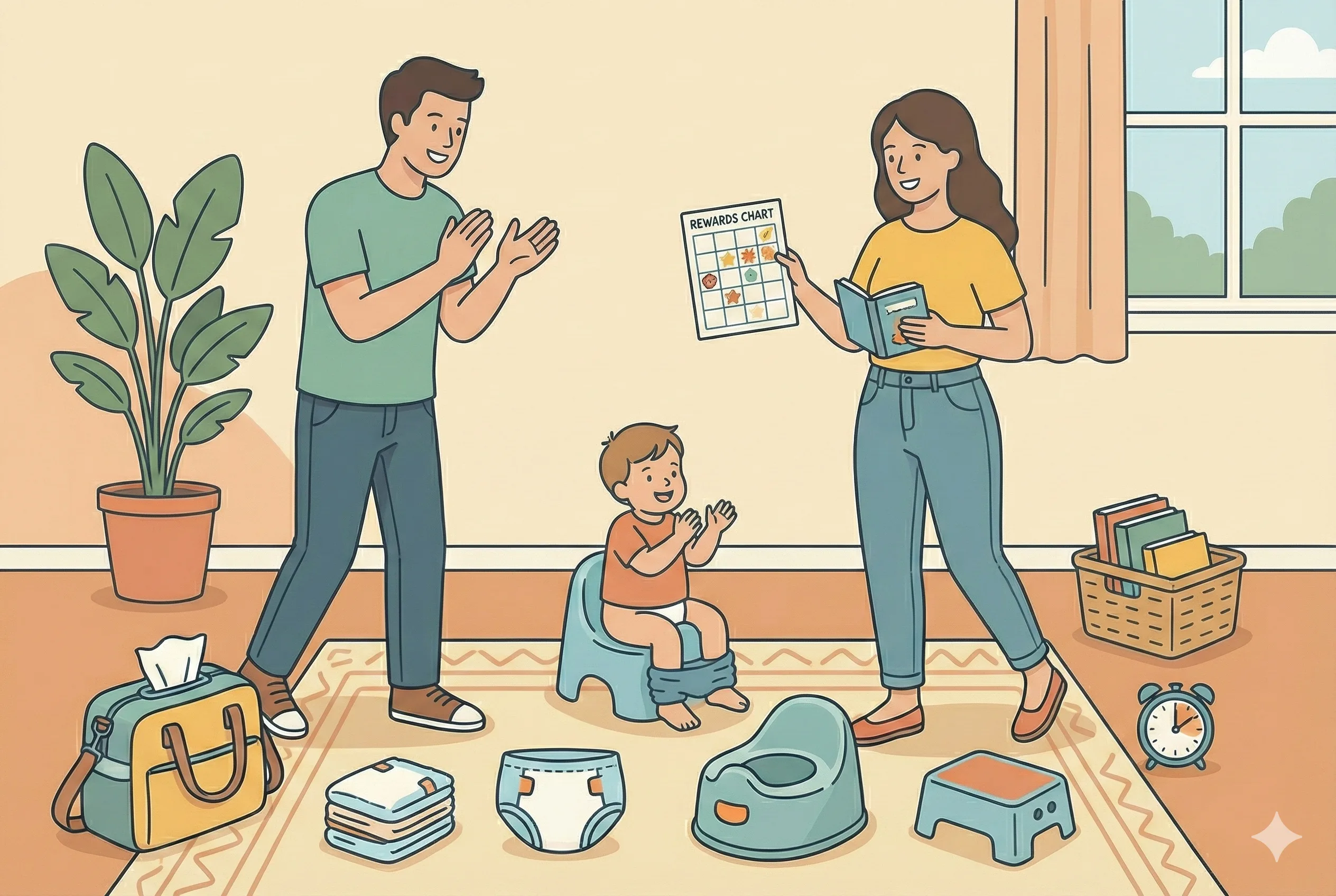
1. A child sized potty or toilet seat reducer
Choose whichever feels more natural for your toddler.
2. Training friendly clothing
Avoid buttons and tight leggings. Choose loose shorts or dresses.
3. A stack of easy to clean towels
Accidents are normal and expected.
4. A reward system
Many parents use praise, stickers, or small celebrations.
5. Patience
Your toddler needs encouragement, not pressure. Your calm tone matters more than perfect techniques.
The Evidence Based Three Day Plan
This approach is simple, but it requires full attention. Most experts agree that consistency is the biggest driver of success.
Day 1: Potty Awareness and Constant Supervision
Explain gently what the potty is for. Use simple language such as “Pee goes in the potty” or “Poop goes in the potty.” Toddlers understand short phrases better than long explanations.
Keep your toddler bare bottomed at home
This increases awareness of their body signals. Without diapers, toddlers feel the urge sooner and connect it to the potty more quickly.
Offer frequent potty trips
Bring them to the potty every 15 to 20 minutes. Use a calm tone. Avoid pushing. If they resist, wait a few minutes and try again.
Watch body cues
Look for:
- Sudden stillness
- Squatting
- Holding their genitals
- Hiding behind furniture
Guide them quickly and kindly to the potty.
Celebrate every success
Clapping, cheering, or giving a sticker helps toddlers feel proud.
Respond gently to accidents
Say, “Pee goes in the potty. Let us try again.” Avoid shame. Accidents are learning moments.
The first day is tiring, but it is also the day when your toddler learns the basic connection between the urge and the potty.
Day 2: Practice and Skill Building
Your toddler understands the idea now. Today is about repetition.
Keep them bare or in loose training underwear
Training underwear increases awareness without causing stress.
Continue frequent potty trips
Every 20 to 30 minutes is helpful. Some toddlers begin to tell you on their own. If they do, respond quickly.
Offer drinks throughout the day
More fluids mean more practice opportunities.
Encourage independence
Let them flush, wash hands, or pick a sticker. These small tasks build motivation.
Expect emotional ups and downs
Toddlers often feel overstimulated on day two. Keeping the tone calm and steady helps them regain confidence.
Day 3: Reinforcement and Building Consistency
Today prepares your toddler for life beyond the three day window.
Practice with clothing
Let your toddler wear loose pants. This teaches them to pull clothing up and down.
Try a short outing
Ten to fifteen minutes is enough. Bring a portable potty or plan to use a public restroom. Outings teach real life application of the skill.
Watch for subtle cues
Toddlers do not always announce. Look for fidgeting, stepping side to side, or touching their body.
Maintain praise and encouragement
Even small successes are worth celebrating.
What Happens After Three Days
The three day method creates strong foundations, but full mastery takes weeks or even months.
Expect occasional accidents
Growth is not linear. Accidents during play, stress, or travel are very common.
Stay consistent
If your toddler suddenly refuses the potty, return to basics with calm reminders.
Support nighttime training separately
Most pediatricians explain that nighttime dryness is controlled by hormones and bladder maturity. It may take months or years, and that is normal.
How to Handle Potty Training Challenges
Potty training is emotional. Your toddler is learning body control, independence, and communication all at once. Some children need more support.
Withholding poop
This happens when toddlers feel pressure or fear. Offer fiber rich foods and keep the routine gentle. Let them sit on the potty daily after meals when digestion is active.
Fear of flushing
Allow your toddler to step away before flushing. Let them watch you flush for a few days.
Refusing the potty
Try letting them choose their potty seat, underwear, or sticker chart. Toddlers respond well to choice.
Regression
Life changes like a new sibling, travel, or illness can cause setbacks. regression is common. Go back to short, predictable potty trips without showing frustration.
Potty training is not a race. It is a developmental process.
Expert Backed Tips to Support Success
Use simple language
Too many instructions confuse toddlers.
Avoid punishment
Punishment does not improve learning. It increases anxiety.
Read potty themed books together
Stories create familiarity and reduce stress.
Involve your toddler in cleanup
Hand them a cloth to wipe a small area. It teaches responsibility without shame.
Model bathroom habits
Toddlers learn best through imitation.
Frequently Asked Questions
1. Can all toddlers be trained in three days?
Not always. The method works best for toddlers who show strong readiness signs. Some children need more time, and that is normal.
2. What if my toddler cries on the potty?
Offer comfort. Forcing them to sit increases fear. Try again later and keep sessions short.
3. Should I use pull ups?
During the day, it is better to avoid pull ups because they feel like diapers. Save them for naps or nights if needed.
4. How long does full training take?
While the basics can form in three days, consistency develops over several weeks.
5. Is it okay if my toddler stands to pee?
Yes. Some children prefer standing. Focus on accuracy later.
6. How do I manage potty training while traveling?
Use portable seats and keep reminders gentle. Expect accidents.
7. What if my toddler refuses public toilets?
Carry a travel potty. Many toddlers feel safer with familiar seating.
8. When should I talk to a doctor?
If your toddler has pain while peeing, severe constipation, or regression that lasts many weeks, guidance from a pediatrician can help.
References and Further Reading
- American Academy of Pediatrics: Toilet Training Basics
- CDC Child Development: Milestones and Toileting
- National Institute of Child Health and Human Development: Readiness Signs
Potty training is a team effort. With steady support, gentle boundaries, and predictable routines, your toddler will learn at their own pace. You are guiding them with patience and love, and that is what matters most.
Medical Disclaimer
The information in this article is for practical and informational purposes only. It is not a substitute for professional medical advice, diagnosis, or treatment for severe sleep disorders or postpartum mood disorders. If you suspect you have Postpartum Depression, Postpartum Anxiety, or a condition like Sleep Apnea, please contact your healthcare provider or a mental health professional immediately.
About the Author
Abhilasha Mishra is a health and wellness writer specializing in women's health, fertility, and pregnancy. With a passion for empowering individuals through evidence-based information, she writes to make complex health topics accessible and actionable.