
Sibling Jealousy: Helping a Toddler Accept a New Baby
A warm, emotionally supportive guide for mothers navigating toddler jealousy when a new baby arrives. Learn why these feelings happen, what is developmentally normal, and how to ease your toddler into their new role with confidence.
Try Related Tools
Use our source-informed calculators to get helpful insights.
Table of Contents
- Introduction
- Why Toddler Jealousy Happens
- Signs Your Toddler Is Feeling Jealous
- How to Support Your Toddler Through Jealousy
- Gentle Strategies for Reducing Jealousy
- When Jealousy Becomes Concerning
- Practical Day-by-Day Adjustment Tips
- FAQs
- Helpful Parenting Tools and Supports
- References and Further Reading
Introduction
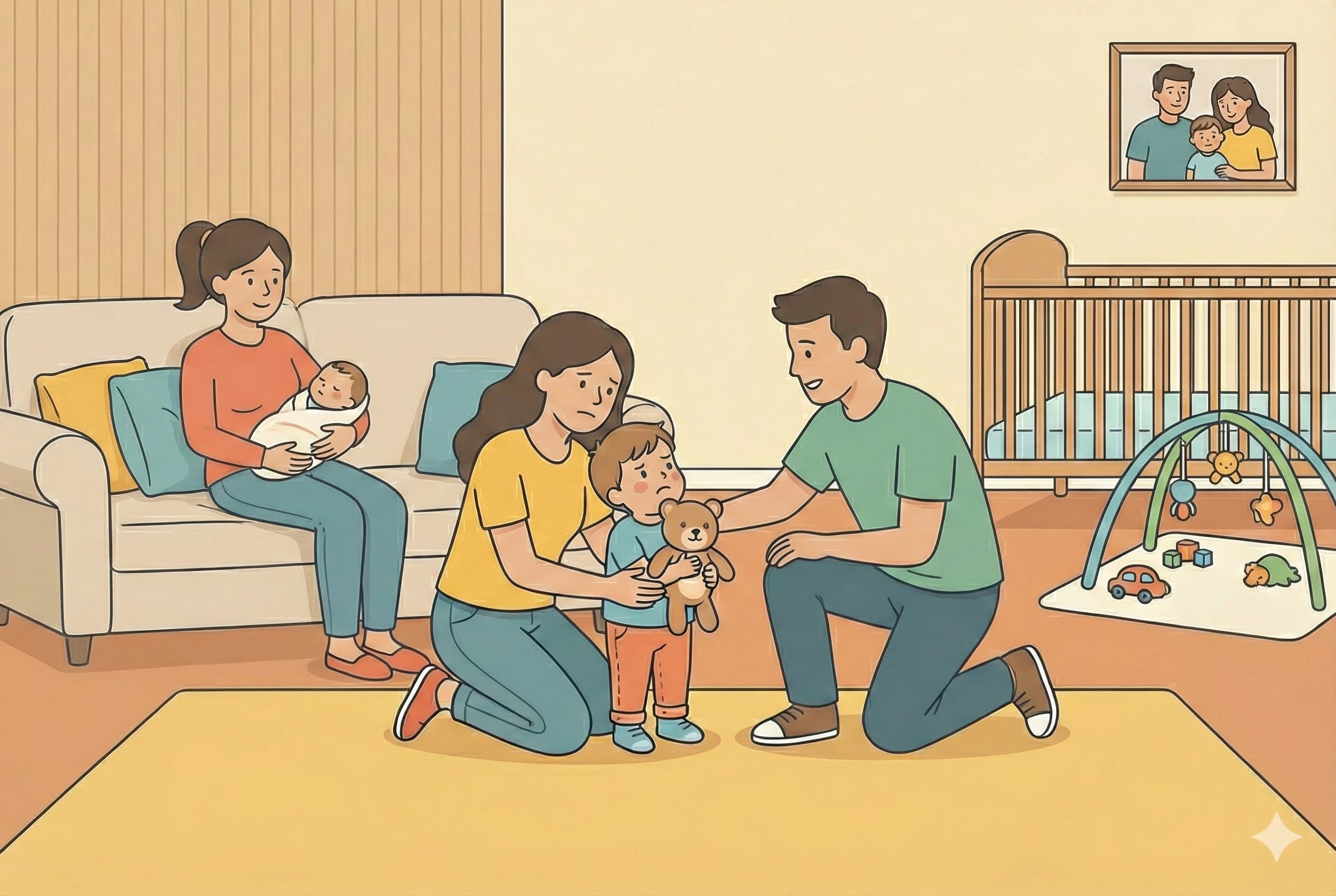
If you are welcoming a new baby while caring for a toddler, you are holding two worlds at once. One child is tiny and helpless, and the other suddenly looks much older than they did last week. Many mothers describe this moment as beautiful and overwhelming at the same time. And then comes the part no one warns you about: your toddler may cling to you, cry more than usual, refuse routines they once managed alone, or even show anger toward the baby.
You may wonder if you did something wrong, but experts often explain that toddler jealousy is a normal emotional response to a major change. Your child is not misbehaving. They are grieving a shift in their place in the family and trying to understand how they still belong. This guide brings clarity, reassurance, and practical steps to help your toddler adjust in a safe and loving way.
Why Toddler Jealousy Happens
Toddlers live in a world where the parent-child bond feels like their entire universe. When a new baby arrives, the security they relied on suddenly feels uncertain. Their brain is still developing emotional regulation skills, so big feelings spill out in unpredictable ways.
Normal Reasons Behind Jealousy
1. Fear of losing connection.
Your toddler worries that your attention will be divided forever, even though you know that love is not limited. They don’t understand this yet.
2. Sudden changes in routine.
New feeding schedules, hospital stays, or relatives visiting can create a sense of instability.
3. Developmental limitations.
Research suggests toddlers cannot yet fully understand abstract concepts like patience, fairness, or sharing a parent.
4. Sensory overload.
A crying newborn, visitors, and household changes can overwhelm your toddler’s still-developing nervous system.
5. Regression as a coping mechanism.
Experts note that regression in toilet training, sleep, or speech is a common stress response and not a sign of long-term issues.
Understanding these reasons helps you respond with empathy instead of frustration.
Signs Your Toddler Is Feeling Jealous
Many mothers feel confused when their toddler’s behavior shifts overnight. The signs below are extremely common:
Behavioral Signs
- Clinging more than usual
- Tantrums over small frustrations
- Taking longer to fall asleep
- Becoming possessive of you
Emotional Signs
- Crying when you hold or feed the baby
- Asking to be “the baby again”
- Acting withdrawn or unusually quiet
Aggressive Signs (Normal but Must Be Guided Safely)
- Pushing the baby’s items away
- Attempting to hit, bite, or climb onto the caregiver during feeding
- Rough handling of toys near the baby
Aggression is not a sign of a “bad child.” It simply means your toddler has reached the limit of their emotional capacity and needs help regulating.
How to Support Your Toddler Through Jealousy
Slow, gentle introduction
Many doctors recommend preparing your toddler weeks before the baby arrives. Picture books, pretend play with dolls, or narrating daily tasks ("I am feeding the baby right now, soon I will come play with you") help them understand what to expect.
Keep routines steady
Toddlers thrive on predictability. Even keeping one or two core routines consistent like bedtime, snack time, or a daily walk can make them feel grounded.
Give them a special “helper role”
Research suggests toddlers respond well to responsibility when it’s framed as belonging, not pressure.
Examples:
- Passing a diaper
- Bringing a small blanket
- Helping choose baby clothes
These small tasks reduce jealousy because your toddler feels included instead of replaced.
Practice “baby time” and “toddler time”
Set clear moments when the baby’s needs come first, and others when your toddler gets your full attention, even if it's only ten minutes. Quality beats quantity here.
Narrate emotions openly
Say things like:
“You wish I could hold you right now. I hear you. I am feeding the baby, and as soon as I finish, I will come to you.”
This teaches emotional labeling and reduces internal stress.
Praise emotional effort, not perfection
Instead of “you’re such a good big sister,” try:
“I noticed you waited while I changed the baby. That was very patient.”
This builds confidence without pressure.
Gentle Strategies for Reducing Jealousy
1. Maintain physical closeness
Your toddler still needs touch to regulate emotions. Use:
- Snuggles
- Lap time
- Gentle back rubs
2. Avoid comparing siblings
Comparisons, even positive ones, can make your toddler feel replaced.
3. Use independent play baskets
Create small baskets with toys your toddler only uses when you are busy with the baby. This promotes independence and reduces emotional conflict.
4. Validate jealousy
Many mothers worry that acknowledging jealousy will make it worse, but experts explain that naming emotions actually reduces their intensity.
Try:
“It’s hard to share Mama. I understand.”
5. Keep your bonding traditions
If you always sang before naps, keep doing it. If you had a weekly walk, keep it alive. These small rituals reassure them that your relationship remains solid.
When Jealousy Becomes Concerning
While jealousy is normal, seek guidance from a pediatrician or child psychologist if you notice:
- Aggression that escalates despite guidance
- Persistent withdrawal or loss of interest in play
- Sleep disturbances lasting more than two months
- Risk-taking behaviors
- Self-harm gestures
Early support helps the entire family adjust more smoothly.
Practical Day-by-Day Adjustment Tips
Day 1–3: Stay close
Your toddler needs time to understand the new family dynamic. Hold them more. Speak softly. Keep routines simple.
Day 4–7: Emphasize connection
Use micro-moments like cuddles, small chats, or reading a book together to reinforce attachment.
Week 2–4: Build confidence
Introduce small helper tasks and independent play baskets. Keep expectations realistic.
Month 2: Strengthen sibling bonding
Sit with your toddler as they “interact” with the baby. Narrate gentle behavior. Celebrate warm moments. Let bonding unfold naturally, never forced.
FAQs
1. How long does toddler jealousy last?
For many families, the strongest feelings settle within a few weeks, but mild jealousy may appear at different phases of development.
2. Should I stop holding the baby to comfort my toddler?
You can comfort both children, but avoid making the baby seem like a problem. Balance is key.
3. What if my toddler tries to hit the baby?
Stay calm, block the action gently with your hand, and say:
“I will keep the baby safe. You wanted my attention.”
Then guide them toward a safe way to express feelings.
4. Is regression normal?
Yes. Many toddlers temporarily regress in sleep, toilet training, or speech. It generally resolves with reassurance.
5. Should I give extra gifts to reduce jealousy?
Small transitions gifts are fine, but avoid using presents as emotional shortcuts.
6. How can I encourage sibling bonding?
Allow natural moments of closeness. Your toddler may enjoy singing to the baby, touching their feet gently, or helping with small tasks.
7. When should I seek help?
If aggression escalates, or if your toddler withdraws or shows ongoing distress, consult a pediatric specialist.
Helpful Parenting Tools and Supports
Here is a small collection of useful resources many parents explore:
-
New baby preparation books:
https://www.amazon.com/s?k=new+baby+big+sibling&tag=mypregnancy01-20 -
Emotional learning toys for toddlers:
https://www.amazon.com/s?k=toddler+emotional+regulation+toys&tag=mypregnancy01-20 -
Calming corner supplies:
https://www.amazon.com/s?k=calming+corner+for+kids&tag=mypregnancy01-20
These are optional tools. Connection, patience, and gentle consistency remain the core of adjustment.
References and Further Reading
-
American Academy of Pediatrics:
https://www.healthychildren.org -
Zero to Three — Sibling Dynamics:
https://www.zerotothree.org -
Child Mind Institute — Emotional Development:
https://childmind.org
Medical Disclaimer
This article is for informational and mental wellness purposes only. It is not a substitute for a professional medical diagnosis or treatment plan from a physician, psychiatrist, or therapist. If you are experiencing thoughts of self-harm or harming your baby, please call 911 (or your local emergency number) or go to the nearest emergency room.
About the Author
Abhilasha Mishra is a health and wellness writer specializing in women's health, fertility, and pregnancy. With a passion for empowering individuals through evidence-based information, she writes to make complex health topics accessible and actionable.