
Foods & Miscarriage: Myths vs. Real Risks
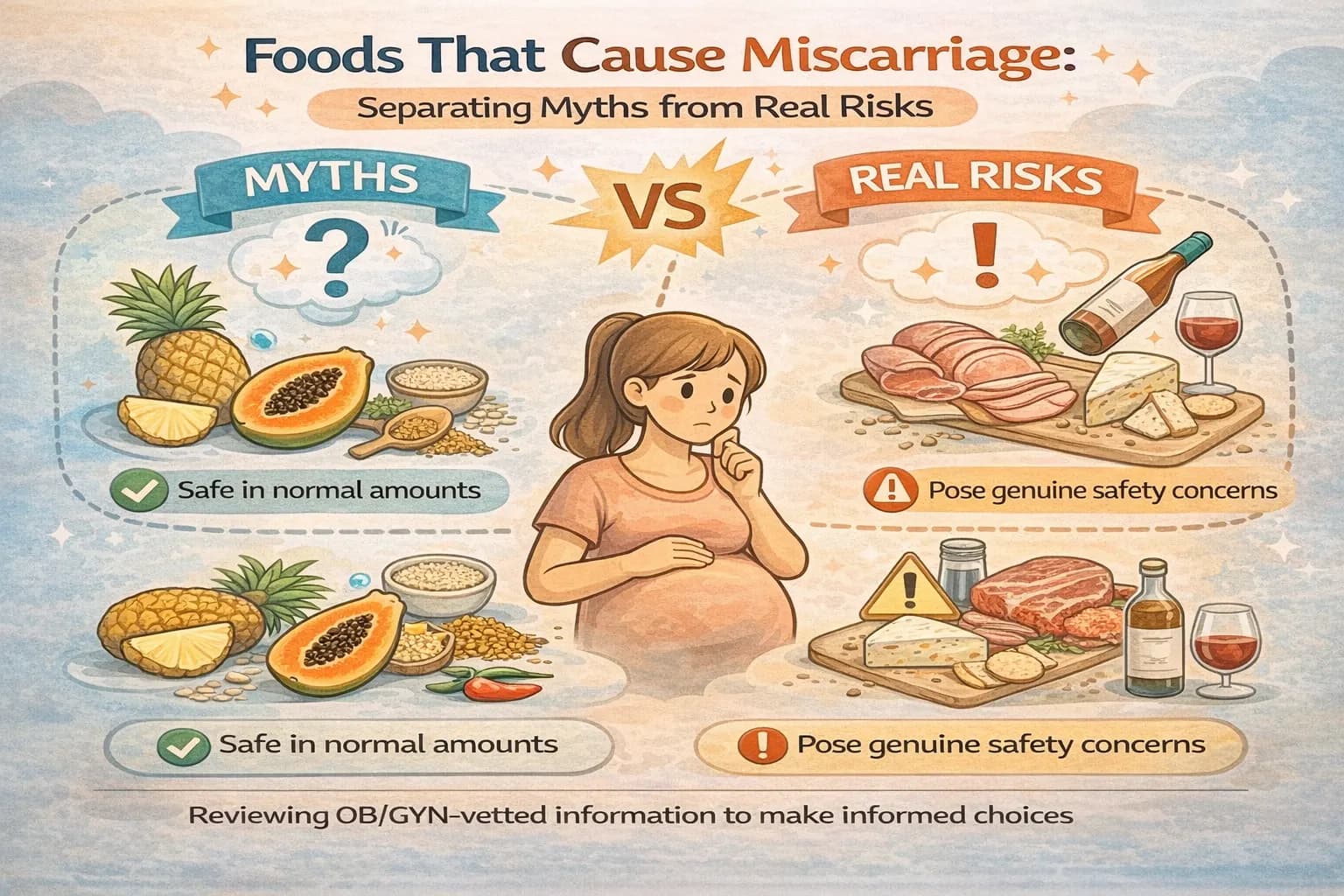
Foods that cause miscarriage: OB/GYN-reviewed guide separating myths like pineapple and papaya from real risks during early pregnancy.
Try Related Tools
Use our source-informed calculators to get helpful insights.
Table of Contents
- First: Understanding What Actually Causes Miscarriage
- The Myths: Foods Wrongly Blamed for Miscarriage
- The Real Risks: Foods That Genuinely Matter
- A Practical Summary Table
- If You Have Had a Miscarriage: What You Should Know
- Frequently Asked Questions (FAQ)
- References and Further Reading
First: Understanding What Actually Causes Miscarriage
To evaluate any food's supposed miscarriage risk, it helps to understand what genuinely causes the vast majority of miscarriages.
Approximately 50-60% of first-trimester miscarriages are caused by chromosomal abnormalities — random errors in cell division during fertilisation or early embryonic development that make the pregnancy incompatible with continued life. These cannot be prevented by any dietary choice. A chromosomally abnormal embryo will miscarry regardless of what the mother eats or avoids.
Other genuine causes of miscarriage include:
- Uterine structural abnormalities (fibroids, uterine septum)
- Thyroid disorders (untreated hypothyroidism or hyperthyroidism)
- Antiphospholipid syndrome (a clotting disorder)
- Progesterone deficiency in some cases
- Uncontrolled diabetes
- Infections (some bacterial and viral)
- Significant trauma
Food — in the quantities and forms consumed by a typical pregnant woman — is not an established independent cause of miscarriage in the absence of the genuine food safety risks described below.
"When a patient asks me whether eating pineapple caused her miscarriage, my answer is clear: no," says medical experts**. "Most first-trimester pregnancy losses are chromosomal — they were going to occur regardless. The cultural myths around food and miscarriage cause significant, unnecessary guilt and anxiety in women who have experienced a loss. My job is to give them the evidence so they can grieve without that burden."
The Myths: Foods Wrongly Blamed for Miscarriage
Pineapple and Bromelain
The claim: Pineapple contains bromelain, an enzyme that can break down proteins and allegedly cause cervical softening leading to miscarriage.
The reality: Bromelain is found predominantly in the core of the pineapple. The flesh contains very small amounts. The quantity of bromelain in a normal serving of pineapple is vastly insufficient to have any effect on the cervix or uterus. Bromelain has been studied as a medical agent (it is used in some wound care preparations) at doses orders of magnitude higher than any dietary exposure. There is no clinical evidence that eating pineapple causes miscarriage in humans.
What is true: Very high doses of bromelain in supplement form (not food) have shown uterotonic effects in some animal studies. Bromelain supplements in high doses are not recommended in pregnancy — but this has no bearing on eating pineapple.
Verdict: Pineapple is safe in pregnancy. Eat it freely.
Raw Papaya (Unripe Papaya)
The claim: Raw papaya contains papain (a proteolytic enzyme) and other compounds that stimulate uterine contractions.
The reality — and this one is more complex:
Unripe (raw/green) papaya does contain high concentrations of latex, which contains papain and other compounds that have shown uterotonic activity in some animal studies and in vitro research. This is not simply a myth — the mechanism is biologically plausible and the compound concentration in unripe papaya is genuinely high.
However: There is no clinical evidence (human trials) demonstrating that eating typical amounts of raw papaya causes miscarriage. Animal studies use concentrations far exceeding dietary exposure. The risk is theoretical, not proven.
Ripe papaya is a different matter — ripe papaya has very low concentrations of latex and papain, and is not associated with any risk. It is actually a nutritious food rich in vitamin C, folate, and fibre.
Verdict: Ripe papaya is safe. Unripe/green papaya in large amounts is theoretically worth avoiding as a precaution, particularly in the first trimester — but there is no clinical evidence it causes miscarriage at normal dietary exposure.
Sesame Seeds
The claim: Widely believed across South Asian and Middle Eastern traditions to cause miscarriage when eaten in early pregnancy.
The reality: There is no scientific evidence that sesame seeds in normal dietary quantities cause miscarriage. Sesame is a nutritious food — a good source of calcium, iron, zinc, and healthy fats. Tahini (sesame paste) is widely consumed by pregnant women globally without documented adverse effects.
Verdict: Sesame seeds are safe in pregnancy at normal dietary amounts. This is a cultural myth with no evidence base.
Fenugreek (Methi)
The claim: Fenugreek seeds cause uterine contractions and miscarriage.
The reality: Fenugreek has mild phytoestrogenic properties, and extremely high doses have shown uterotonic effects in some animal studies. At normal culinary amounts — as a spice or in methi-based dishes — there is no clinical evidence of harm. It is consumed regularly by pregnant women in South Asia without demonstrated adverse outcomes.
However, fenugreek supplements (high-dose capsules used for milk supply) are a different consideration — these deliver concentrations far exceeding culinary use and are generally not recommended in pregnancy.
Verdict: Fenugreek as a spice in cooking is safe. High-dose fenugreek supplements should be avoided in pregnancy.
Hot/Spicy Foods
The claim: Spicy foods generate internal heat that damages the developing embryo or stimulates miscarriage.
The reality: There is no scientific basis for this belief. Spicy foods affect the gastrointestinal tract — causing heartburn and digestive discomfort, which pregnancy already exacerbates — but have no effect on the uterus or the developing embryo. Pregnant women in countries with highly spiced cuisines (India, Mexico, Thailand) do not have elevated miscarriage rates attributable to diet.
Verdict: Spicy foods are safe in pregnancy. They may worsen heartburn and nausea, so tolerance varies, but they do not cause miscarriage.
Coffee and Moderate Caffeine
The claim: Any caffeine causes miscarriage.
The reality: The evidence on caffeine is more nuanced. High caffeine intake (above 200–300 mg per day) is associated with a modestly increased miscarriage risk in some observational studies, though the causality is debated. The association may partly reflect confounding factors.
The consensus guideline from ACOG and the WHO is to limit caffeine to under 200 mg per day during pregnancy. This is approximately one standard 8 oz cup of brewed coffee. At this level, the evidence does not support a significant increase in miscarriage risk.
Verdict: Limit caffeine to under 200 mg daily. One cup of coffee per day is compatible with current guidelines. Excessive consumption (multiple coffees, energy drinks, cola) warrants reduction.
The Real Risks: Foods That Genuinely Matter
While the myths above cause unnecessary anxiety, the following represent genuine food safety concerns that are worth taking seriously:
1. Listeria-Prone Foods (The Most Significant Real Risk)
Listeria monocytogenes is a bacterium that survives refrigeration, can cross the placenta, and can cause miscarriage, stillbirth, or severe neonatal infection. Pregnant women are approximately 10× more susceptible to listeriosis than the general population.
Foods to genuinely avoid:
- Refrigerated ready-to-eat deli meats and hot dogs (unless heated to steaming)
- Soft cheeses made from unpasteurised milk (Brie, Camembert, feta, blue cheese — if labelling indicates unpasteurised)
- Refrigerated smoked seafood (lox, smoked salmon — unless fully cooked in a dish)
- Unpasteurised juices and milk
- Raw sprouts (alfalfa, bean sprouts)
- Pre-packaged salads and ready-to-eat refrigerated foods held for long periods
Protective measures: Reheat any potentially at-risk food until steaming. Choose pasteurised dairy products. Check labels. Avoid buffet foods held at uncertain temperatures.
2. Raw or Undercooked Meat and Eggs (Salmonella, Toxoplasma)
Raw and undercooked meat carries risk of Salmonella and Toxoplasma gondii. Toxoplasmosis in pregnancy can cause miscarriage, stillbirth, and severe fetal abnormality (particularly affecting the brain and eyes).
Avoid:
- Rare or medium-rare beef, lamb, pork, or chicken
- Steak tartare, sashimi, ceviche
- Raw or runny eggs (hollandaise, homemade mayo, runny-yolk fried eggs)
- Pâté and game meats (often undercooked, higher toxoplasma risk)
What to do: Cook all meat to safe internal temperatures. Cook eggs until whites and yolks are firm.
3. High-Mercury Fish
Mercury does not cause miscarriage directly, but high mercury exposure is associated with fetal neurological damage and developmental impairment. Large, predatory, long-lived fish accumulate mercury.
Avoid during pregnancy:
- Shark
- Swordfish
- King mackerel
- Tilefish
- Bigeye tuna
Safe and encouraged: Salmon, sardines, cod, tilapia, shrimp, canned light tuna (limit albacore to 6 oz/week). These provide essential omega-3 fatty acids for fetal brain development.
4. Unwashed Produce
Soil on unwashed produce can carry Toxoplasma and Listeria. Wash all fruits and vegetables thoroughly under running water before eating, even if you plan to peel them.
5. Alcohol
There is no known safe amount of alcohol in pregnancy. Alcohol crosses the placenta freely and can cause foetal alcohol spectrum disorders. It is associated with miscarriage risk, particularly with heavy consumption. The recommendation is complete avoidance throughout pregnancy.
6. Excessive Vitamin A (Retinol) from Supplements or Liver
Very high intake of preformed vitamin A (retinol — from animal sources and supplements, not beta-carotene from vegetables) is teratogenic and associated with miscarriage and fetal malformations. A single serving of liver can contain 3–4× the safe upper limit of retinol for pregnancy. Liver and liver products are best avoided in pregnancy for this reason. Check prenatal supplement labels — retinol content should not exceed 770 mcg RAE (2500 IU).
A Practical Summary Table
| Food | Safe in Pregnancy? | Evidence Level |
|---|---|---|
| Pineapple (fresh, normal amounts) | ✅ Yes | Myth — no evidence |
| Ripe papaya | ✅ Yes | No evidence of risk |
| Unripe/green papaya (large amounts) | ⚠️ Avoid as precaution | Theoretical only |
| Sesame seeds (culinary) | ✅ Yes | Myth — no evidence |
| Fenugreek spice (culinary) | ✅ Yes | No evidence at culinary doses |
| Fenugreek supplements (high dose) | ❌ Avoid | Precautionary |
| Spicy foods | ✅ Yes | Myth — no evidence |
| Coffee < 200 mg/day | ✅ Yes (with limit) | Guideline-based |
| Deli meats (unheated) | ❌ Avoid | Listeria — real risk |
| Soft unpasteurised cheese | ❌ Avoid | Listeria — real risk |
| Raw meat and eggs | ❌ Avoid | Salmonella/Toxoplasma — real risk |
| High-mercury fish | ❌ Avoid | Neurological risk — real |
| Alcohol | ❌ Avoid entirely | Teratogenic — real risk |
| Liver and liver products | ❌ Avoid | Retinol toxicity — real risk |
| Washed fruits and vegetables | ✅ Yes — eat generously | Protective |
If You Have Had a Miscarriage: What You Should Know
If you have experienced a miscarriage, it is natural to look for a cause — particularly a controllable one. But attributing a loss to food is almost certainly incorrect.
As noted, the majority of first-trimester miscarriages are caused by random chromosomal abnormalities in the embryo — events that occur at or very shortly after fertilisation and are entirely unrelated to anything the mother ate, did, or thought. Miscarriage is not caused by sex, exercise, an argument, lifting something heavy, or eating the "wrong" food.
If you have had two or more miscarriages, recurrent pregnancy loss investigation (including chromosomal testing, thrombophilia screen, uterine anatomy assessment, thyroid and immune testing) is appropriate and can identify treatable causes in a significant proportion of cases.
Frequently Asked Questions (FAQ)
Q: Can pineapple really cause a miscarriage? A: No. This is one of the most persistent pregnancy myths with no scientific support. The bromelain in normal amounts of pineapple flesh is insufficient to have any uterotonic effect. Even the higher concentration of bromelain in pineapple core does not pose a risk at normal dietary intake. You can eat pineapple safely during pregnancy.
Q: Is raw papaya actually dangerous in pregnancy? A: Ripe papaya is safe and nutritious. Unripe green papaya contains higher concentrations of latex containing papain, which has shown uterotonic effects in animal studies and in vitro models. At normal culinary amounts, the clinical risk is unproven but theoretical. As a precautionary measure — particularly in the first trimester — avoiding large amounts of raw green papaya is reasonable. It is not necessary to avoid ripe papaya.
Q: I ate deli meat before I knew I was pregnant. Should I be worried? A: A single exposure carries a very low absolute risk. Listeriosis from a single exposure to deli meat is not inevitable — the probability that any given portion is contaminated with Listeria at infective levels is low. Monitor for flu-like symptoms (fever, chills, muscle aches) over the following 2–8 weeks and report these to your doctor. In the absence of symptoms, there is no specific action needed. Going forward, heat deli meats until steaming before eating.
Q: Can too much vitamin C cause a miscarriage? A: This is another persistent myth with no clinical evidence. Vitamin C from food (fruits, vegetables) at any normal dietary amount does not cause miscarriage. Very high-dose vitamin C supplementation (multiple grams daily) has been speculated to affect progesterone, but this has not been demonstrated in human studies at any dose likely to be consumed. Standard prenatal vitamin doses of vitamin C (60–100 mg) are completely safe.
Q: Are there any herbs I should avoid during pregnancy? A: Yes — several herbal preparations have documented or plausible uterotonic properties and are best avoided in pregnancy, particularly in the first trimester. These include: pennyroyal (strongly abortifacient), blue and black cohosh, tansy, artemisia (wormwood), high-dose raspberry leaf (until the third trimester, where it is sometimes used in preparation for labour), and dong quai. Always inform your midwife or doctor about any herbal supplements or teas you are taking.
Q: Is it safe to eat sushi during pregnancy? A: Raw fish carries risk of parasites (anisakis), bacteria (Vibrio, Listeria), and mercury accumulation in some species. The recommendation is to avoid raw fish and shellfish during pregnancy. Cooked sushi rolls (tempura, fully cooked seafood) are safe. Vegetarian rolls are safe. If you are in Japan or a country where high-quality sashimi-grade fish is available and you choose to eat it, ensure it has been previously frozen (which kills parasites) — discuss this with your provider.
Q: Does eating foods with heat-generating properties (like garlic or ginger) cause miscarriage? A: No. The concept of "heat-generating" foods causing miscarriage is a traditional Ayurvedic belief without scientific support. Ginger, in particular, is actually recommended for morning sickness in pregnancy based on clinical evidence. Garlic, in normal culinary amounts, is safe. These foods do not interact with the uterus or placenta in ways that would cause pregnancy loss.
Q: My mother-in-law says I should not eat certain foods in my culture. Should I listen? A: Cultural food restrictions during pregnancy reflect deeply held traditions that deserve respect — and some may overlap with genuinely sensible precautions (avoiding raw or undercooked foods, for example). Discuss any specific restrictions with your doctor or midwife. Where a restriction involves avoiding nutritious foods unnecessarily (fruit, vegetables, whole grains), and where that avoidance might compromise your nutrition, it is worth having a gentle, evidence-based conversation with your care team.
References and Further Reading
-
ACOG — Nutrition During Pregnancy:
https://www.acog.org/womens-health/faqs/healthy-eating-during-pregnancy -
NHS — Foods to Avoid in Pregnancy:
https://www.nhs.uk/pregnancy/keeping-well/foods-to-avoid -
FDA — Advice on Eating Fish During Pregnancy:
https://www.fda.gov/food/consumers/advice-about-eating-fish -
WHO — Healthy Diet in Pregnancy:
https://www.who.int/news-room/fact-sheets/detail/healthy-diet -
CDC — Listeria and Pregnancy:
https://www.cdc.gov/listeria/risk-groups/pregnant-women.html -
RCOG — Recurrent Miscarriage Guideline:
https://www.rcog.org.uk/guidance/browse-all-guidance/green-top-guidelines/recurrent-miscarriage-green-top-guideline-no-17/
Medical Disclaimer
This article is for informational and educational purposes only. It does not constitute medical advice, diagnosis, or treatment. Dietary recommendations during pregnancy should be personalised in discussion with your obstetrician, midwife, or dietitian, taking into account your individual health history and nutritional needs. If you have experienced a miscarriage, please seek support from your healthcare provider — the cause is almost certainly unrelated to any food you consumed.
About the Author
Abhilasha Mishra is a health and wellness writer specializing in pregnancy nutrition, evidence-based maternal health, and fertility. She writes to replace anxiety-generating myths with clear, clinically grounded information that empowers pregnant women to nourish themselves and their babies with confidence.