
DPO Explained: What Each Day Past Ovulation Really Means
Days Past Ovulation can feel like the longest days of a cycle. This medically grounded, emotionally supportive guide explains what may be happening in your body at each DPO, what is normal, and how to protect your peace during the wait.
Try Related Tools
Use our source-informed calculators to get helpful insights.
Table of Contents
- What Does DPO Mean?
- Why DPO Is So Important in Early Pregnancy Tracking
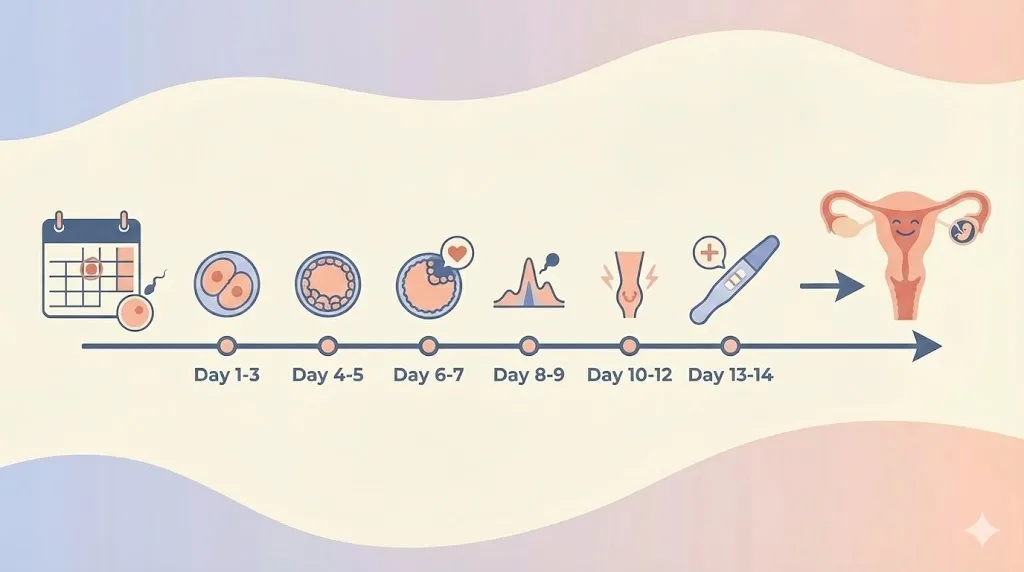
- DPO 0 to 1: Ovulation and Fertilization
- DPO 2 to 3: Early Cell Division
- DPO 4 to 5: Preparing for Implantation
- DPO 6 to 8: The Implantation Window Begins
- DPO 9 to 10: Early Hormone Signals
- DPO 11 to 12: Possible Test Sensitivity
- DPO 13 to 14: The Expected Period Window
- Common DPO Symptoms and What They Mean
- The Emotional Weight of the Two Week Wait
- When to Seek Medical Guidance
- Using DPO as a Tool, Not a Test
- FAQs
- References and Further Reading
What Does DPO Mean?
DPO stands for Days Past Ovulation. It refers to the number of days that have passed since your ovary released an egg.
Ovulation is considered day zero. The day after ovulation is 1 DPO, and the count continues until either pregnancy occurs or your next period begins.
Doctors and fertility specialists often use DPO instead of cycle day because ovulation timing is more biologically meaningful than calendar dates.
When you are ready to test, When to Take a Pregnancy Test explains how DPO relates to home test reliability, false negatives, and retesting — without treating any single day as a guarantee.
Why DPO Is So Important in Early Pregnancy Tracking
Everything that happens after ovulation follows a specific biological sequence. Fertilization, embryo development, implantation, and hormone release all occur within windows measured in days.
Using DPO helps explain why pregnancy tests may be negative early on and why symptoms can vary widely from one person to another.
Tools like the Ovulation Calculator help establish a reliable starting point for DPO tracking.
DPO 0 to 1: Ovulation and Fertilization
Ovulation occurs when an egg is released from the ovary. The egg survives for about 12 to 24 hours. If sperm is present, fertilization may occur during this window.
At this stage, there are usually no noticeable symptoms related to pregnancy. Any sensations you feel are typically related to ovulation itself rather than conception.
Many doctors explain that fertilization is silent and cannot be felt.
DPO 2 to 3: Early Cell Division
If fertilization has occurred, the embryo begins dividing as it travels down the fallopian tube. This journey takes several days.
During this time, progesterone levels rise. This hormone prepares the uterus for possible implantation and can cause symptoms such as mild bloating, breast tenderness, or fatigue.
These sensations are normal in both pregnant and non pregnant cycles.
DPO 4 to 5: Preparing for Implantation
By now, the developing embryo has reached the blastocyst stage. It is still traveling and has not yet implanted.
Some women notice heightened awareness of their bodies at this point. Experts often explain that most symptoms felt now are progesterone driven rather than pregnancy specific.
It is still too early for pregnancy tests to detect anything.
DPO 6 to 8: The Implantation Window Begins
This is when implantation may begin for many women. Implantation usually occurs between 6 and 10 DPO, though timing varies.
Implantation involves the embryo attaching to the uterine lining. This process takes time and may span more than one day.
You can explore this timing using the Implantation Calculator.
Some women report mild cramping or light spotting during this phase, while others feel nothing at all.
DPO 9 to 10: Early Hormone Signals
If implantation has occurred, the body may begin producing small amounts of hCG. This hormone supports pregnancy and signals the ovaries to continue progesterone production.
At this stage, hCG levels are often too low to be detected by home pregnancy tests.
Many doctors recommend waiting a few more days to test to avoid unnecessary disappointment.
DPO 11 to 12: Possible Test Sensitivity
By now, hCG levels may be high enough to detect in some women, especially with sensitive tests. However, results can still vary widely.
A negative test at this stage does not rule out pregnancy. Late implantation can delay hormone detection.
Patience during this window is often emotionally difficult, and support matters.
DPO 13 to 14: The Expected Period Window
For many women, this is when menstruation would normally begin if pregnancy has not occurred.
If pregnancy has occurred, hCG levels typically rise more clearly, making test results more reliable.
If you receive a positive result, a Due Date Calculator can help estimate early milestones.
Common DPO Symptoms and What They Mean
Many symptoms associated with early pregnancy overlap with normal luteal phase changes.
These may include:
- Breast tenderness
- Fatigue
- Mood changes
- Mild cramping
- Changes in appetite
Research suggests that symptom presence or absence does not reliably predict pregnancy.
The Emotional Weight of the Two Week Wait
The days between ovulation and a test result are often called the two week wait, and for good reason.
Hope can feel fragile during this time. Many women analyze every sensation, searching for meaning. It is important to remember that your body is not sending coded messages meant to be decoded perfectly.
Rest, distraction, and self compassion are not avoidance. They are care.
When to Seek Medical Guidance
You should consider speaking with a healthcare provider if:
- Ovulation timing is unclear or irregular
- Cycles are consistently short or long
- There is repeated early loss
- Severe pain or heavy bleeding occurs
Medical advice can provide reassurance and individualized support.
Using DPO as a Tool, Not a Test
DPO tracking works best when used to understand biology, not to predict outcomes with certainty.
Many doctors recommend using DPO as a guide rather than a scoreboard. Your worth and your future are not defined by a single cycle.
FAQs
1. Can I feel implantation when it happens?
Some women report sensations, but many feel nothing at all.
2. Is cramping at 5 DPO a pregnancy sign?
Usually not. It is often related to progesterone.
3. When is the best DPO to test?
Most doctors recommend testing after 12 DPO or after a missed period.
4. Does late implantation mean something is wrong?
Not necessarily. Many healthy pregnancies implant later.
5. Can stress delay implantation?
Stress can affect hormones, but implantation timing varies naturally.
6. Why do symptoms change each cycle?
Hormone levels fluctuate from cycle to cycle, even in healthy patterns.
References and Further Reading
-
American College of Obstetricians and Gynecologists
https://www.acog.org -
Mayo Clinic — Early Pregnancy Symptoms
https://www.mayoclinic.org -
National Institutes of Health — Implantation Research
https://pubmed.ncbi.nlm.nih.gov
Medical Disclaimer
This content is for educational purposes only and does not replace professional medical advice. Always consult a qualified healthcare provider with concerns about fertility, ovulation, or early pregnancy.
About the Author
Abhilasha Mishra writes about early childhood development, women’s health, and parenting. Her work focuses on empathy, clarity, and practical guidance for mothers navigating the toddler years.