
Choking Risks in Toddlers: Foods to Cut or Avoid
A medically responsible guide for mothers to understand choking hazards in toddlers, which foods need modification, and how to keep meals safe without fear.
Try Related Tools
Use our source-informed calculators to get helpful insights.
Choking Risks in Toddlers: Foods to Cut or Avoid
Table of Contents
- Why Toddlers Are More Prone to Choking
- Gagging vs. Choking: Every Mother Should Know the Difference
- High-Risk Foods That Need Modification
- How to Make Mealtimes Safer (Practical Steps You Can Use Today)
- What a Safe Meal Setup Looks Like
- When to Seek Professional Help
- Frequently Asked Questions (FAQ)
- 1. What should I do if my toddler keeps stuffing food into their mouth?
- 2. Are chips or crackers choking hazards?
- 3. Is gagging normal during toddlerhood?
- 4. Should I avoid peanut butter completely?
- 5. How long should I mash or modify foods?
- 6. Are smoothies safer than solid fruit?
- 7. Can teething increase choking risk?
- 8. What should I do after a choking scare?
- References and Further Reading
- Helpful Feeding Tools for Safer Meals
Why Toddlers Are More Prone to Choking
Toddlers learn through movement, repetition, and curiosity. Their chewing patterns are still developing, and they often try to swallow before their food is ready. Pediatric feeding specialists explain a few reasons why choking risk is naturally higher in this age:
1. Chewing Skills Are Still Developing
Even at two or three years old, many children still mash food with their gums rather than chewing in coordinated circular motions. This makes firm or round foods especially risky.
2. Toddlers Get Distracted Easily
Running around, laughing, or talking while eating increases the risk. Most choking accidents happen when the child is not seated.
3. They Stuff Too Much Food in Their Mouth
Many toddlers love taking big bites. This is normal behavior but needs gentle guidance.
4. They Lack the Ability to Judge Texture
Some foods feel soft on the outside but firm inside. Grapes, beans, and sausages fall in this category.
Knowing these factors helps you reduce risk dramatically by adjusting serving sizes and eating routines.
Gagging vs. Choking: Every Mother Should Know the Difference
Understanding the difference can ease so much anxiety.
Gagging (Normal Protective Reflex)
A toddler who is gagging may:
- Cough
- Make retching noises
- Stick their tongue out
- Turn red or watery-eyed
This is uncomfortable to watch, but it is the body's way of keeping the airway safe.
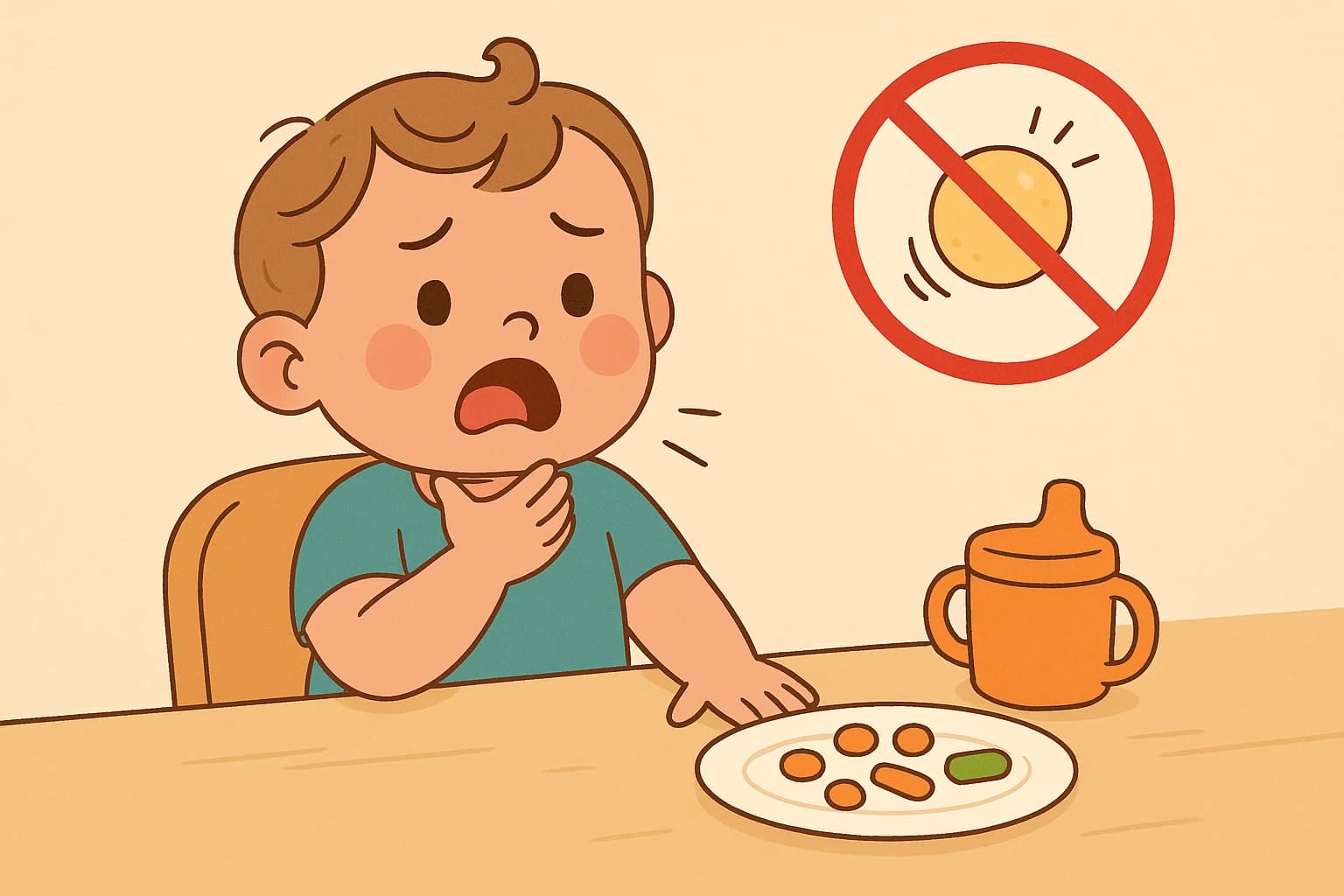
Choking (Medical Emergency)
A toddler who is choking may:
- Be silent
- Freeze or look panicked
- Turn blue or pale
- Struggle for air
- Unable to cough
If this happens, immediate action is required. Many doctors recommend that every caregiver take a certified infant and toddler CPR course, as it builds confidence and reduces panic in emergencies.
High-Risk Foods That Need Modification
Experts often explain that choking risk is not about banning foods but serving them in the right shape and texture. Here are the most common choking hazards and how to modify them.
1. Whole Grapes
- Risk level: Very high
- Serve as: Quarters lengthwise (not round slices)
2. Hot Dogs or Sausages
- Risk level: High
- Serve as: Thin strips, never round coin shapes
3. Nuts and Seeds
- Risk level: High
- Serve as: Nut butters spread thin, or finely crushed nuts
4. Popcorn
Not recommended before age four. Hard kernels can lodge deep in the airway.
5. Raw Carrots or Apples
- Serve as: Grated, steamed, or very thin matchsticks
6. Cherry Tomatoes
- Serve as: Quarters to reduce slipperiness
7. Peanut Butter (Thick Spoonfuls)
Sticky textures can block the airway. Spread thinly on bread or mix with applesauce or yogurt.
8. Marshmallows, Hard Candy, and Gum
These offer no nutritional benefit and pose high choking risks.
9. Large Beans (Chickpeas, Kidney Beans)
Mash lightly to break the structure and reduce the risk.
10. Cheese Cubes
Serve as thin strips or shredded cheese.
These adjustments make a massive difference without restricting your toddler’s exposure to nutritious foods.
How to Make Mealtimes Safer (Practical Steps You Can Use Today)
1. Always Seat Your Toddler While Eating
Many choking events happen while running, playing, or walking around.
2. Offer Small Bites and Model Slow Eating
Show your toddler what a bite looks like and how to chew gently.
3. Avoid Pressuring or Rushing
Stress makes toddlers swallow faster. Calm, predictable meals reduce risk.
4. Keep Mealtimes Screen-Free
Screens distract from chewing and swallowing cues.
5. Serve a Variety of Textures Starting Early
Research suggests toddlers who experience varied textures during the learning phase eat more confidently later.
6. Never Fish Food Out of Their Mouth With Fingers
This can push the food deeper. Let them cough or gag unless it becomes true choking.
7. Learn CPR and Choking First Aid
Many parents report feeling more confident after taking a class.
What a Safe Meal Setup Looks Like
When feeding specialists guide parents, they focus on three pillars: posture, food texture, and pace of eating.
Healthy Eating Posture
Your toddler should have:
- Feet supported
- Upright seated position
- Stable chair (high chair or toddler chair)
Texture Matters
Soft foods can still be choking hazards if shaped incorrectly. A cooked carrot coin is more dangerous than a thin raw carrot stick.
Slow, Calm Pace
Toddlers copy you. If you eat calmly, they slow down too.
When to Seek Professional Help
Consider speaking to your pediatrician or a feeding specialist if:
- Your toddler frequently gags on soft foods
- Mealtimes create stress for you or your child
- They refuse most textures
- You notice coughing, wheezing, or discomfort after meals
- You suspect oral-motor delays
Early support can prevent long-term feeding struggles.
Frequently Asked Questions (FAQ)
1. What should I do if my toddler keeps stuffing food into their mouth?
Offer smaller pieces and gently remind them to chew. Some parents give only one or two pieces at a time.
2. Are chips or crackers choking hazards?
Hard chips can break into sharp pieces. Softer crackers are usually safer but still require supervision.
3. Is gagging normal during toddlerhood?
Yes. Gagging helps protect the airway. It improves with time as skills develop.
4. Should I avoid peanut butter completely?
No. Just avoid thick dollops. Spread thinly or mix into yogurt.
5. How long should I mash or modify foods?
Toddlers vary. Some need modifications until three years old. Follow your child’s chewing readiness.
6. Are smoothies safer than solid fruit?
Smoothies reduce choking risk, but toddlers still need texture exposure for oral-motor development.
7. Can teething increase choking risk?
Yes. Sore gums can make chewing harder. Offer softer textures during teething days.
8. What should I do after a choking scare?
Stay calm, observe your child, and consult a pediatrician if breathing or swallowing seems affected.
References and Further Reading
- American Academy of Pediatrics: HealthyChildren.org
- CDC Infant & Toddler Safety: Centers for Disease Control and Prevention
- Red Cross Pediatric First Aid: CPR & Choking Resources
Helpful Feeding Tools for Safer Meals
If you want to make mealtimes safer and easier, here are some helpful tools many parents use:
Medical Disclaimer
This article is for informational and educational purposes only and is based on general medical guidelines. It is not a substitute for professional medical advice, diagnosis, or treatment. Always seek the advice of your physician or other qualified health provider with any questions you may have regarding your fertility or medical condition.
About the Author
Abhilasha Mishra is a health and wellness writer specializing in women's health, fertility, and pregnancy. With a passion for empowering individuals through evidence-based information, she writes to make complex health topics accessible and actionable.