
BMI for Women: How Hormones, Pregnancy & Age Affect BMI
BMI numbers often feel confusing for women because female bodies change across life stages. This compassionate, medically grounded guide explains how hormones, pregnancy, and aging influence BMI, and how to interpret the numbers without fear or self-blame.
Try Related Tools
Use our source-informed calculators to get helpful insights.
Table of Contents
- Why BMI Often Feels Different for Women
- Hormones and Their Impact on BMI
- Pregnancy and BMI: A Unique Life Stage
- Postpartum Changes and BMI
- Aging and BMI in Women
- Why BMI May Rise Even When You Are Healthy
- A More Compassionate Way to Use BMI
- When BMI Deserves Closer Attention
- Emotional Weight of BMI for Women
- FAQs
- References and Further Reading
Why BMI Often Feels Different for Women
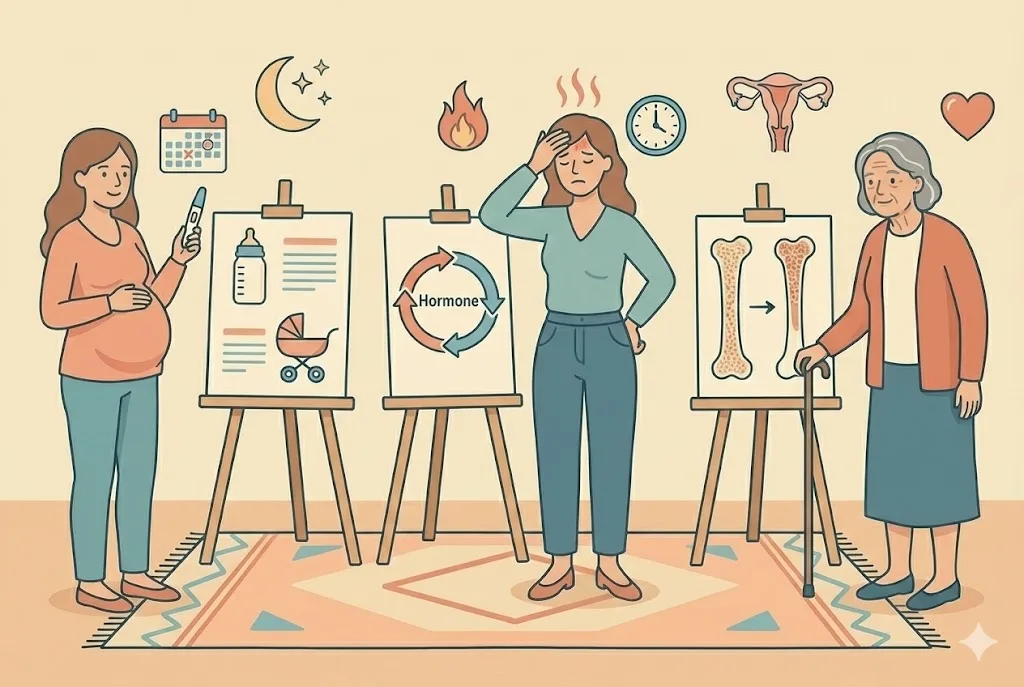
Body Mass Index was created as a simple population-level tool. It does not account for reproductive hormones, monthly cycles, pregnancy, or menopause. These factors influence fat storage, fluid retention, muscle mass, and appetite regulation in ways that are biologically normal for women.
Many doctors recommend using BMI as one data point rather than a final judgment. Tools like the BMI Calculator can offer a starting place, but interpretation matters far more than the number itself.
Hormones and Their Impact on BMI
Estrogen and Fat Distribution
Estrogen encourages fat storage in the hips, thighs, and breasts. This pattern supports fertility and pregnancy but can raise BMI even when overall health is strong.
As estrogen fluctuates during menstrual cycles, some women notice temporary weight changes related to water retention rather than fat gain. These shifts often resolve on their own.
Progesterone and Fluid Retention
Progesterone rises during the second half of the menstrual cycle and during pregnancy. It can cause bloating and temporary weight increases that affect BMI readings.
Experts often explain that these changes reflect fluid shifts, not long-term body composition changes.
Insulin Sensitivity and Female Metabolism
Hormonal shifts can affect how the body uses glucose. Conditions like PCOS may increase insulin resistance, which can influence weight and BMI despite healthy habits.
In such cases, BMI alone does not reflect effort or overall health.
Pregnancy and BMI: A Unique Life Stage
Pregnancy permanently alters the body in many women. Weight gain during pregnancy is not only expected, it is necessary. The body builds blood volume, fat stores, uterine tissue, and placental support.
Using BMI during pregnancy without context can be misleading. Many doctors rely instead on gestational guidelines and tools like the Pregnancy Weight Gain Calculator to support maternal and fetal health.
After birth, the body recovers gradually. Some changes remain, and that is normal.
Postpartum Changes and BMI
After delivery, hormone levels drop rapidly. Sleep disruption, stress, and breastfeeding demands affect appetite and metabolism.
Research suggests that postpartum weight retention is influenced by many factors, including genetics, social support, and recovery time. BMI may remain elevated for months or years without indicating poor health.
Gentle nutrition and gradual movement are often recommended over aggressive weight targets.
Aging and BMI in Women
Muscle Loss Over Time
From the mid-30s onward, women naturally lose muscle mass unless strength training is prioritized. Since muscle weighs more than fat, BMI may increase even when clothing size stays the same.
This is one reason BMI becomes less precise with age.
Menopause and Metabolic Shifts
During perimenopause and menopause, estrogen declines. Fat storage shifts toward the abdomen, and resting metabolic rate may decrease.
Many women notice BMI increases despite unchanged eating patterns. Doctors often emphasize metabolic health over scale numbers during this stage.
Why BMI May Rise Even When You Are Healthy
BMI may increase due to:
- Hormonal transitions
- Fluid retention
- Muscle loss
- Stress-related cortisol changes
These factors are not signs of failure. They are biological responses.
A More Compassionate Way to Use BMI
Rather than aiming for a single category, consider BMI as a trend over time alongside:
- Energy levels
- Menstrual regularity
- Blood markers
- Strength and mobility
Health is not static, and women’s bodies are not meant to remain unchanged across decades.
When BMI Deserves Closer Attention
BMI becomes more clinically relevant when accompanied by:
- Rising blood sugar
- Elevated blood pressure
- Reduced mobility
- Chronic fatigue
In these cases, BMI helps guide further evaluation rather than define the outcome.
Emotional Weight of BMI for Women
Many women carry emotional history tied to weight. Pregnancy, caregiving, illness, and aging all leave marks that deserve respect, not criticism.
A supportive healthcare approach acknowledges this complexity and prioritizes wellbeing over labels.
FAQs
1. Is BMI accurate for women?
BMI has limitations for women due to hormonal and life-stage changes.
2. Why did my BMI increase after pregnancy?
Hormonal shifts, recovery needs, and lifestyle changes all contribute.
3. Does menopause affect BMI?
Yes. Metabolic changes during menopause often raise BMI.
4. Should women aim for a “normal” BMI?
Health goals should be personalized rather than chart-driven.
5. Can hormonal conditions affect BMI?
Conditions like PCOS can significantly influence BMI.
6. What matters more than BMI?
Overall health markers, strength, energy, and mental wellbeing.
References and Further Reading
-
Centers for Disease Control and Prevention — BMI and Women
https://www.cdc.gov/bmi/adult-calculator/index.html -
NIH — Hormones and Weight Regulation
https://www.niddk.nih.gov/health-information/weight-management/adult-overweight-obesity -
Harvard Health — Menopause and Metabolism
https://www.health.harvard.edu/womens-health
Medical Disclaimer
This article is for educational purposes only and does not replace personalized medical advice. Please consult a qualified healthcare provider for guidance tailored to your health history.
About the Author
Abhilasha Mishra writes about early childhood development, women’s health, and parenting. Her work focuses on empathy, clarity, and practical guidance for mothers navigating the toddler years.