
Best Montessori Activities for Toddlers (At Home Setup Guide)
A warm, practical, expert-informed guide to Montessori activities for toddlers. Learn how to set up your home, choose age-appropriate materials, and support independence with gentle, realistic strategies.
Try Related Tools
Use our source-informed calculators to get helpful insights.
Montessori is one of those words that mothers hear often, yet many still feel unsure about what it really means. You might see beautifully arranged shelves on social media and wonder if your home needs to look like that too. The truth is much simpler. At its heart, Montessori is not about perfect aesthetics. It is about creating an environment where your toddler can explore, participate, and learn with confidence.
If you have ever watched your toddler try to pour water, carry a spoon, or insist on helping you with simple chores, you have already seen the Montessori philosophy at work. Toddlers crave independence. They want real tasks, real involvement, and real tools. The more we support these instincts, the more capable they feel.
This guide breaks down practical Montessori activities you can introduce at home without pressure or expensive materials. You will find step-by-step ideas that fit into your daily routine and help your toddler build focus, coordination, creativity, and emotional confidence.
Table of Contents
- What Makes Montessori Different for Toddlers
- Setting Up a Montessori-Friendly Home
- Montessori Activities for 12 to 18 Months
- Montessori Activities for 18 to 24 Months
- Montessori Activities for 2 to 3 Years
- How to Rotate Montessori Activities
- How Long Should Toddlers Play Montessori Activities?
- Montessori at Home: How to Set Realistic Expectations
- When Montessori Activities Help With Behavioral Challenges
- Safety Tips for Montessori Activities
- Frequently Asked Questions
- References and Further Reading
What Makes Montessori Different for Toddlers
Many parents think Montessori is primarily about academics. In reality, it focuses on building life skills, emotional grounding, and independence long before worksheets or letters appear.
Hands-On Learning
Toddlers learn through their senses. Montessori activities let them touch, pour, transfer, smell, and move. This strengthens both cognitive and motor abilities.
Child-Led Exploration
Your toddler chooses what they want to do. You simply offer safe, engaging activities and observe. Choice boosts confidence and problem-solving.
Real-Life Tasks
Practical life activities like pouring water, wiping spills, or sorting laundry build early responsibility. They also strengthen fine motor skills.
Respect for the Child
Montessori places deep trust in a toddler’s potential. You treat them as capable, not fragile.
Setting Up a Montessori-Friendly Home
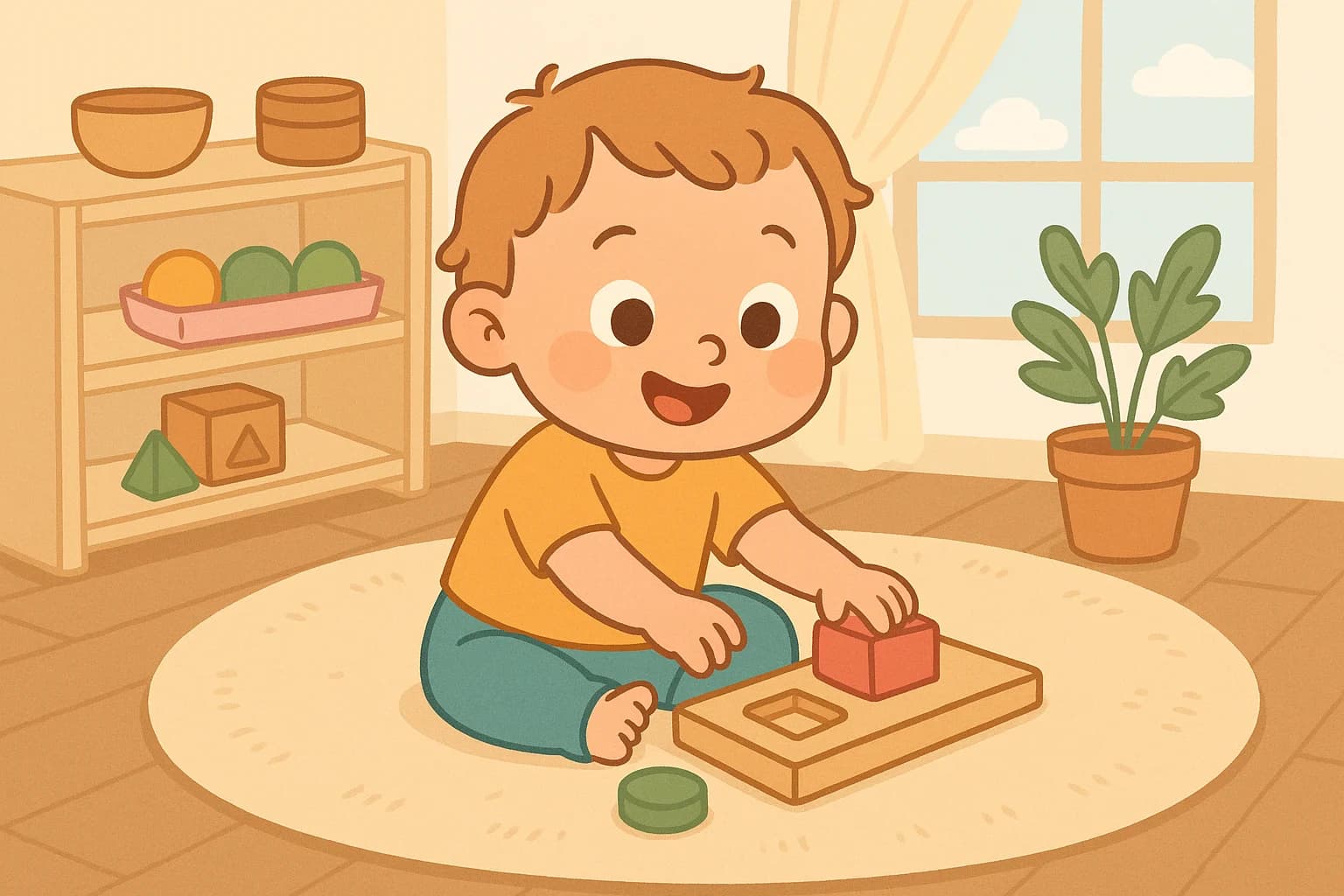
A Montessori home is not about buying expensive toys. It is about arranging your space in a way that encourages independence.
1. Use Low Shelves
Toddlers should be able to reach their toys, books, and materials without help. Low shelves create freedom and reduce frustration.
2. Keep Toys Minimal
Too many toys overwhelm children. A few well-chosen items encourage longer, more meaningful play.
3. Create Clear Work Areas
A small play mat or table signals that this is a space for focused activity. Toddlers respond well to visual boundaries.
4. Offer Real Tools, Not Just Toy Versions
Safe, child-sized real tools build skills. Examples include small brooms, child-safe peelers, or metal cups.
5. Make It Predictable
Order and repetition help toddlers feel calm. Place items back in the same spot so your toddler knows where they belong.
Montessori Activities for 12 to 18 Months
At this age, toddlers love to explore with their whole bodies. Activities should be simple and sensorial.
Object Permanence Box
Helps toddlers understand that things exist even when out of sight. It also builds hand control.
Posting Activities
Dropping coins into a slot (use large wooden coins for safety) or inserting sticks into a hole strengthens concentration.
Simple Transfer Activities
Use two bowls and let your toddler move pom poms from one bowl to another with their hands.
Pulling and Pushing Tasks
Pulling scarves from a tissue box or pushing balls through tubes supports motor planning.
Practical Life: Wiping Tables
Give them a small cloth. They love copying you, and it builds coordination.
Montessori Activities for 18 to 24 Months
This age brings improved hand control and curiosity about everyday tasks.
Water Pouring
Use a small pitcher and cup. Expect spills. Spills are part of learning, not mistakes.
Dry Transfer With Scoops
Let your toddler scoop rice or beans using a spoon or ladle. This activity strengthens wrist movement.
Opening and Closing Boxes
Toddlers practice problem solving and fine motor skills while exploring lids, zippers, and Velcro.
Matching Objects
Match lids to containers or socks to pairs. Matching builds memory and early mathematical thinking.
Simple Food Preparation
Tearing lettuce, peeling bananas, or washing fruits helps them feel responsible and capable.
Montessori Activities for 2 to 3 Years
At this stage, toddlers seek independence and enjoy tasks with clear steps.
Sorting by Size, Shape, or Color
Use simple household objects like spoons or wooden blocks.
Spoon Transfer
Encourages precision and builds concentration. Many parents see their toddlers settle deeply into this task.
Threading and Beading
Large beads or pasta tubes are perfect for safe threading activities.
Simple Chores
Allow your toddler to help with chores like:
- Watering plants
- Feeding pets
- Sweeping crumbs
- Putting clothes in a hamper
These tasks create pride and responsibility.
Early Practical Life Tasks
Let them butter bread using a child-safe spreader, or help you mix ingredients. They learn sequencing and coordination.
How to Rotate Montessori Activities
Rotation keeps your toddler engaged without overstimulation.
Step 1: Offer 6 to 8 Activities on a Shelf
This number keeps choices simple.
Step 2: Swap Items Every 1 to 2 Weeks
Change if your toddler loses interest.
Step 3: Keep Old Favorites
Some activities hold emotional meaning. You can keep them available longer.
How Long Should Toddlers Play Montessori Activities?
Many parents worry if their toddler only plays for a few minutes. That is normal. A toddler’s attention span may range from two minutes to twenty minutes depending on interest and mood.
What matters most is consistency, not duration. Repeated short sessions build stronger skills than forced long ones.
Montessori at Home: How to Set Realistic Expectations
Montessori is not supposed to be perfect. You never need to create Pinterest-style shelves or spend a fortune. Toddlers learn from:
- Everyday routines
- Active involvement
- Real tools
- Predictable environments
- Patient guidance
Your presence matters more than any material.
When Montessori Activities Help With Behavioral Challenges
Many parents find Montessori activities reduce tantrums and frustration. This happens because:
- Toddlers gain independence
- Activities offer a calming rhythm
- Tasks create a sense of purpose
- Movement helps release emotion
- Predictability reduces overwhelm
If your toddler struggles with biting, hitting, or shouting, structured hands-on tasks can support emotional regulation.
Safety Tips for Montessori Activities
- Always supervise water or small objects.
- Use child-safe materials.
- Keep choking hazards away.
- Choose activities that match your toddler’s development stage.
Safety creates the foundation for confidence.
Frequently Asked Questions
Do I need Montessori shelves or trays?
Not at all. Any low, accessible shelf works. Trays help with organization but are optional.
How many activities should I introduce at once?
Six to eight is ideal. Too many choices can overwhelm toddlers.
Does Montessori mean no toys?
Not at all. Montessori encourages intentional toys that support learning. Wooden toys, puzzles, and real-life tools fit well.
My toddler throws Montessori materials. What should I do?
Throwing is communication. Gently guide them by saying, “This is for gentle hands. If you want to throw, we can throw a soft ball.” Redirection works better than punishment.
Is Montessori only for calm children?
Montessori works beautifully for active toddlers because it channels energy into meaningful tasks.
References and Further Reading
-
Montessori Foundation:
Montessori Basics -
American Academy of Pediatrics on Play:
HealthyChildren.org -
CDC Early Learning Guidelines:
CDC Developmental Milestones
Medical Disclaimer
This article is for educational purposes only and does not replace medical, developmental, or therapeutic advice. Always consult your pediatrician if you have concerns about your toddler’s behavior, safety, or developmental progress.
About the Author
Abhilasha Mishra writes about toddler development, parenting, and women’s health with a focus on gentle guidance and practical steps families can use at home.