
Best Home Safety Setup for Toddlers (Kitchen + Bathroom + Living Room)
A warm, medically responsible guide to toddler-proofing the kitchen, bathroom, and living room with simple changes that prevent accidents and support safe independence.
Try Related Tools
Use our source-informed calculators to get helpful insights.
Best Home Safety Setup for Toddlers (Kitchen + Bathroom + Living Room)
Table of Contents
- Kitchen Safety Setup
- Bathroom Safety Setup
- Living Room Safety Setup
- Creating a Safe but Encouraging Environment
- When to Seek Professional Help
- Frequently Asked Questions
-
- 1. How often should I recheck home safety setups?
- 2. Do I need to lock every drawer in my home?
- 3. Are safety gates necessary in every home?
- 4. What should I keep on hand for small injuries?
- 5. When can toddlers safely use stools or step ladders?
- 6. How do I stop my toddler from climbing furniture?
- 7. My toddler keeps touching outlets. What should I do?
- 8. Does childproofing delay learning about danger?
-
- References and Further Reading
Why Home Safety Matters More During the Toddler Stage
Toddlers move quickly
They love to run, climb, and reach places they could never reach before.
Limited sense of danger
At this age, children understand curiosity, not consequences. They cannot judge temperature, height, or sharpness.
Growing confidence
Toddlers want independence. They try to imitate everything adults do. This confidence is beautiful, but it needs the right environment.
Still developing motor control
Their hands are still learning coordination. This means dropping items, spilling water, and losing balance are all common.
Preparing your home is not about restricting your toddler. It is about giving them a safe space to grow with fewer risks.
Kitchen Safety Setup
The kitchen is often considered the most hazardous room for toddlers. Hot surfaces, chemicals, and sharp objects make it important to create boundaries while still allowing your child to be included in daily routines.
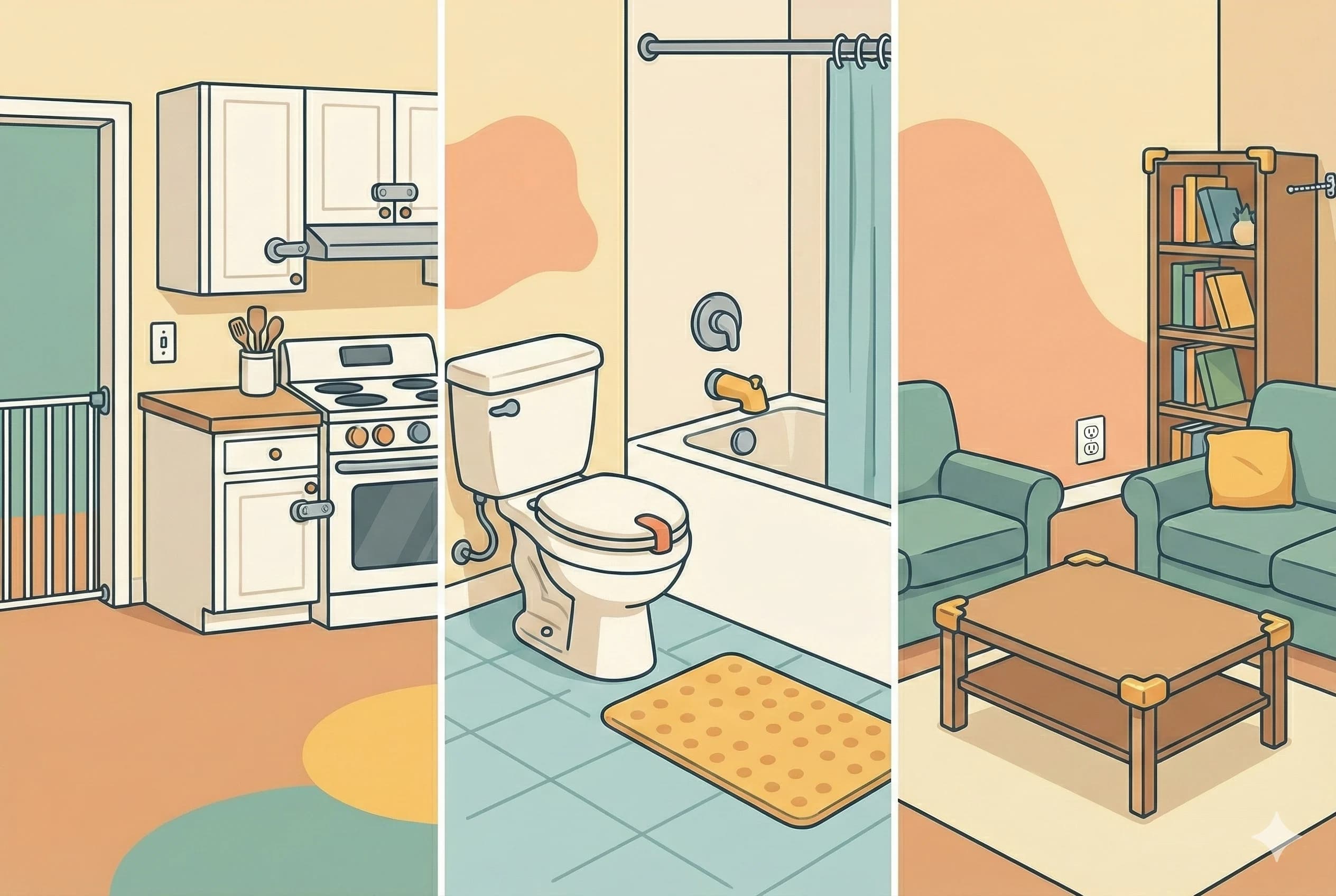
1. Secure Lower Cabinets and Drawers
Toddlers naturally open anything they can reach. Experts often explain that lower cabinets should either contain safe items or be locked securely.
Helpful options include:
- Magnetic locks
- Adhesive strap locks
- Spring latch locks
If you prefer a Montessori style home, you can keep one lower cabinet safe and accessible to your child with bowls or wooden spoons. Everything else should be locked.
2. Install a Safety Gate at the Kitchen Entrance
If your toddler runs in while you are cooking, the risk of burns increases. A pressure gate or retractable gate keeps the kitchen off limits during active cooking. It also creates a predictable routine for your toddler.
3. Move Cleaning Products Out of Reach
Cleaning sprays, dishwasher pods, and bleach should never be stored under the sink. Pediatric poison centers report that toddlers often ingest or bite into these items out of curiosity. Store them in higher cabinets or behind locks.
4. Keep Handles Turned Inward
Toddlers reach upward without realizing the danger. Turning pot handles inward and placing hot items away from counter edges prevents burn accidents.
5. Heat-Free Zones
Many mothers create a “heat free zone” where a toddler can safely play with:
- Silicone bowls
- Measuring cups
- Wooden spoons
This helps the child feel included while keeping them far from hot surfaces.
Bathroom Safety Setup
Bathrooms seem harmless, but they carry several hidden risks like water temperature, slipping, medicine access, and drowning hazards. Even small amounts of standing water can be unsafe for toddlers.
1. Use a Non-Slip Mat in the Tub
Toddlers are still learning balance, and wet surfaces can cause sudden falls. A textured mat improves stability and makes bath time safer.
2. Store All Medications in High Cabinets
Many doctors recommend that medicine be treated like sharp objects. Toddlers love to open bottles because they resemble toys. Keep all pills, syrups, ointments, and vitamins in a locked or high place.
3. Install Toilet Locks
Toilet water is unsafe to touch, and toddlers may try to put toys inside or lean too far. A simple toilet lock prevents this.
4. Adjust Water Temperature
Toddlers have delicate skin. Setting your water heater to around 49 degrees Celsius (120 degrees Fahrenheit) helps prevent accidental scalding.
5. Keep Electrical Appliances Out of Reach
Hair dryers, straighteners, and trimmers should be unplugged and stored in cabinets. Even harmless looking appliances become risky when toddlers pull cords.
Living Room Safety Setup
This is the room where toddlers spend most of their waking hours. A small amount of planning can significantly reduce injuries.
1. Anchor Heavy Furniture
Bookshelves, TVs, and dressers must be anchored. Research suggests that tipping accidents are more common than many parents realize, especially during climbing phases.
2. Corner Guards for Sharp Edges
Coffee tables and TV stands often have edges at toddler head height. Soft corner guards help prevent injuries during fast movement or play.
3. Manage Electrical Outlets and Cords
Toddlers love plugging and unplugging items. Use outlet covers or sliding plates. Keep cords bundled or behind furniture.
4. Soft Play Area
A designated area with:
- Cushions
- Foam tiles
- A play mat
gives toddlers a safe landing spot as they practice running, spinning, and jumping.
5. Window Safety
Keep furniture away from windows. Install window guards or stops if your toddler can reach the sill.
Creating a Safe but Encouraging Environment
A safe home is not a home full of restrictions. It is a space where your toddler can explore freely while you feel confident that major risks are addressed.
Try these supportive habits:
- Keep daily routines predictable so your toddler learns boundaries.
- Offer supervised exploration in every room to teach safe behavior.
- Use short, clear phrases like “Hot, not for touching” or “Drawer stays closed”.
- Observe your toddler’s habits to spot new risks early.
Home safety grows alongside your child. What works at 12 months may need updating at 20 months as climbing and reaching improve.
When to Seek Professional Help
Call your pediatrician if you notice:
- Repeated bruising or falls beyond normal toddler behavior
- Sensory issues that make your child seek dangerous stimulation
- Strong head banging or climbing that seems uncontrolled
If you are unsure, asking is always the right step. Doctors understand that toddlers develop at different speeds, and many concerns are easy to address once explained.
Frequently Asked Questions
1. How often should I recheck home safety setups?
Many experts recommend reviewing your safety setup every two to three months because toddlers gain new skills quickly.
2. Do I need to lock every drawer in my home?
No. Focus on drawers that contain sharp, breakable, or chemical items. You can keep one safe drawer accessible for your toddler.
3. Are safety gates necessary in every home?
Safety gates are most helpful for kitchens, stairs, or rooms with ongoing hazards.
4. What should I keep on hand for small injuries?
A basic kit with bandages, saline wash, cotton pads, and a mild antiseptic is usually enough for minor bumps and scratches.
5. When can toddlers safely use stools or step ladders?
Once your toddler shows reliable balance and follows simple instructions, supervised stool use can help build independence.
6. How do I stop my toddler from climbing furniture?
Provide safe climbing alternatives like foam blocks or supervised play structures. Anchoring furniture is still essential.
7. My toddler keeps touching outlets. What should I do?
Use outlet covers and teach through repetition. Most toddlers stop once the novelty wears off.
8. Does childproofing delay learning about danger?
No. Protecting your toddler gives them space to explore safely, which supports development rather than limiting it.
References and Further Reading
- American Academy of Pediatrics: Home Safety Tips
- CDC Home Safety: Preventing Childhood Injuries
- National Safety Council: Childproofing Guidelines
Helpful Tools for Home Safety
If you want to build a safer environment for your toddler, here are some helpful tools many parents rely on:
- Baby Safety Gates
- Cabinet and Drawer Locks
- Furniture Anchoring Straps
- Corner Protectors
- Non Slip Bathroom Mats
- Electric Outlet Covers
These are simple tools, but they make a meaningful difference during the active toddler years.
Medical Disclaimer
The information in this article is for informational and educational purposes only and is not intended as medical advice. It is not a substitute for professional medical advice, diagnosis, or treatment. Always seek the advice of your physician or other qualified health provider with any questions you may have regarding a medical condition or before making any significant changes to your diet.
About the Author
Abhilasha Mishra is a health and wellness writer specializing in women's health, fertility, and pregnancy. With a passion for empowering individuals through evidence-based information, she writes to make complex health topics accessible and actionable.