
Baby Feeding Schedule (0-6 Months): A Gentle, Real-Life Guide for New Mothers
A warm, medically responsible feeding schedule for babies from birth to six months. Learn what a normal day of feeding looks like, how schedules evolve, and how to feed with confidence rather than pressure.
Try Related Tools
Use our source-informed calculators to get helpful insights.
Table of Contents
- What “Feeding Schedule” Really Means for Babies
- Hunger and Fullness Cues to Watch For
- Feeding Schedule: 0–1 Month (Newborn Phase)
- Feeding Schedule: 1–2 Months
- Feeding Schedule: 2–3 Months
- Feeding Schedule: 3–4 Months
- Feeding Schedule: 4–5 Months
- Feeding Schedule: 5–6 Months
- Sample Flexible Daily Feeding Rhythm (3–4 Months)
- How to Know Your Baby Is Feeding Well
- Common Feeding Concerns in the First 6 Months
- When to Seek Medical Guidance
- FAQs
- References and Further Reading
What “Feeding Schedule” Really Means for Babies
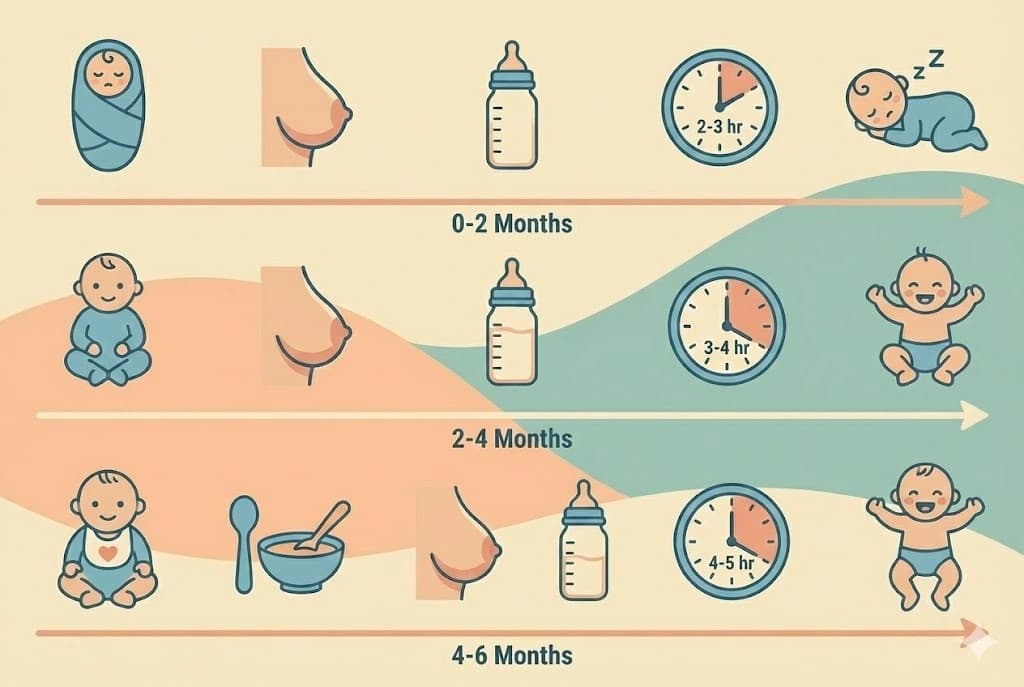
For infants, a feeding schedule is not a strict clock-based routine. Doctors often explain that babies are biologically wired to eat based on hunger cues, not time slots.
A healthy feeding schedule means:
- Feeding on demand
- Recognizing hunger and fullness cues
- Understanding age-based patterns
- Adjusting gently as your baby grows
If you want a quick reference for how much milk is typical by age, the Baby Feeding Amount Calculator can be helpful.
Hunger and Fullness Cues to Watch For
Before looking at age-based schedules, it helps to understand your baby’s signals.
Early hunger cues
- Stirring or stretching
- Rooting toward the breast
- Sucking on hands
- Opening the mouth
Late hunger cues
- Crying
- Fussing
- Arching the back
Crying is a late sign of hunger. Feeding earlier usually leads to calmer, more effective feeds.
Feeding Schedule: 0–1 Month (Newborn Phase)
Newborns have very small stomachs and rapid growth needs.
Typical pattern
- 8–12 feeds per 24 hours
- Every 2–3 hours, sometimes more often
- Feeds may cluster, especially in the evening
Breastfed babies
- Feed durations vary widely
- Frequent feeding supports milk supply
- Night feeds are biologically normal
Formula-fed babies
- Usually 2–3 oz per feed
- Feeding every 2–3 hours
Newborn feeding often feels intense. This stage is temporary, even when it feels endless.
If breastfeeding feels uncomfortable or painful, the Breast Care & Pain Relief Guide offers gentle support.
Feeding Schedule: 1–2 Months
Your baby becomes more alert, but still needs frequent nourishment.
Typical pattern
- 7–10 feeds per day
- Every 2.5–3 hours
- One longer stretch of sleep may appear
Babies at this age often go through growth spurts, leading to cluster feeding. Experts often explain this helps regulate milk supply and does not mean your baby is not getting enough.
To understand how your calorie needs change during this phase, the Breastfeeding Calorie Needs Calculator can be useful.
Feeding Schedule: 2–3 Months
This phase often brings more predictability.
Typical pattern
- 6–8 feeds per day
- Every 3–4 hours
- Some babies sleep 4–6 hours at night
Breasts may feel softer, which worries many mothers. This usually means your supply has regulated, not decreased.
Feeding Schedule: 3–4 Months
Your baby is more engaged with the world and may get distracted during feeds.
Typical pattern
- 6–7 feeds per day
- Longer feeds or bottles
- Night feeds may decrease
Babies may pull off, smile, or look around. Feeding in a quiet space can help.
If you want guidance on maintaining connection during these changes, the Breastfeeding Journey can help track progress and patterns.
Feeding Schedule: 4–5 Months
Milk remains the primary source of nutrition.
Typical pattern
- 5–7 feeds per day
- Every 3–4 hours
- Some babies begin sleeping longer at night
Doctors recommend continuing full milk feeds even if solids are introduced soon. Solids at this stage are exploratory, not nutritional replacements.
Feeding Schedule: 5–6 Months
Your baby may show readiness signs for solids, but milk is still essential.
Typical pattern
- 5–6 milk feeds per day
- Consistent intake of breastmilk or formula
- Solids offered once daily if developmentally ready
If you are planning a feeding transition, the Formula Transition Guide offers step-by-step support.
Sample Flexible Daily Feeding Rhythm (3–4 Months)
This is an example, not a rule:
- Morning feed after waking
- Feed mid-morning
- Feed early afternoon
- Feed late afternoon
- Evening feed
- Optional night feed
Your baby’s rhythm may look different. That is okay.
How to Know Your Baby Is Feeding Well
Instead of watching the clock, focus on:
Growth
- Steady weight gain
- Consistent growth curve
Diapers
- 6+ wet diapers daily
- Regular stools appropriate for age
Behavior
- Alert periods
- Contentment after feeds
- Good muscle tone
If these signs are present, your feeding rhythm is working.
Common Feeding Concerns in the First 6 Months
“My baby feeds all the time”
Frequent feeding is normal, especially during growth spurts.
“My baby sleeps through feeds”
Some babies are sleepy eaters. Gentle stimulation may help.
“My baby refuses the breast or bottle”
This can happen due to growth, distraction, or illness. Persistent refusal deserves professional input.
“My supply feels low”
Perceived low supply is common. True low supply is less so. Tracking intake and growth offers clarity.
When to Seek Medical Guidance
Consult a pediatrician or lactation professional if:
- Weight gain is poor
- Wet diapers decrease
- Feeding causes pain or distress
- Baby seems persistently lethargic
Early support prevents unnecessary stress.
FAQs
1. Should I wake my baby to feed?
Newborns may need waking initially. Older babies usually self-regulate unless advised otherwise.
2. Is feeding every hour normal?
Yes, especially during growth spurts or cluster feeding phases.
3. Can I put my baby on a strict schedule?
Most experts recommend responsive feeding rather than rigid schedules.
4. How long should a feed last?
Feed length varies widely. Effective feeding matters more than minutes.
5. Is it okay if my baby skips a feed?
Occasionally, yes. Patterns over time matter more than single feeds.
6. When do babies need solids?
Around six months, if developmental readiness signs are present.
7. Does formula-fed mean fewer feeds?
Often yes, but babies still need responsive feeding.
8. How do I know my baby is full?
Relaxed hands, turning away, and content behavior are common signs.
References and Further Reading
-
American Academy of Pediatrics:
https://www.healthychildren.org -
World Health Organization — Infant Feeding:
https://www.who.int/health-topics/infant-nutrition -
CDC Infant Nutrition:
https://www.cdc.gov/nutrition/infantandtoddlernutrition
Medical Disclaimer
This article is for informational purposes only and does not replace professional medical advice. Always consult your healthcare provider for concerns about feeding, growth, or development.
About the Author
Abhilasha Mishra writes about early childhood development, women’s health, and parenting. Her work focuses on empathy, clarity, and practical guidance for mothers navigating the toddler years.