
6 Weeks Pregnant: Symptoms, Baby Size, and What to Expect
6 weeks pregnant symptoms explained by an OB/GYN. Discover your baby's development, why nausea peaks now, what an early scan shows, and exactly what to expect this week.
Try Related Tools
Use our source-informed calculators to get helpful insights.
Table of Contents
- How Far Along Are You, Really?
- Your Baby at 6 Weeks: Size and Development
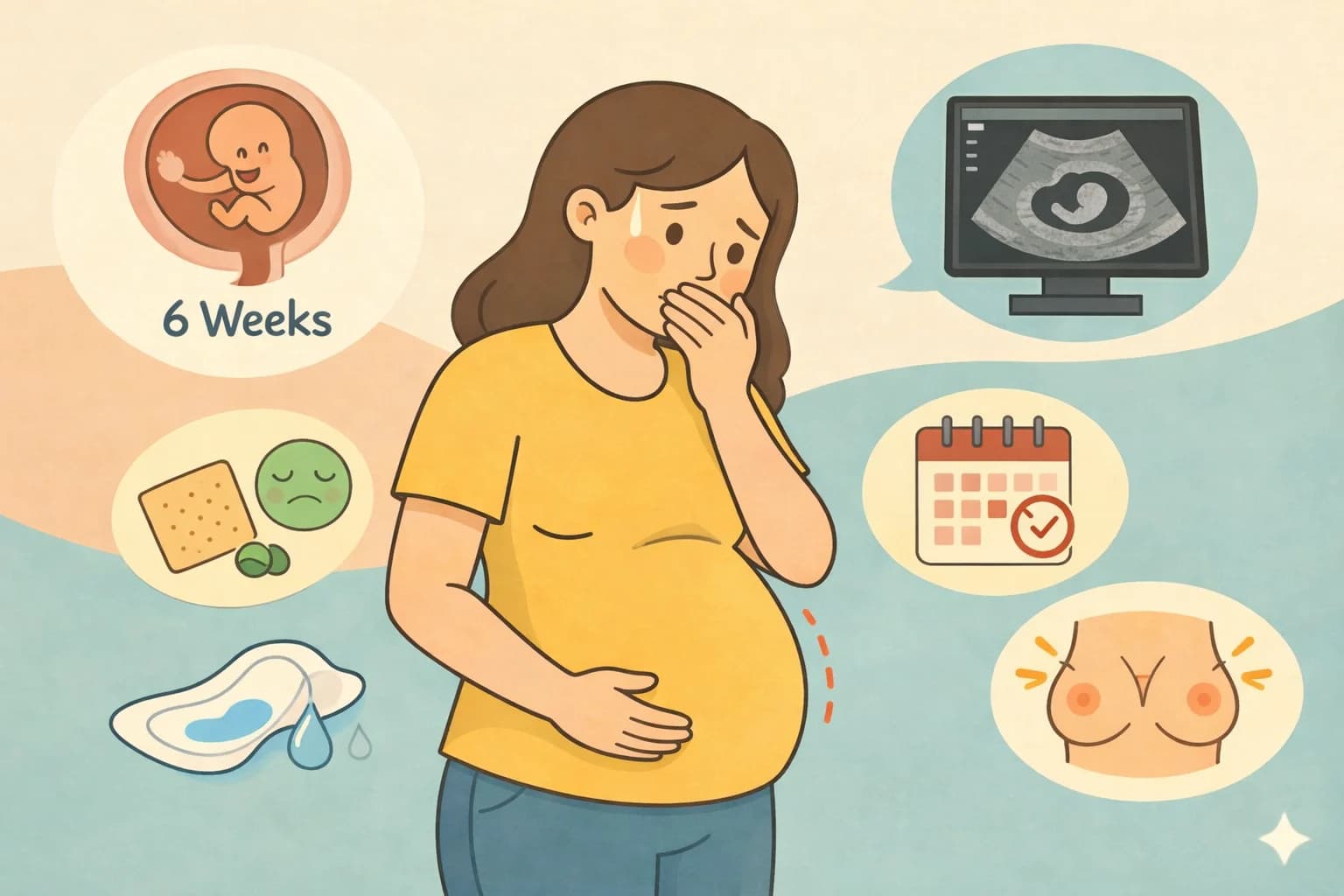
- 6 Weeks Pregnant Symptoms: What to Expect
- 1. Nausea (Morning Sickness That Is Not Just in the Morning)
- 2. Extreme Fatigue
- 3. Breast Tenderness and Changes
- 4. Heightened Sense of Smell (Hyperosmia)
- 5. Frequent Urination
- 6. Light Cramping and Spotting
- 7. Mood Swings and Emotional Changes
- 8. Food Aversions and Cravings
- 9. Bloating and Gas
- 10. Mild Headaches
- What You Should Be Doing at 6 Weeks
- 6 Weeks Pregnant with Twins
- What an Ultrasound at 6 Weeks Shows
- When to Seek Medical Attention
- Frequently Asked Questions (FAQ)
- References and Further Reading
How Far Along Are You, Really?
At six weeks pregnant, you are in your first trimester, specifically week six of a 40-week pregnancy. This is measured from the first day of your last menstrual period (LMP), not from conception. This means:
- Gestational age: 6 weeks
- Actual fetal age: approximately 4 weeks (conception typically occurs two weeks after LMP)
- Trimester: First (weeks 1–13)
- Weeks remaining: approximately 34 weeks
Your Baby at 6 Weeks: Size and Development
At six weeks, your baby is called an embryo — it will not be called a fetus until week 10. Here is what is happening:
Size
Your baby is approximately 4–6 mm in length, roughly the size of a lentil or small pea. Despite the tiny size, development is happening at a remarkable speed.
The Heartbeat
This is the milestone of week six. Your baby's heart has begun to beat — typically between 100 and 160 beats per minute. This is often the first thing visible on an early transvaginal ultrasound at this stage.
"Hearing or seeing that first heartbeat on ultrasound at six weeks is one of the most emotional moments in early prenatal care," says medical experts**. "It confirms viable intrauterine pregnancy and gives us the first real reassurance that things are progressing as they should."
Neural Tube and Brain Development
The neural tube, which will become the brain and spinal cord, is closing this week. This is precisely why folic acid (or methylfolate) supplementation before and in early pregnancy is so critical — it dramatically reduces the risk of neural tube defects like spina bifida.
Facial Features Beginning to Form
- Optic vesicles (the beginnings of eyes) have formed
- Ear openings (otic pits) are present
- Small arm buds and leg buds are visible
- The heart is now a primitive four-chambered structure
The Placenta
The placenta is developing rapidly, establishing the blood supply that will nourish your baby for the remainder of pregnancy. It is not yet fully functional — the embryo is primarily nourished by the yolk sac at this stage.
6 Weeks Pregnant Symptoms: What to Expect
The six-week mark is notorious among pregnant women for being when symptoms hit their hardest. Here is a thorough breakdown of what you may be experiencing and why.
1. Nausea (Morning Sickness That Is Not Just in the Morning)
Nausea at six weeks is typically at its peak or just beginning its peak. The term "morning sickness" is misleading — for many women, nausea is present throughout the day.
Why it happens: Rapidly rising levels of human chorionic gonadotropin (hCG) — the pregnancy hormone — are strongly linked to nausea. Estrogen levels also rise sharply and contribute. At six weeks, hCG levels are doubling approximately every 48 to 72 hours.
What helps:
- Eating small, frequent meals every 2–3 hours to keep your blood sugar stable
- Ginger in any form — tea, chews, biscuits
- Cold foods and bland carbohydrates (crackers, plain toast)
- Staying hydrated with small, frequent sips
- Avoiding triggers: strong smells, spicy foods, fatty foods
- Eating a plain cracker before getting out of bed in the morning
When to seek help: If you cannot keep any food or fluids down for 24 hours, are losing weight, or are feeling dizzy when standing, contact your provider. You may be experiencing hyperemesis gravidarum, a more severe form of pregnancy nausea that requires medical management.
2. Extreme Fatigue
The exhaustion of early pregnancy is unlike ordinary tiredness. Many women describe feeling as though they have run a marathon — even after sleeping 10 hours.
Why it happens: Your body is building an entirely new organ (the placenta), increasing your blood volume, and adapting to a significant hormonal shift. Progesterone, which rises dramatically in early pregnancy, has a sedative effect on the body.
What helps: Rest when you can. Short naps are beneficial. Reduce non-essential obligations. Iron-rich foods (leafy greens, legumes, fortified cereals) can help if mild anaemia is contributing.
3. Breast Tenderness and Changes
Your breasts may feel sore, heavy, swollen, or tingling. The areolae (the area around your nipples) may darken and widen.
Why it happens: A rapid surge in oestrogen and progesterone increases blood flow to the breasts and triggers changes in the tissue in preparation for breastfeeding. Tiny bumps (Montgomery's tubercles) may appear around the areola — these are oil glands, and they are perfectly normal.
4. Heightened Sense of Smell (Hyperosmia)
At six weeks, many women find their sense of smell dramatically amplified. Cooking odours, perfume, petrol fumes — smells that were previously neutral can now trigger immediate nausea.
Why it happens: Rising estrogen is thought to heighten olfactory sensitivity. This is believed to be an evolutionary protective mechanism to steer pregnant women away from potentially harmful substances.
5. Frequent Urination
You may find yourself making significantly more trips to the bathroom, including at night.
Why it happens: Your blood volume is increasing (by up to 50% during full pregnancy), which means your kidneys are processing more fluid. hCG also increases blood flow to the pelvic region. The growing uterus is also beginning to put pressure on the bladder.
6. Light Cramping and Spotting
Mild, period-like cramps are common at six weeks as the uterus expands. Implantation bleeding — light spotting that occurred when the embryo attached to the uterine wall — typically happens at 6–10 DPO, which may coincide with the time many women first discover they are pregnant.
When to call your doctor:
- Heavy bleeding (similar to a period or heavier)
- Severe, one-sided abdominal pain
- Cramping combined with dizziness or shoulder pain (potential ectopic pregnancy)
7. Mood Swings and Emotional Changes
Feeling tearful, anxious, irritable, or overwhelmingly joyful — sometimes in rapid succession — is completely normal at six weeks. The hormonal cascade of early pregnancy affects neurotransmitters, including serotonin and dopamine.
Being kind to yourself during this period is genuinely important. Emotional volatility is physiological, not a character flaw.
8. Food Aversions and Cravings
Foods you previously enjoyed may suddenly seem revolting. Alternatively, you may find yourself craving very specific things — often carbohydrates or cold foods.
Why it happens: The hormonal shifts of early pregnancy alter your sense of taste and smell, creating strong aversions (most commonly to meat, fish, eggs, and coffee) and sometimes specific cravings. Both are mediated by the same hormonal mechanisms as nausea.
9. Bloating and Gas
Progesterone relaxes smooth muscle throughout the body — including in your digestive tract. This slows digestion (to maximise nutrient absorption), leading to bloating, gas, and sometimes constipation.
10. Mild Headaches
Tension headaches are common in the first trimester due to hormonal fluctuations, increased blood volume, and dehydration (especially if nausea is making it hard to drink enough fluids).
Safe options: Paracetamol (acetaminophen) in the recommended dose is considered safe in pregnancy. Avoid ibuprofen and aspirin unless specifically directed by your doctor. Stay hydrated, rest in a dark room, and apply a cool cloth to your forehead.
What You Should Be Doing at 6 Weeks
Book Your First Prenatal Appointment
If you have not already done so, call your OB/GYN or midwife to schedule your first antenatal appointment. This typically takes place between 8 and 12 weeks.
What your first appointment will include:
- Confirmation of pregnancy
- Blood pressure check
- Blood tests (blood type, full blood count, rubella immunity, STI screening)
- Discussion of medical history
- Dating ultrasound (if not already done)
Start (or Continue) Prenatal Vitamins
If you are not already taking a prenatal vitamin, start now. The key nutrients for this stage are:
| Nutrient | Why It Matters at 6 Weeks |
|---|---|
| Folic acid / Methylfolate | Neural tube closure is happening NOW |
| Iodine | Critical for brain and nervous system development |
| Iron | Supports increased blood volume; prevents anaemia |
| Vitamin D | Bone and immune development |
| DHA / Omega-3 | Brain and eye development |
Check Your Prenatal Nutrition
Use our Prenatal Vitamin Calculator to understand what you need at each stage of your pregnancy — personalised to your week and health status.
What to Eat (and Avoid) at 6 Weeks
- Eat: Whole grains, leafy green vegetables, legumes, lean protein, dairy or fortified alternatives, low-mercury fish
- Avoid: Raw or undercooked meat and fish, soft unpasteurised cheeses, high-mercury fish (shark, swordfish, king mackerel), deli meats (unless heated to steaming), raw eggs
- Limit: Caffeine (under 200mg per day), artificial sweeteners, highly processed foods
- Eliminate: Alcohol (no safe amount is established in pregnancy)
6 Weeks Pregnant with Twins
If you are carrying twins (either identified early via fertility treatment or suspected due to higher-than-usual hCG levels), your symptoms at six weeks are likely more intense. Twin pregnancies typically produce higher hCG levels, which translates to more severe nausea, earlier and more pronounced breast changes, and greater fatigue.
Twins are typically visible on ultrasound at 6 weeks, with two separate gestational sacs (for dizygotic/fraternal twins) or shared structures (for monozygotic/identical twins) identifiable.
What an Ultrasound at 6 Weeks Shows
If you have an early transvaginal ultrasound at six weeks, here is what your provider will be looking for:
- Gestational sac — a round structure visible in the uterus
- Yolk sac — a small circle inside the gestational sac
- Fetal pole — the early embryonic structure (may just be visible)
- Cardiac activity — the flickering heartbeat (usually 100–160 bpm)
Not all of these will be clearly visible at exactly six weeks. If you are measured at 5 weeks 5 days or 6 weeks 1 day, the heartbeat may not yet be detectable on abdominal ultrasound (transvaginal is more sensitive at this stage).
A repeat scan a week later is commonly recommended if findings are uncertain at six weeks.
When to Seek Medical Attention
Contact your provider promptly if you experience:
- Heavy vaginal bleeding (soaking a pad)
- Severe, one-sided pelvic or abdominal pain
- Shoulder tip pain (referred pain from internal bleeding)
- Inability to keep any fluids down for more than 24 hours
- Fever above 38°C (100.4°F)
- Painful urination (possible UTI, which requires treatment in pregnancy)
Frequently Asked Questions (FAQ)
Q: Is it normal to have no symptoms at 6 weeks? A: Yes. Symptom experience varies enormously between women and even between pregnancies. Some women feel profound nausea; others feel almost nothing. The absence of symptoms does not mean something is wrong. A viable heartbeat on ultrasound is a far more reliable indicator of pregnancy health than the presence or absence of symptoms.
Q: My nausea is so bad I cannot eat. What should I do? A: If you cannot keep food or fluids down for 24 hours, are urinating very little, feel dizzy, or are losing weight, contact your healthcare provider. This may be hyperemesis gravidarum, which requires treatment. There are safe anti-nausea medications available in pregnancy.
Q: Can I exercise at 6 weeks pregnant? A: For most women with uncomplicated pregnancies, moderate exercise is safe and beneficial. Walking, swimming, prenatal yoga, and light strength training are generally recommended. Avoid contact sports, high-impact jumping, and exercises that require lying flat on your back. Always discuss with your provider before starting or continuing an exercise routine.
Q: Is cramping at 6 weeks normal? A: Mild cramping, similar to period cramps, is common at 6 weeks as the uterus grows and expands. However, severe cramping combined with bleeding or one-sided pain requires immediate medical evaluation to rule out miscarriage or ectopic pregnancy.
Q: When will morning sickness go away? A: For most women, nausea peaks between weeks 8 and 10 and begins to improve by weeks 12 to 14. However, some women experience symptoms throughout pregnancy. If your nausea is severe, discuss treatment options with your provider — effective, pregnancy-safe medications exist.
Q: Can I tell my friends and family I am pregnant at 6 weeks? A: This is entirely a personal decision. Many couples choose to wait until after the 12-week scan (when miscarriage risk drops significantly) before making a wider announcement. However, there is no medical reason you must wait, and having close support can be valuable in the first trimester.
Q: I had a positive pregnancy test but no symptoms yet. Is that okay? A: Yes. Pregnancy symptoms can begin at different times for different women. Some feel symptoms immediately after a positive test; others may not notice significant changes until week 7 or 8. A positive test with no symptoms is not a cause for concern.
References and Further Reading
-
American College of Obstetricians and Gynecologists (ACOG):
https://www.acog.org/womens-health/faqs/healthy-eating-during-pregnancy -
NHS — Week 6 of Pregnancy:
https://www.nhs.uk/pregnancy/week-by-week/1-to-12/6-weeks/ -
Mayo Clinic — Fetal Development Week 6:
https://www.mayoclinic.org/healthy-lifestyle/pregnancy-week-by-week/in-depth/prenatal-care/art-20045302 -
WHO — Antenatal Care Recommendations:
https://www.who.int/reproductivehealth/publications/maternal_perinatal_health/anc-positive-pregnancy-experience/en/
Medical Disclaimer
This article is for informational and educational purposes only and does not constitute medical advice, diagnosis, or treatment. Every pregnancy is unique. Always seek guidance from your doctor, midwife, or qualified healthcare provider regarding your specific symptoms, test results, and pregnancy care.
About the Author
Abhilasha Mishra is a health and wellness writer specializing in women's health, fertility, and pregnancy. Her work focuses on clarity, empathy, and evidence-based guidance for mothers at every stage of their journey.