
How Much Milk Should a Toddler Drink Daily?
A warm, medically responsible guide explaining how much milk toddlers truly need each day, the risks of too much or too little, and how to balance milk with solid foods for healthy growth.
Try Related Tools
Use our source-informed calculators to get helpful insights.
Milk is often one of the first foods mothers feel confident about. It is familiar, easy to prepare, and comforting for toddlers. Yet many parents find themselves unsure about the right amount as their child grows. Some toddlers seem to want milk all day while others lose interest completely. You may wonder whether your toddler is getting enough calcium, whether too much milk can harm them, or whether milk is replacing solid foods.
If you have these questions, you are not alone. Understanding toddler milk needs can bring much more confidence and calm to your feeding routine. This article explains how much milk experts recommend, how to balance milk with solid foods, and when certain habits become red flags.
Table of Contents
- How Much Milk Toddlers Should Drink: The General Guidelines
- When Too Much Milk Becomes a Problem
- Signs Your Toddler May Be Drinking Too Much Milk
- How to Transition to the Right Milk Amount
- What If My Toddler Refuses Milk?
- Best Types of Milk for Toddlers
- Balancing Milk With Toddler Meals
- Common Myths About Toddler Milk Intake
- When to Talk to Your Pediatrician
- Frequently Asked Questions
- 1. Should toddlers drink milk before bed?
- 2. What if my toddler wants milk instead of breakfast?
- 3. Can milk cause anemia?
- 4. Is chocolate milk okay?
- 5. How do I encourage water drinking?
- 6. Does breastfeeding count toward daily milk intake?
- 7. Should toddlers take calcium supplements?
- 8. What if my toddler only drinks milk and barely eats?
- References and Further Reading
How Much Milk Toddlers Should Drink: The General Guidelines
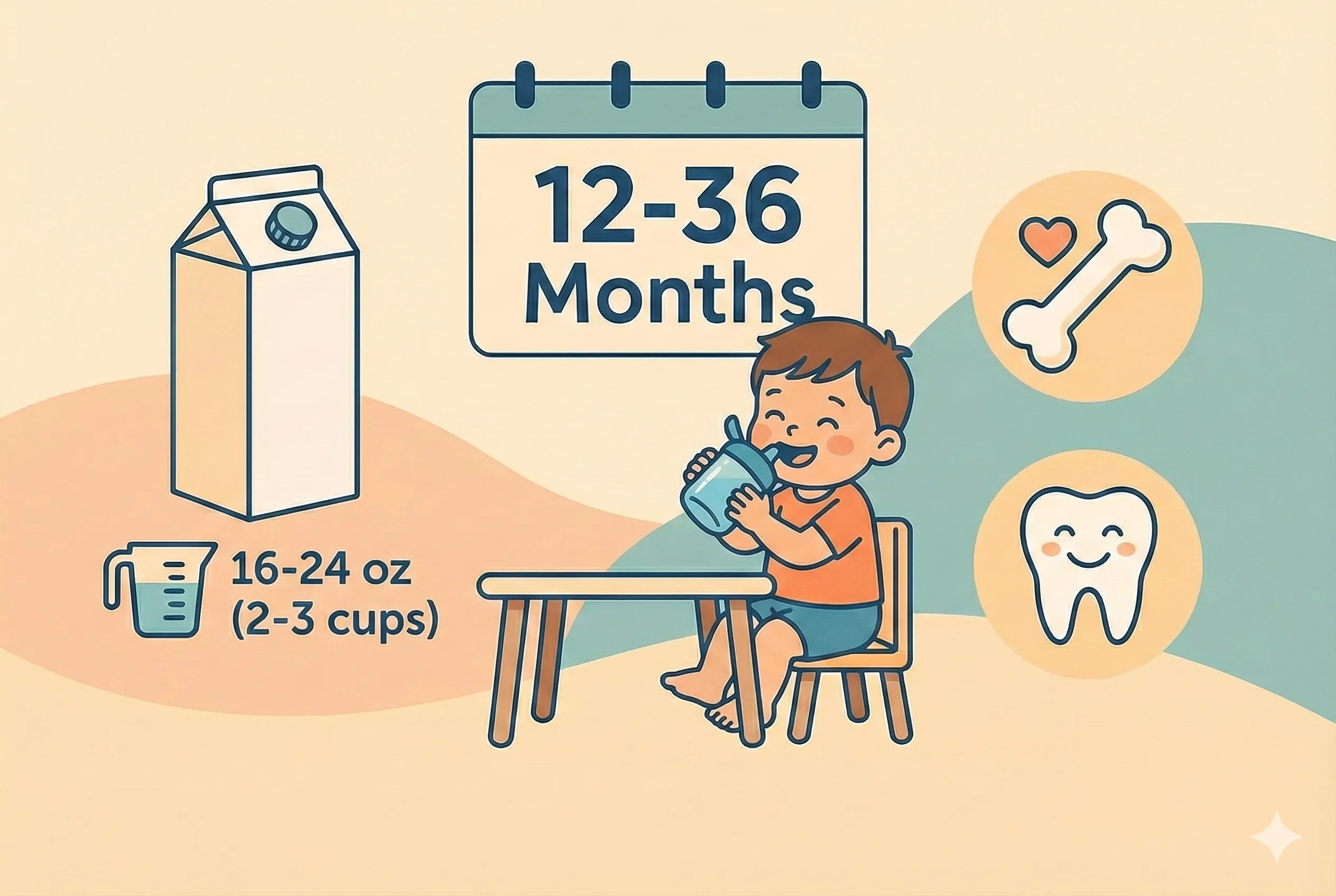
Most pediatric nutrition experts recommend 16 to 24 ounces (470 to 710 ml) of milk per day for toddlers between 12 and 36 months.
This amount provides enough calcium, fat, and vitamin D without interfering with appetite for solid foods. Many doctors explain that toddler nutrition should gradually shift toward solids after the first birthday. Milk remains important, but it is only one part of the diet now.
Why 16 to 24 Ounces?
This range:
- Supports bone development
- Provides dietary fat for brain growth
- Prevents excessive milk intake that may replace meals
- Reduces risk of iron deficiency
Milk is nutritious, but in toddlerhood it should complement a balanced diet rather than dominate it.
When Too Much Milk Becomes a Problem
Many toddlers love milk so much that they drink it instead of eating meals. While comforting, this habit can create nutritional gaps.
1. Reduced Appetite for Solid Foods
Milk is filling. Drinking too much can leave little room for nutrient-dense meals. Over time, this may lead to picky eating or slow weight gain.
2. Iron Deficiency
Research shows that excessive milk intake can reduce iron absorption and lower appetite for iron-rich foods. Iron deficiency is one of the most common nutritional concerns in toddlerhood.
3. Constipation
Cow’s milk can make stools firmer. Some toddlers experience constipation when intake exceeds recommendations.
4. Night Wakings for Milk
Toddlers who rely on milk for comfort may wake more often at night. Milk becomes a soothing habit rather than a nutritional need.
5. Bottle Dependence
Extended bottle use may affect dental health and increase cavity risk.
If your toddler drinks more than 24 ounces daily, gentle adjustments can help balance their diet.
Signs Your Toddler May Be Drinking Too Much Milk
You may notice:
- Poor appetite during meals
- Refusal of solid foods
- Frequent requests for milk between meals
- Hard stools
- Pale skin or low energy
- Night waking for milk
These are not signs of failure. They are signals that your toddler needs support in balancing milk with solid foods.
How to Transition to the Right Milk Amount
Adjustments do not need to be sudden. Toddlers respond best to slow, predictable changes.
1. Offer Milk After Meals, Not Before
This small shift encourages toddlers to try solid foods first. Milk becomes the finishing step, not the replacement.
2. Serve Milk in Cups, Not Bottles
Open or straw cups reduce chugging and encourage mindful sipping.
3. Limit Milk to Mealtimes and One Snack
This structure prevents grazing on milk throughout the day.
4. Introduce Water as the Main Daytime Drink
Many toddlers drink more milk simply because they are thirsty. Offering water meets that need without affecting appetite.
5. Reduce Portions Slowly
If your toddler is used to large servings, gradually decrease by one to two ounces each week.
6. Add High-Iron Foods to the Diet
Pairing meats, eggs, beans, and leafy greens with vitamin C rich foods improves iron absorption.
What If My Toddler Refuses Milk?
Some toddlers do not enjoy milk or have sensitivities. They can still meet calcium needs through foods like:
- Yogurt
- Cheese
- Almonds
- Broccoli
- Fortified cereals
- Fortified plant milks
Many doctors recommend ensuring plant milks are fortified with calcium and vitamin D. For toddlers avoiding dairy entirely, discuss supplementation with your pediatrician.
Best Types of Milk for Toddlers
Whole Cow’s Milk
Recommended for ages 12 to 24 months because the fat supports brain development.
Reduced-Fat Milk
May be recommended for older toddlers or those with a family history of obesity or heart disease. Your pediatrician can guide you.
Plant-Based Milks
Use only fortified versions. Avoid rice milk for toddlers due to lower protein.
Breast Milk
Toddlers can continue breastfeeding as long as mother and child desire. It does not replace the need for solid foods but remains nutritionally beneficial.
Balancing Milk With Toddler Meals
A well-balanced toddler plate includes:
- Protein
- Healthy fats
- Fruits or vegetables
- Whole grains
- A portion of dairy or dairy alternative
Milk fits into the dairy category, but toddlers still need the full plate for complete nutrition.
Example Day
Breakfast: Eggs, toast, fruit, plus 4 ounces of milk
Lunch: Rice with vegetables, yogurt
Snack: Fruit or crackers
Dinner: Lentils, chapati, or pasta
Bedtime: 4 ounces of milk (if needed and within daily limit)
Common Myths About Toddler Milk Intake
“Toddlers need milk all day for strong bones.”
Strong bones come from a combination of calcium, vitamin D, protein, and movement. Milk helps, but so do many foods.
“More milk means better nutrition.”
Excess milk often leads to iron deficiency and lowered appetite.
“If my toddler drinks less milk, they will not grow well.”
Growth depends on a balanced diet. Solids play a key role after the first birthday.
“My toddler wakes at night because they are hungry.”
Night waking is often linked to comfort habits, not hunger.
When to Talk to Your Pediatrician
Reach out if your toddler shows:
- Extreme dependence on milk
- Refusal of solid foods
- Poor weight gain
- Low energy or pallor
- Chronic constipation
- Allergic reactions to milk
Early guidance helps prevent nutritional issues.
Frequently Asked Questions
1. Should toddlers drink milk before bed?
A small serving is fine, but avoid letting milk replace dinner. Also avoid bottles in bed due to cavity risk.
2. What if my toddler wants milk instead of breakfast?
Offer breakfast first. Milk can follow the meal. Routine builds healthy habits.
3. Can milk cause anemia?
Too much milk can interfere with iron absorption and reduce intake of iron-rich foods. Balance is important.
4. Is chocolate milk okay?
Occasionally, yes. Daily intake is discouraged due to added sugar.
5. How do I encourage water drinking?
Use fun cups, offer small frequent sips, and model water drinking yourself.
6. Does breastfeeding count toward daily milk intake?
Breastfeeding continues to provide nutritional value. Treat it separately from cow’s milk intake. Do not reduce breastfeeding unless you choose to.
7. Should toddlers take calcium supplements?
Supplements should only be used under medical supervision.
8. What if my toddler only drinks milk and barely eats?
This can indicate dependence. Structured mealtimes, reduced milk amounts, and pediatric guidance are recommended.
References and Further Reading
-
American Academy of Pediatrics:
HealthyChildren.org Milk Guidance -
CDC Toddler Nutrition:
CDC Infant and Toddler Nutrition -
NHS Dietary Recommendations:
NHS Milk and Dairy Advice
Medical Disclaimer
This article is for educational purposes only and does not replace professional medical advice. Always consult your pediatrician if you have concerns about your toddler’s nutrition, growth, or dairy intake.
About the Author
Abhilasha Mishra writes about toddler development, nutrition, and women’s health. Her work blends compassion, clarity, and science-backed guidance to support mothers through early childhood years.