
Growth Spurts and Feeding: Why Your Baby Suddenly Wants More Milk
A warm, reassuring, medically grounded guide to understanding why babies suddenly want more milk during growth spurts. Learn the behavioral reasons behind increased feeding, what is normal, and how to respond with confidence instead of worry.
Try Related Tools
Use our source-informed calculators to get helpful insights.
Table of Contents
- What Is a Growth Spurt, Really?
- Why Babies Want More Milk During Growth Spurts
- Cluster Feeding: A Normal but Confusing Pattern
- Why This Happens Suddenly
- Breastfed Babies and Growth Spurts
- Formula-Fed Babies and Growth Spurts
- Common Myths About Growth Spurts and Feeding
- Signs This Is a Growth Spurt, Not a Feeding Problem
- When Increased Feeding Needs Attention
- How to Support Your Baby During a Growth Spurt
- Growth Spurts Are Temporary
- Why Understanding Behavior Matters More Than Numbers
- FAQs
- References and Medical Sources
What Is a Growth Spurt, Really?
A growth spurt is a short period when a baby’s body and brain develop rapidly. During these windows, babies often need more energy, more comfort, and more connection.
Growth spurts commonly occur around:
- 2 to 3 weeks
- 6 weeks
- 3 months
- 6 months
- 9 months
These timelines are approximate. Every baby follows a slightly different rhythm.
Experts often explain that growth spurts affect not only size, but also neurological development. This is why feeding behavior changes before physical growth becomes visible.
Why Babies Want More Milk During Growth Spurts
The increased feeding during a growth spurt is not just about hunger. It is a combination of physical need and emotional regulation.
1. Increased Energy Demand
As tissues grow and the brain forms new connections, energy needs rise. Babies respond the only way they can by asking for milk more often.
2. Comfort Seeking
Feeding provides more than calories. It offers security, warmth, and regulation. During developmental leaps, babies often need extra reassurance.
3. Milk Supply Adaptation
For breastfeeding parents, frequent feeding helps signal the body to produce more milk. This is a natural, self-correcting system.
Many doctors recommend trusting this process instead of trying to limit feeds.
Cluster Feeding: A Normal but Confusing Pattern
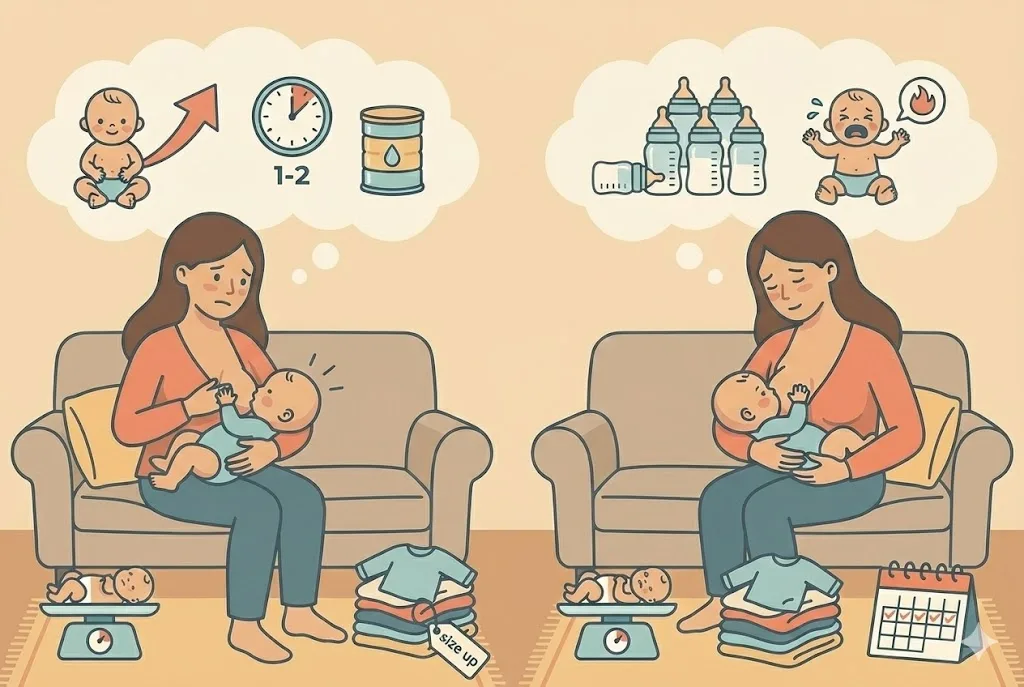
One of the most common growth spurt behaviors is cluster feeding, where a baby feeds very frequently over a short period, often in the evening.
This can look like:
- Feeding every 30 to 60 minutes
- Fussiness between feeds
- Short naps
- Increased need for holding
Cluster feeding does not mean your baby is starving. It means their body is preparing for growth.
Why This Happens Suddenly
Parents often say, “Everything was fine yesterday. Today my baby won’t settle.”
Growth spurts arrive quickly. Babies do not gradually increase feeds. They change behavior almost overnight.
Research suggests that these behavioral shifts often appear before measurable growth occurs. The feeding increase comes first. The weight gain follows.
Breastfed Babies and Growth Spurts
Breastfed babies often show growth spurts through:
- Longer feeding sessions
- More frequent feeds
- Increased night waking
- Fussiness at the breast
This does not mean your milk supply is low. In fact, frequent feeding is how supply increases.
The Breastfeeding Guide explains how supply responds naturally to demand, especially during growth spurts.
Formula-Fed Babies and Growth Spurts
Formula-fed babies may also:
- Ask for feeds sooner
- Finish bottles more quickly
- Show frustration if volumes are limited
In these cases, caregivers may need to slightly increase volume or frequency for a short time.
Many doctors recommend watching hunger cues rather than sticking rigidly to a previous schedule.
Common Myths About Growth Spurts and Feeding
“My baby is feeding more because my milk is weak”
This is not true. Milk quality does not suddenly decrease.
“If I feed more often, I am overfeeding”
Responsive feeding during growth spurts is healthy and temporary.
“Growth spurts should last only one day”
Some last a few days. Others can last a week or more.
Signs This Is a Growth Spurt, Not a Feeding Problem
Growth spurts usually come with:
- Increased feeding
- Mild fussiness
- Changes in sleep
- Normal wet diapers
- Continued alertness
If weight gain remains steady and diapers are adequate, feeding is likely sufficient.
When Increased Feeding Needs Attention
While growth spurts are normal, seek professional advice if:
- Weight gain stalls or declines
- Baby seems lethargic
- Feeding causes distress most of the time
- Wet diapers decrease significantly
Trust your instincts. Support is always appropriate when you feel unsure.
How to Support Your Baby During a Growth Spurt
Follow Cues, Not the Clock
Responding early prevents escalation and frustration.
Lower Expectations
Sleep may temporarily change. This is not a setback.
Care for Yourself
Frequent feeding can be exhausting. Ask for help and rest when possible.
Growth Spurts Are Temporary
One of the hardest parts of growth spurts is not knowing when they will end. The good news is that they do end.
Once the growth phase passes, feeding often settles naturally into a new, slightly increased baseline.
Why Understanding Behavior Matters More Than Numbers
Feeding calculators are helpful, but babies are not machines. Behavior tells the story numbers cannot.
Understanding why your baby wants more milk helps you respond with calm instead of fear.
FAQs
1. How long does a growth spurt last?
Most last a few days to one week, though patterns vary.
2. Should I wake my baby to feed during a growth spurt?
If your baby is sleeping well and gaining weight, waking is usually unnecessary.
3. Can growth spurts affect sleep?
Yes. Sleep changes are common and temporary.
4. Does frequent feeding mean I should supplement?
Not necessarily. Supplementing should be discussed with a healthcare provider.
5. Can growth spurts happen back to back?
Yes. Development often comes in waves.
6. Will feeding always be this intense?
No. Feeding patterns evolve as babies grow.
References and Medical Sources
-
American Academy of Pediatrics
https://www.aap.org -
World Health Organization
https://www.who.int -
La Leche League International
https://www.llli.org
Medical Disclaimer
This article is for educational purposes only and does not replace personalized medical advice. Always consult your healthcare provider with feeding concerns.
About the Author
Abhilasha Mishra writes about early childhood development, women’s health, and parenting. Her work focuses on empathy, clarity, and practical guidance for mothers navigating the toddler years.