
Formula vs. Breastfeeding Schedules by Age
Guide to formula vs. breastfeeding schedules by age: differences in volume and frequency, normal intake, and feeding confidence.
Try Related Tools
Use our source-informed calculators to get helpful insights.
Table of Contents
- Why Formula and Breastfeeding Schedules Are Not the Same
- Volume vs Frequency: The Core Confusion Explained
- Newborn Stage (0–1 Month)
- Early Infancy (1–3 Months)
- Mid Infancy (3–6 Months)
- Why Breastfed Babies Feed More Often
- Why Formula-Fed Babies Often Drink More Per Feed
- Growth Matters More Than Schedules
- Mixed Feeding: When Breast and Formula Combine
- Common Myths That Increase Feeding Anxiety
- When to Be Concerned About Feeding Patterns
- Supporting Confidence Instead of Comparison
- What Truly Matters Most
- FAQs
- References and Medical Sources
Why Formula and Breastfeeding Schedules Are Not the Same
Breast milk and formula are both nourishing, but they behave differently in a baby’s body. Because of this, feeding schedules naturally differ, even when babies are thriving equally well.
Breast milk digests more quickly. Formula digests more slowly. This single difference explains most of the confusion parents experience.
Experts often explain that feeding schedules should respond to digestion and hunger cues, not to the clock alone.
Volume vs Frequency: The Core Confusion Explained
Volume refers to how much milk a baby takes in one feed.
Frequency refers to how often a baby feeds across the day.
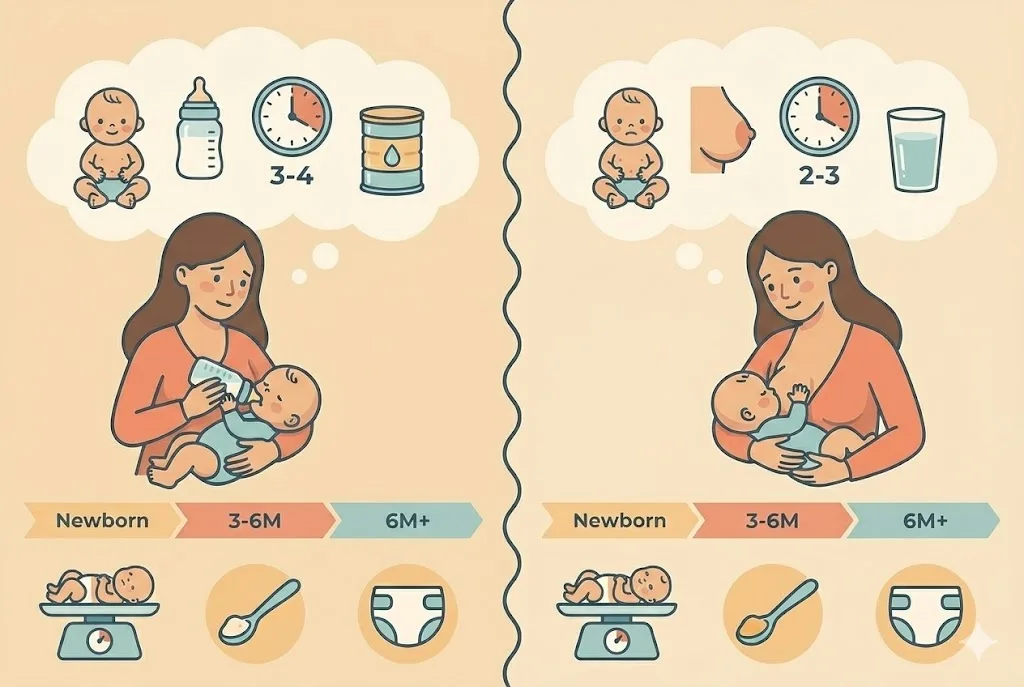
Formula-fed babies usually take larger volumes per feed but feed less frequently.
Breastfed babies usually take smaller volumes per feed but feed more frequently.
Neither pattern is better. They simply reflect how each type of milk is processed by the body.
Newborn Stage (0–1 Month)
Breastfeeding Schedule
In the newborn period, breastfed babies often feed 8 to 12 times in 24 hours. This can feel overwhelming, especially at night.
This frequent feeding helps:
- Establish milk supply
- Support rapid growth
- Regulate newborn hunger cues
Cluster feeding is common and normal.
Formula Feeding Schedule
Formula-fed newborns often feed every 2.5 to 4 hours. Volumes start small and increase gradually.
Because formula takes longer to digest, babies may stay full longer between feeds. This does not mean they are more satisfied or sleeping better long-term.
Early Infancy (1–3 Months)
Breastfeeding Changes
Breastfed babies may still feed frequently, but some feeds shorten as efficiency improves. Night feeds often remain common.
Many doctors recommend following baby-led cues rather than stretching feeds artificially.
Formula Feeding Changes
Formula volumes increase steadily. Frequency may drop slightly, with feeds spacing out to every 3 to 4 hours for many babies.
Parents sometimes worry when breastfed babies feed more often than formula-fed peers. This difference is expected and healthy.
Mid Infancy (3–6 Months)
Breastfeeding Patterns
Breastfeeding sessions often become quicker and more purposeful. Some babies still feed frequently, while others space feeds more naturally.
Growth spurts may temporarily increase frequency again.
Formula Feeding Patterns
By this age, formula-fed babies often have predictable feeding intervals and stable volumes. Some may begin to sleep longer stretches at night.
It is important not to force longer gaps if a baby shows hunger cues earlier.
Why Breastfed Babies Feed More Often
Breast milk composition changes throughout the day and even within a single feed. It adapts to the baby’s needs in ways formula cannot.
Because it is digested faster, hunger returns sooner. This is not a sign of insufficient milk.
The Breastfeeding Guide can help parents understand these patterns and feel reassured.
Why Formula-Fed Babies Often Drink More Per Feed
Formula has a consistent composition and takes longer to break down. Larger volumes help maintain fullness for longer stretches.
This does not mean formula-fed babies need fewer calories overall. It simply means intake is distributed differently.
Growth Matters More Than Schedules
Healthy feeding is best measured by:
- Steady weight gain
- Adequate wet diapers
- Alertness and comfort
- Developmental progress
Feeding schedules that look different can still produce equally healthy outcomes.
Mixed Feeding: When Breast and Formula Combine
Many families use both breast milk and formula. In these cases, feeding patterns often blend.
Some feeds may be closer together, others more spaced. Flexibility becomes especially important.
Research suggests that responsive feeding remains the most important factor, regardless of milk type.
Common Myths That Increase Feeding Anxiety
- Breastfed babies feed often because milk is weak
- Formula-fed babies are always more satisfied
- Longer gaps between feeds are better
- Babies must follow strict schedules
These ideas are common, but they are not supported by evidence.
When to Be Concerned About Feeding Patterns
Seek professional advice if:
- Feeding is consistently stressful
- Weight gain stalls or drops
- Baby shows distress during most feeds
- You feel unsure despite reassurance
Support early prevents unnecessary worry.
Supporting Confidence Instead of Comparison
Every baby has a unique rhythm. Comparing feeding schedules often increases anxiety without improving outcomes.
Understanding volume versus frequency allows parents to respond calmly and confidently.
What Truly Matters Most
Babies thrive on responsive care, not rigid schedules. Feeding is not a test you can fail.
When parents understand the logic behind feeding differences, fear softens into trust.
FAQs
1. Why does my breastfed baby eat more often than formula-fed babies?
Breast milk digests faster, so hunger returns sooner.
2. Should I try to space feeds for my breastfed baby?
No. Feeding on demand supports supply and growth.
3. Is it bad if my formula-fed baby eats less often?
Not if growth and comfort are normal.
4. Can feeding frequency change suddenly?
Yes. Growth spurts and development affect appetite.
5. Should I follow the clock or my baby?
Baby cues matter more than time intervals.
6. Does feeding frequency affect sleep?
Feeding patterns influence sleep, but sleep matures with development.
References and Medical Sources
-
American Academy of Pediatrics
https://www.aap.org -
World Health Organization
https://www.who.int -
La Leche League International
https://www.llli.org
Medical Disclaimer
This article is for educational purposes only and does not replace personalized medical advice. Always consult your healthcare provider for feeding concerns.
About the Author
Abhilasha Mishra writes about early childhood development, women’s health, and parenting. Her work focuses on empathy, clarity, and practical guidance for mothers navigating the toddler years.